
Kenya and Tanzania Set a 31 May Deadline to Eliminate All Non-Tariff Barriers. East Africa Has Heard This Before. The Difference This Time Is Presidential Skin in the Game
Ready
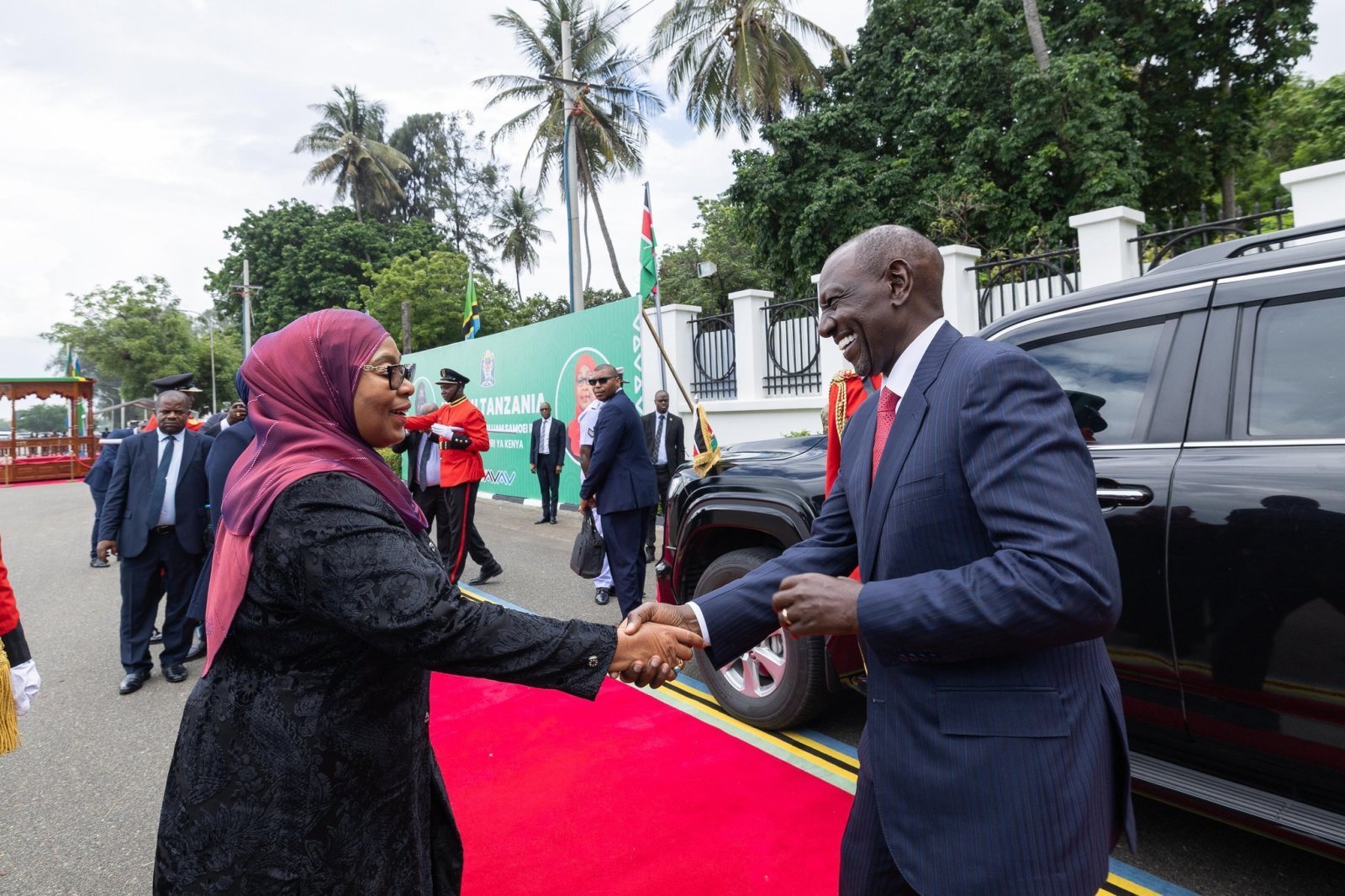
The Kenya-Tanzania Business summit of 4 and 5 May 2026 produced four measurable commitments: a 31 May 2026 deadline for eliminating all non-tariff barriers, a KSh 130 billion annual trade target, a KSh 65 billion investment pipeline, and eight signed MOUs covering standards harmonisation, joint investment promotion, and cross-border infrastructure. Ruto's address to Tanzania's Parliament, the first by a Kenyan president, embedded the bilateral agenda in Tanzania's domestic political system in a way that creates accountability beyond the executive level. This article assesses what those commitments mean in practice, why the 31 May deadline is the single metric that will reveal whether this summit's political alignment holds against the institutional resistance that has defeated previous NTB elimination attempts, and what the Tanga refinery discussion confirmed about where the bilateral energy agenda actually stands.
The most important outcome of the Kenya-Tanzania summit of 4 and 5 May 2026 is not the eight memoranda of understanding, the bilateral trade target, or the cross-border investment pipeline, though all three are more specific and more time-bound than anything the two countries have produced in equivalent previous engagements. It is the 31 May 2026 deadline for eliminating all non-tariff barriers between Kenya and Tanzania, because that deadline creates a public accountability mechanism whose failure or success will be visible, measurable, and impossible to manage through the diplomatic language that usually softens the gap between summit commitments and operational reality. Presidents Ruto and Samia have attached their political credibility to a three-week implementation window whose outcome will be determined not by their offices but by the joint trade committees, standards bodies, border management agencies, and regulatory institutions that have maintained the non-tariff barriers the summit has committed to removing.
According to the summit's confirmed deliverables, the 2nd Kenya-Tanzania Joint Commission for Cooperation, co-chaired by both presidents at State House Dar es Salaam on 4 May 2026, established the 31 May deadline explicitly and publicly, upgrading the bilateral trade volume target to KSh 130 billion annually, equivalent to approximately USD 1 billion, and committing a KSh 65 billion cross-border investment pipeline across manufacturing, logistics, and agriculture value chains. Eight MOUs were signed covering standards harmonisation, joint investment promotion, and cross-border infrastructure. The following day, at Tanzania's National Assembly in Dodoma, President Ruto became the first Kenyan head of state to address Tanzania's Parliament, framing Kenya and Tanzania as economies joined at the hip and calling explicitly for legislative support to fast-track the regulatory alignment that the summit's commitments require. The parliamentary address is analytically significant not merely as a diplomatic milestone but as a deliberate political strategy: embedding the bilateral agenda in Tanzania's legislative system creates accountability at an institutional level beyond the executive, making it harder for the regulatory agencies and ministries responsible for NTB removal to defer or dilute implementation without political cost.
What non-tariff barriers actually cost and why they have survived previous removal commitments
Non-tariff barriers between Kenya and Tanzania are not bureaucratic accidents. They are institutionalised inefficiencies whose persistence reflects the interests of the domestic constituencies that benefit from them, including trucking associations that profit from checkpoint delays, clearing agents whose business models depend on documentation complexity, standards bodies whose relevance is tied to duplicative certification requirements, and manufacturers in both countries who have used regulatory friction to slow cross-border competition. According to World Bank Africa Trade Policy Notes, non-tariff barrier costs on East African regional trade corridors have historically added between 10% and 40% to the effective price of goods moving between origin and destination depending on the product category and the specific route, a cost that falls on manufacturers, traders, and ultimately consumers in both countries while delivering economic rents to the intermediaries whose operations the barriers sustain.
The categories of non-tariff barriers that the summit has committed to eliminating include duplicative product standards, sudden licensing changes, road checkpoints and associated enforcement discretion, and port and rail inefficiencies that add cost and time to every shipment moving between the two countries. According to the summit's documentation, manufacturers in fertiliser, edible oils, cement, pharmaceuticals, and agro-processing sectors already treat Kenya and Tanzania as a single supply chain in their operational planning, absorbing the NTB costs as a structural feature of regional commerce rather than a policy failure capable of being corrected. The economic return from eliminating those costs is therefore immediate and concentrated in the sectors where cross-border production integration is already most advanced, because those sectors are closest to capturing the margin improvement that lower friction delivers and because their investment decisions about where to locate capacity, which country to source from, and which market to prioritise, respond directly to logistics cost changes.
The EAC Customs Union, which launched in 2005 and established the legal framework for tariff-free trade among member states, created the architecture for this integration without delivering the operational reality, because the Customs Union addressed formal tariffs while leaving non-tariff barriers, which impose equivalent or greater costs, to the discretion of individual member state regulatory agencies. Every previous bilateral commitment between Kenya and Tanzania to address specific NTB categories has encountered the same resistance from domestic lobbies that have more immediate political access to the regulatory agencies responsible for implementation than the presidents who made the commitment at the summit level. The difference that the 31 May 2026 deadline creates is that presidential ownership of a specific, public, time-bound commitment makes the political cost of non-implementation visible to the same domestic constituencies whose support both presidents require, rather than allowing the implementation failure to occur gradually and quietly through regulatory inaction.
The KSh 65 billion investment pipeline and what determines whether it reaches productive assets
The KSh 65 billion cross-border investment commitment, equivalent to approximately USD 500 million, is analytically meaningful only if a significant share of it reaches productive assets rather than trading operations or real estate. According to the summit's documentation, the investment pipeline covers manufacturing, logistics, and agriculture value chains, sectors whose capital deployment generates employment, technology transfer, and supply chain integration in ways that commercial property or import trading operations do not. The distinction matters because Tanzania's industrialisation challenge, which Uchumi360 documented in its April 2026 analysis of the trader-to-industrialist conversion thesis, is precisely the gap between capital deployed in trade and capital deployed in production, and a KSh 65 billion investment commitment that lands primarily on trading desks rather than factory floors does not address that gap.
The standards harmonisation MOU signed during the summit is the instrument most directly connected to the investment pipeline's productive deployment, because duplicative product standards between Kenya and Tanzania impose costs on manufacturers whose cross-border production integration requires goods to meet certification requirements in both markets. A Kenyan manufacturer exporting processed food to Tanzania that must meet different certification standards than those applied in Kenya faces a compliance cost that reduces the return on cross-border investment and therefore the incentive to locate production capacity that serves both markets simultaneously. Eliminating that duplication through harmonised standards makes the integrated Kenya-Tanzania market more attractive for the manufacturing investment that the KSh 65 billion pipeline is intended to catalyse, which is why the standards harmonisation MOU is not a procedural agreement but a prerequisite for the investment commitment's productive realisation.
Rwanda, Uganda, and South Sudan are the regional audience for this bilateral demonstration, and the summit's documentation explicitly identifies the EAC demonstration effect as one of the three immediate economic levers the NTB removal delivers. According to the summit analysis, a visible Kenya-Tanzania success story removes the political cover for other EAC members to maintain their own invisible walls, because the bilateral agreement establishes that NTB removal is operationally achievable and economically rewarding at a pace faster than multilateral EAC-wide negotiations have been able to deliver. This framing is analytically sound but requires the 31 May deadline to be met in substance rather than form, because a Kenya-Tanzania NTB clearance that is announced as complete but leaves the most economically significant barriers intact would have the opposite demonstration effect, confirming rather than challenging the regional consensus that bilateral integration commitments are managed through communication rather than implementation.
The Tanga refinery clarification and what it revealed
The joint press briefing on 4 May 2026 included a public clarification from both presidents on the Tanga refinery project, and the substance of that clarification is analytically more interesting than the headline coverage of it has reflected. According to the summit documentation, both Ruto and Samia confirmed their support for the regional refinery concept while neither committing to specific financing terms, equity structures, or implementation timelines for the Dangote-proposed facility. The documentation describes the clarification moment as revealing healthy tension between both presidents' desire for value addition on African soil and neither wanting to lose narrative or revenue control, a characterisation that accurately describes the political economy of a regional refinery whose benefits and costs are distributed across multiple sovereign stakeholders with different crude production profiles and different domestic industrial policy priorities.
As Uchumi360 documented in its analysis of the Ruto Tanzania visit, Dangote committed at the Africa We Build Summit in Nairobi on 23 April 2026 to build a Tanga refinery identical to his Lagos facility if the three East African governments formally supported the project, and Ruto confirmed at the Kenya Mining Investment Conference on 28 April that Kenya, Uganda, Tanzania, and South Sudan had agreed in principle on a single large regional refinery. The summit clarification on 4 May advances that agreement from in-principle commitment to active bilateral discussion without yet resolving the governance, financing, and equity architecture questions whose resolution will determine whether the Tanga refinery moves from political alignment into bankable project structure. The Uganda tension, between Museveni's separate USD 4 billion Hoima refinery plan and the regional Tanga model, was not publicly resolved during the Dar es Salaam summit and remains the most significant structural obstacle to the regional refinery's political coalition holding through the implementation phase.
Ruto's parliamentary address and the institutional accountability it created
President Ruto's address to Tanzania's National Assembly on 5 May 2026 in Dodoma was the first by a Kenyan head of state to Tanzania's Parliament, arriving five years after President Samia Suluhu Hassan addressed Kenya's Parliament on 5 May 2021 at the start of her presidency. According to Tanzania's Deputy Speaker Daniel Sillo, who announced the address to lawmakers on 29 April, the event was described as historic and was attended by Tanzania's senior national leadership. Ruto's framing of Kenya and Tanzania as economies joined at the hip and his call for legislative support to fast-track regulatory alignment were directed not at his executive counterpart, whose commitment to the summit's agenda was already established, but at the legislative institutions and the political constituencies they represent whose cooperation the implementation phase requires.
The institutional significance of this is specific and should not be generalised into diplomatic symbolism. Non-tariff barrier removal in Tanzania requires action by the Tanzania Bureau of Standards, the Tanzania Revenue Authority, the Tanzania Ports Authority, the Ministry of Trade, and the Ministry of Transport, all of which are accountable to Parliament through the budget and oversight processes that the legislators Ruto addressed control. A Kenyan president making the case for bilateral regulatory alignment directly to those legislators creates a political context in which Tanzanian MPs who obstruct or deprioritise NTB removal face a reputational cost they would not face if the commitment had been made only at the presidential level. That accountability mechanism is not guaranteed to work, but it is structurally more robust than the executive-only commitment architecture that previous bilateral NTB removal agreements have relied on.
The measurement framework that will determine this summit's legacy
The summit's documentation identifies three metrics whose trajectory by December 2026 will reveal whether the 31 May NTB deadline produced operational change or managed communication: freight volume on the Northern and Central Corridors, measured in containers and bulk cargo, whose increase would provide ground-level evidence that policy change is reaching actual logistics operations; private sector investment announcements citing NTB removal as a locational factor, which would demonstrate that business decision-makers are pricing the regulatory change into their capital allocation; and fiscal returns through higher utilisation of ports, rail infrastructure, and investment incentives, whose improvement would show that the public infrastructure Tanzania and Kenya have built is generating the throughput that justifies its cost.
These metrics are not conventional summit follow-up indicators selected for their susceptibility to favourable interpretation. They are the variables whose movement or stagnation cannot be managed through press releases, because freight volumes are reported by the corridor transport facilitation agencies, investment announcements are made by private firms whose decisions are commercial rather than political, and port and rail utilisation is measured by the Tanzania Ports Authority and Kenya Railways Corporation against operational benchmarks that both institutions publish. Uchumi360's commitment to monthly scorecards on NTB removal progress, freight data, and investment flows is the appropriate editorial response to a summit whose accountability architecture is unusually specific, because the numbers that emerge from those scorecards will tell a story that no amount of diplomatic framing can alter in either direction.
The Kenya-Tanzania summit of 4 and 5 May 2026 is not a revolutionary event in the history of East African integration. It is a corrective event, finally applying the enforcement discipline to a Customs Union framework that has existed since 2005 without producing the operational integration its architects intended. In a region where the distance between summit commitment and implementation outcome has historically been measured in years rather than weeks, a 31 May deadline with presidential ownership and parliamentary accountability is genuinely unusual. The real test begins with the joint committee sessions that followed the summit's conclusion, and it will be passed or failed not in Dodoma or Nairobi but at the border crossings, standards offices, and port facilities where the NTBs that the summit committed to eliminating have been sustained for two decades by interests whose resistance to this commitment will be as determined as the political will behind it.
FAQ
What did the Kenya-Tanzania summit of 4 and 5 May 2026 actually produce? According to the summit's confirmed deliverables, the two governments set a 31 May 2026 deadline for eliminating all non-tariff barriers between Kenya and Tanzania, established a bilateral trade target of KSh 130 billion annually, committed a KSh 65 billion cross-border investment pipeline across manufacturing, logistics, and agriculture value chains, and signed eight memoranda of understanding covering standards harmonisation, joint investment promotion, and cross-border infrastructure. President Ruto also addressed Tanzania's Parliament on 5 May, the first address by a sitting Kenyan president to Tanzania's National Assembly.
What are non-tariff barriers and why do they matter more than tariffs?
Non-tariff barriers include duplicative product standards, inconsistent licensing requirements, road checkpoint delays, port inefficiencies, and administrative duplication that impose costs on cross-border trade without appearing as formal tariff lines in trade agreements. According to World Bank Africa Trade Policy Notes, NTB costs on East African corridors have historically added between 10% and 40% to the effective price of goods moving between origin and destination, in several documented cases exceeding the cost of formal tariffs that trade agreements have already eliminated.
Why is the 31 May 2026 deadline significant?
It is the first Kenya-Tanzania NTB elimination commitment with a specific, publicly stated three-week deadline that both presidents have attached their political credibility to. Previous bilateral NTB removal commitments have been implemented gradually and quietly through regulatory processes that domestic lobbies were able to slow or circumvent without political cost. A public presidential deadline with parliamentary accountability in both countries creates a visibility that makes the same kind of managed non-implementation more difficult to sustain.
What is the connection between this summit and the Tanga refinery proposal?
Both presidents publicly clarified their support for the regional refinery concept during the 4 May joint press briefing, confirming the alignment that Ruto established at the Kenya Mining Investment Conference on 28 April when he stated that Kenya, Uganda, Tanzania, and South Sudan had agreed in principle on a single large regional facility. The summit did not resolve the governance, financing, or equity architecture questions that would make the Tanga refinery a bankable project, and the tension between Uganda's separate Hoima refinery plan and the regional Tanga model remains the most significant structural obstacle to the project's political coalition holding through implementation.
How will Uchumi360 track whether the summit's commitments are delivered? Through monthly scorecards covering the three primary metrics whose movement cannot be managed through diplomatic communication: freight volume on the Northern and Central Corridors measured in containers and bulk cargo, private sector investment announcements citing NTB removal as a locational factor, and fiscal returns through higher utilisation of ports, rail infrastructure, and investment incentives. These metrics are reported by corridor transport facilitation agencies, private firms, and national port and rail authorities against operational benchmarks that political framing cannot alter.
 Uchumi360
Business Intelligence
Uchumi360
Business Intelligence
- Kenya-Tanzania Joint Commission for Cooperation, 2nd session, Dar es Salaam, 4 May 2026
- President Ruto's address to Tanzania's National Assembly, Dodoma, 5 May 2026
- Tanzania Deputy Speaker Daniel Sillo, parliamentary announcement of Ruto's address, 29 April 2026
- Confirmed across multiple sources including The Citizen, Kenyans.co.ke, and TRT Afrika
- World Bank, Africa Trade Policy Notes, non-tariff barrier cost estimates on East African corridors
- EAC Customs Union, launch documentation, 2005
- Cited as established context
- Africa We Build Summit 2026, Nairobi, 23 April 2026
- Dangote commitment cited from Nairobi Wire reporting
- Kenya Mining Investment Conference and Expo, Nairobi, 28 April 2026
- Ruto quotation cited from Nairobi Wire and My Engineers reporting
- Tanzania Bureau of Standards, Tanzania Revenue Authority, Tanzania Ports Authority
Uchumi360 covers business, investment, and economic policy across East, Central, and Southern Africa.
For the serious reader
You read to the end. That places you in a small group.
Uchumi360 is built for readers who demand precision over speed, structure over sentiment, and analysis that holds uncomfortable conclusions rather than softening them. If this work sharpens how you think about Africa's economy, help us keep building the infrastructure behind it.
Institutional Partners
Commission intelligence. Shape the conversation.
Uchumi360 works with development finance institutions, investment firms, sovereign bodies, and strategic organisations across the coverage region. Institutional partnership unlocks:
- Commissioned sector and country intelligence reports
- Branded research series under your institution's authority
- Exclusive data briefings for internal strategy teams
- Speaking and editorial presence at Uchumi360 events
- Co-published investment outlooks for your markets
Support Our Work
Independent analysis has a cost. Help us bear it.
Uchumi360 does not carry advertising. It does not take editorial direction from sponsors. Every article is produced without commercial compromise. Your contribution funds the reporting, research, and editorial infrastructure that keeps this analysis free from influence.
Secure checkout: One-time and monthly support are processed securely. Add payment credentials to enable checkout here.
Stay Connected
Keep up with every new insight.
Follow our latest analysis, policy coverage, and market intelligence as soon as it is published. If you need something specific, reach out directly and we will point you to the right research.
