
Uganda's Kiira Motors Has Secured a UGX 1 Trillion Electric Bus Export Contract. East Africa May Have Its First Automotive Original Equipment Manufacturer.
Ready
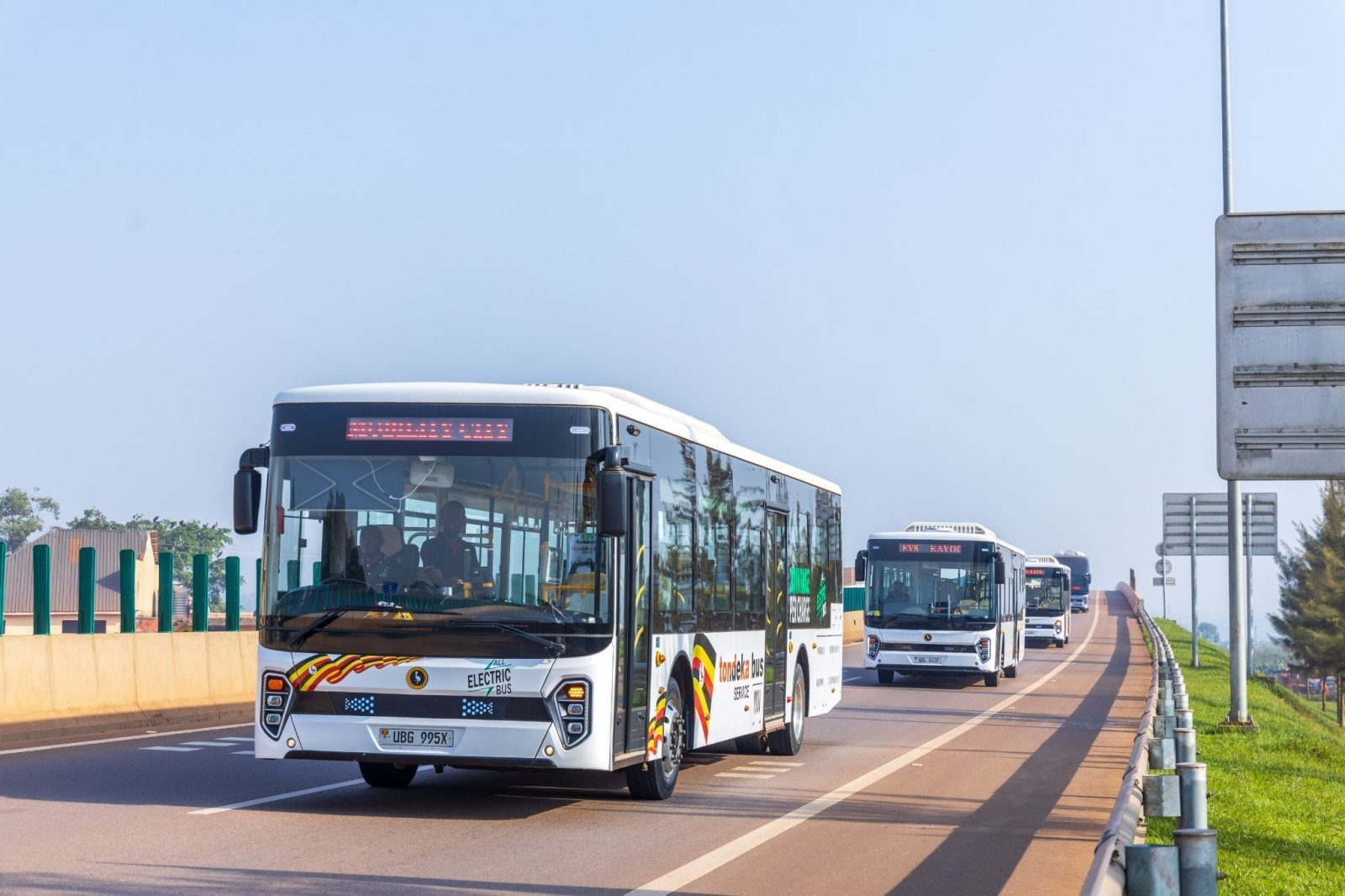
Kiira Motors Corporation, Uganda's state electric vehicle manufacturer founded from a Makerere University student research project, has secured a UGX 1 trillion export contract to supply 820 electric buses, shifting Uganda's export portfolio from raw agricultural commodities toward high-value engineering goods. The Kiira Vehicle Plant in Jinja Industrial and Business Park has an annual production capacity of 5,000 vehicles targeting regional East African markets including Kenya, Rwanda, Tanzania, and beyond, and targets 60% to 65% local content participation by 2030 through supply chain localisation across minerals and metallurgy, chemicals and plastics, energy and utilities, and lithium beneficiation for future domestic battery manufacturing. Over USD 180 million in public-private e-mobility investments are expanding Uganda's national charging grid infrastructure. The Ugandan government has mapped USD 1.74 billion in long-term capital investment to optimise plant operations at scale. KMC maintains a 4% equity link to Makerere University creating a direct academic pipeline and is projected to generate over 500,000 direct and indirect jobs across the region at full production scale. The article situates KMC's emergence within East Africa's industrial development argument, identifies the macro-fiscal import substitution logic whose validation the export contract represents, examines the supply chain localisation multiplier across adjacent sectors, and identifies the capital discipline challenge whose resolution determines whether Kiira Motors becomes the blueprint for African automotive industrialisation or remains a strategically significant but under-scaled facility whose potential the funding gap prevents from reaching continental impact. Africa has spent decades importing the vehicles that move its people and its goods. Uganda is attempting to manufacture them instead. The UGX 1 trillion export contract is the moment that ambition became a commercial reality whose scale demands regional attention.
From a student project at Makerere University to Africa's largest dedicated electric bus manufacturing facility, Kiira Motors Corporation has covered a distance whose significance is industrial rather than geographical.
In early 2026, KMC secured a UGX 1 trillion export contract, equivalent to approximately USD 250 million, to supply 820 electric buses. The contract does not simply represent a single commercial success for a Ugandan state enterprise. It represents a structural shift in Uganda's export composition from raw agricultural commodities toward high-value, technology-intensive engineering goods, and it positions Kiira Motors as the anchor asset around which East Africa's automotive industrial argument is now most credibly made.
What Kiira Motors has built in Jinja
The Kiira Vehicle Plant in the Jinja Industrial and Business Park is Africa's largest dedicated electric bus manufacturing facility by production capacity, designed for an annual output of 5,000 vehicles at full operational scale. The facility produces the Kayoola EVS, the Electric Vehicle Series buses whose export contract has now confirmed commercial demand at the scale that prototype validation could not. Uganda is not assembling completely knocked down kits in the screwdriver plant model that characterises most African automotive sector participation. KMC targets a 60% to 65% local content participation rate by 2030, meaning the majority of the vehicle's value would be produced within Uganda and the region rather than imported and assembled.
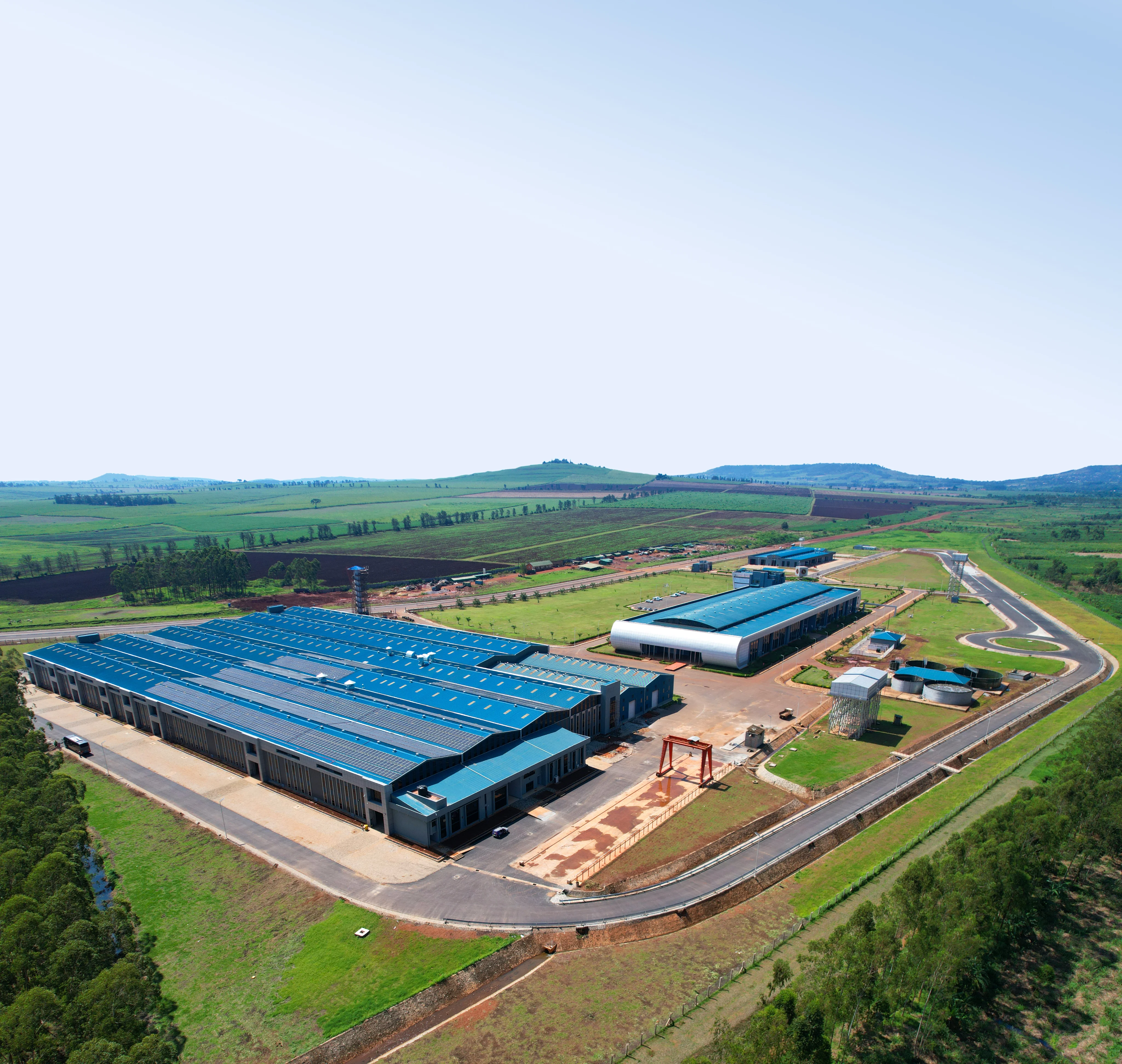 Newly constructed Kiira Motors' Automotive plant in Jinja, Uganda
That local content target is the industrial policy commitment whose achievement would make the difference between a manufacturing facility that employs people and a manufacturing ecosystem that develops productive complexity. An automotive assembly plant that sources 35% of its components locally and imports 65% contributes to employment and import substitution at the margins. An automotive OEM that sources 65% of its components locally creates the supplier ecosystem, the engineering skills, the quality management standards, and the industrial learning that compound into the productive complexity whose absence Uchumi360's analysis of Africa's industrial development challenge has consistently identified as the binding constraint on long-run wealth creation.
The macro-fiscal argument that the export contract validates
Sub-Saharan Africa spends billions annually importing used internal combustion engine vehicles from Europe and Asia, whose import cost represents the foreign exchange drain, the shipping and intermediary fee accumulation, and the import duty payment whose combination has historically made the African automotive market among the most commercially lucrative for foreign producers and among the most fiscally expensive for African governments and consumers.
The import dependence pattern produces the macro-fiscal vulnerability whose reversal Kiira Motors' domestic manufacturing model directly addresses. Foreign exchange that flows outward for imported vehicles does not circulate through the domestic banking system, does not generate the corporate income tax that domestic manufacturing produces, does not create the supply chain employment whose wages circulate through local consumer markets, and does not develop the engineering skills whose accumulation creates the productive complexity that industrial economies build over decades of manufacturing learning.
KMC's import substitution model retains the high-value capital within the regional banking system by providing the vehicles that East African municipalities, transport operators, and urban transit systems require from a domestic source rather than an imported one. The Ugandan shilling that pays for a Kiira electric bus stays in Uganda rather than converting to euros or yen for a European or Japanese alternative. The local procurement that the 65% local content target enables retains the component manufacturing value that import dependence currently surrenders to external suppliers.
The UGX 1 trillion export contract adds a dimension whose significance exceeds the import substitution argument: Uganda is not only replacing imports with domestic production. It is generating export revenue from a manufactured product whose value per unit substantially exceeds the agricultural commodity exports that have historically dominated Uganda's export composition. According to Uganda Bureau of Statistics trade data, Uganda's export portfolio has been heavily concentrated in coffee, tea, fish, and minerals whose commodity price exposure creates the fiscal vulnerability that manufactured export diversification reduces. An 820-bus export contract worth approximately USD 250 million from a single production facility in a single year is not a marginal export diversification achievement. It is a structural shift whose replication across subsequent export contracts would materially change Uganda's trade balance composition.
The supply chain multiplier across East Africa's industrial sectors
The Jinja plant's significance for East Africa's industrial development extends beyond the vehicles it produces into the supply chain ecosystem whose development the local content mandate is designed to catalyse across adjacent sectors whose productive capacity the automotive demand creates commercial incentive to develop.
Uganda's iron ore deposits provide the metallurgical foundation for localised steel chassis panels and structural components whose domestic production the automotive demand anchor justifies at a scale that consumer goods manufacturing alone could not commercially support. The chemical and plastics sector whose domestic production of interior upholstery, dashboard components, and automotive-grade materials the local content target requires creates the manufacturing capability whose adjacent applications extend into packaging, construction, and consumer goods. The energy sector whose engagement with KMC's electric vehicle production and charging infrastructure requirement has prompted over USD 180 million in public-private e-mobility investment expands Uganda's national charging grid infrastructure while creating the stable off-taker for Uganda's surplus hydroelectric power whose utilisation the Julius Nyerere equivalent, the Karuma and Isimba hydropower projects, has generated without fully commercialising in the domestic industrial market.
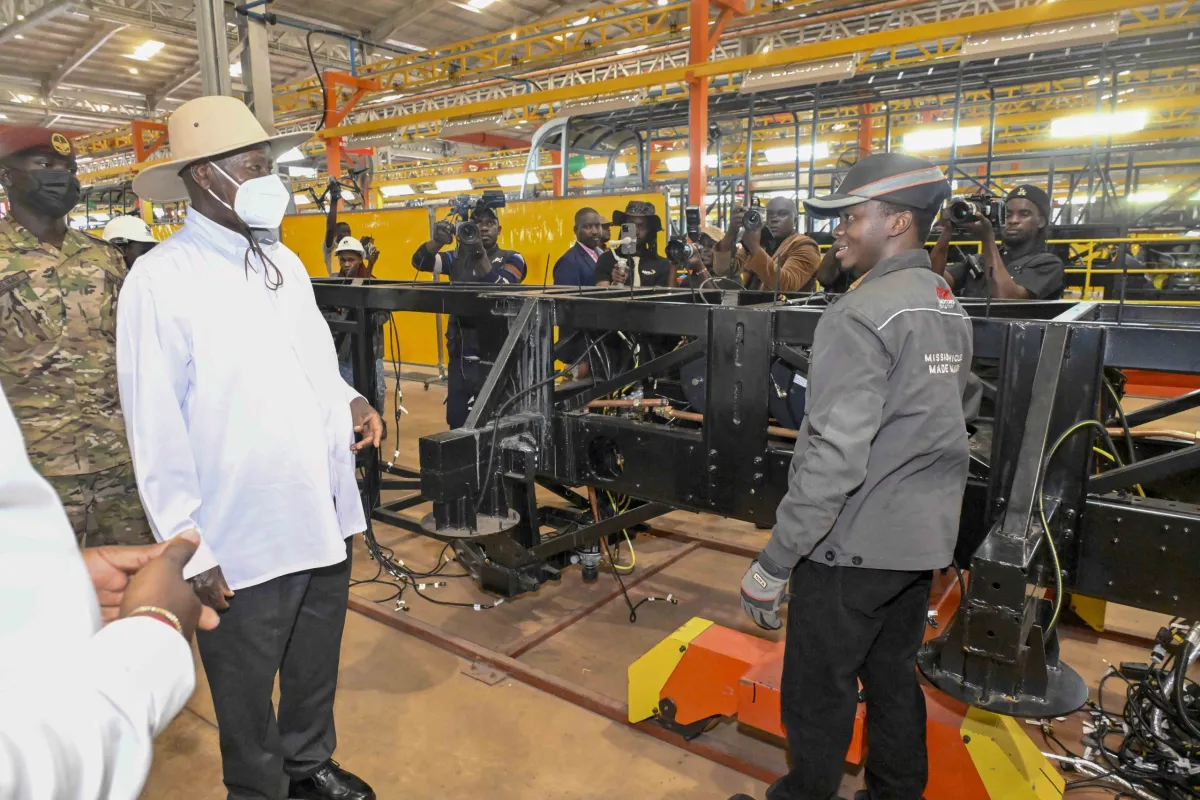 Ugandan President inspecting ongoing works at Kiira plant in Jinja
The lithium beneficiation dimension is the most forward-looking element of the supply chain multiplier argument. East Africa's critical minerals position, whose graphite deposits in Tanzania, cobalt in the DRC, and lithium potential across the region Uchumi360 has documented in its coverage of the global energy transition supply chain competition, provides the raw material foundation for future domestic battery manufacturing whose development would close the electric vehicle supply chain from mineral extraction through battery cell production to vehicle assembly within the region. KMC's current battery sourcing remains predominantly external, but the local content roadmap toward 65% domestic participation creates the demand signal whose scale would justify the battery manufacturing investment whose upstream mineral position East Africa already holds.
The regional market the Jinja plant is sized to serve
The Kiira Vehicle Plant's annual production capacity of 5,000 vehicles is sized for regional rather than purely Ugandan demand, reflecting the market scale calculation whose accuracy the AfCFTA framework and EAC integration are designed to validate. Uganda's domestic urban transit market cannot independently absorb 5,000 electric buses annually at a pace that makes the plant's full capacity utilisation commercially sustainable. The regional market whose access AfCFTA and EAC preferential trade provide is the demand base whose size justifies the production scale.
Kenya's urban transport modernisation programme, whose Nairobi Bus Rapid Transit development and urban mobility investment are creating the fleet replacement demand that electric bus manufacturers are positioned to serve, is the most immediately significant regional market whose access KMC's proximity and intra-regional trade preference position it to compete for. Rwanda's green city initiatives, whose Kigali urban development framework has established the sustainability standards that electric vehicle adoption serves, create the policy-driven procurement demand that state-sponsored electric bus manufacturers whose vehicles meet the certification requirements are naturally positioned to supply. Tanzania's urban transport development, whose Dar es Salaam Bus Rapid Transit system expansion creates the fleet demand that regional sourcing would serve more efficiently than the European and Asian imports that currently dominate procurement decisions.
The UGX 1 trillion export contract's geographic destination, whose disclosure would confirm whether the regional market that the 5,000-unit production capacity is sized for is absorbing the initial production or whether the contract serves markets beyond East Africa, is the most important undisclosed detail in the announcement whose clarification would strengthen the regional industrial argument the facility's scale implies.
The Makerere University connection and what it produces
Kiira Motors' origin as a Makerere University student research project whose commercialisation into Africa's largest electric bus manufacturer the Ugandan government supported through state capitalisation is the human capital development story whose structure is as significant as the commercial outcome it produced. KMC maintains a 4% equity link to Makerere University, establishing the direct pipeline between academic innovation and industrial application that successful industrial economies build into their manufacturing ecosystems through the university-industry relationships whose absence in most African contexts produces the skills gap critique that Kiira's trajectory explicitly challenges.
The knowledge spillovers from KMC's operations are producing the specific technical capabilities whose development East Africa's manufacturing ambitions require: local technicians mastering powertrain calibration, software developers working on high-voltage battery management systems, and assembly line operators developing robotics competencies whose transferability into adjacent manufacturing sectors creates the engineering skills base that industrial complexity requires. The workforce that KMC trains in Jinja is not simply learning to assemble electric buses. It is developing the automotive engineering capability whose application to the broader manufacturing sector improves the productive capacity of every industrial investment that Jinja's industrial park subsequently attracts.
The projected 500,000 direct and indirect jobs at full production scale is the employment figure whose magnitude indicates the regional economic multiplier rather than the Jinja plant's direct employment. Direct automotive assembly employment at 5,000 vehicles annually is a fraction of that figure. The indirect employment in component suppliers, logistics, maintenance, charging infrastructure, and the service ecosystem that a regional electric vehicle fleet generates is where the multiplier's majority accumulates. The specific Ugandan employment figure and its verification against current plant staffing levels would strengthen the employment argument whose aggregate projection requires the direct-indirect breakdown whose component figures the announcement does not specify.
The USD 1.74 billion challenge and what it means for KMC's trajectory
The Ugandan government has mapped USD 1.74 billion in long-term capital investment to optimise Kiira Vehicle Plant operations at the production scale whose commercial viability the 5,000-unit annual capacity requires. That figure is the honest acknowledgement of the capital discipline challenge whose resolution determines whether Kiira Motors becomes the blueprint for African automotive industrialisation that its ambition and early commercial success suggest it could be, or remains a strategically significant but under-scaled facility whose potential the funding gap prevents from reaching the continental impact whose realisation the export contract's scale implies.
Automotive manufacturing is among the most capital-intensive industrial activities available. The minimum efficient scale whose achievement makes automotive production commercially competitive with established international manufacturers requires the production volume, the supply chain depth, the quality management infrastructure, and the technology investment that USD 1.74 billion in long-term capital is designed to enable but whose deployment requires the financial discipline, the investor confidence, and the production consistency that new manufacturing facilities in frontier economy contexts face the most demanding version of.
The funding pathway whose construction the Ugandan government is pursuing includes the combination of state capitalisation, development finance institution lending, and the private sector investment whose attraction requires the commercial track record that the UGX 1 trillion export contract is beginning to establish. The East African Development Bank, whose mandate as an EAC organ covers exactly the regional industrial investment that KMC represents, is the natural development finance partner whose engagement with the USD 1.74 billion capital programme Uchumi360's analysis of the EADB's underutilisation identified as the most consequential application of the institution's regional industrial financing mandate.
What Kiira Motors means for East Africa's industrial argument
KMC's emergence is analytically significant for the broader East African industrial development argument that Uchumi360's 2026 coverage has documented across Tanzania's infrastructure decade, the Kwala solar manufacturing complex, the Dangote refinery discussions, and the minerals governance reforms whose combined direction is the most comprehensive regional industrialisation push since independence.
Uganda has demonstrated that a state-capitalised manufacturing enterprise originating from academic innovation can scale into a regionally significant automotive OEM whose export contract validates the commercial argument rather than simply the political one. That demonstration is important for the regional policy community whose industrial development discussion has concentrated on the enabling conditions whose construction, infrastructure, energy, logistics, and investment climate improvement, is the necessary but insufficient condition for the manufacturing investment whose commercial validation requires the specific decisions to build specific factories producing specific products for specific markets.
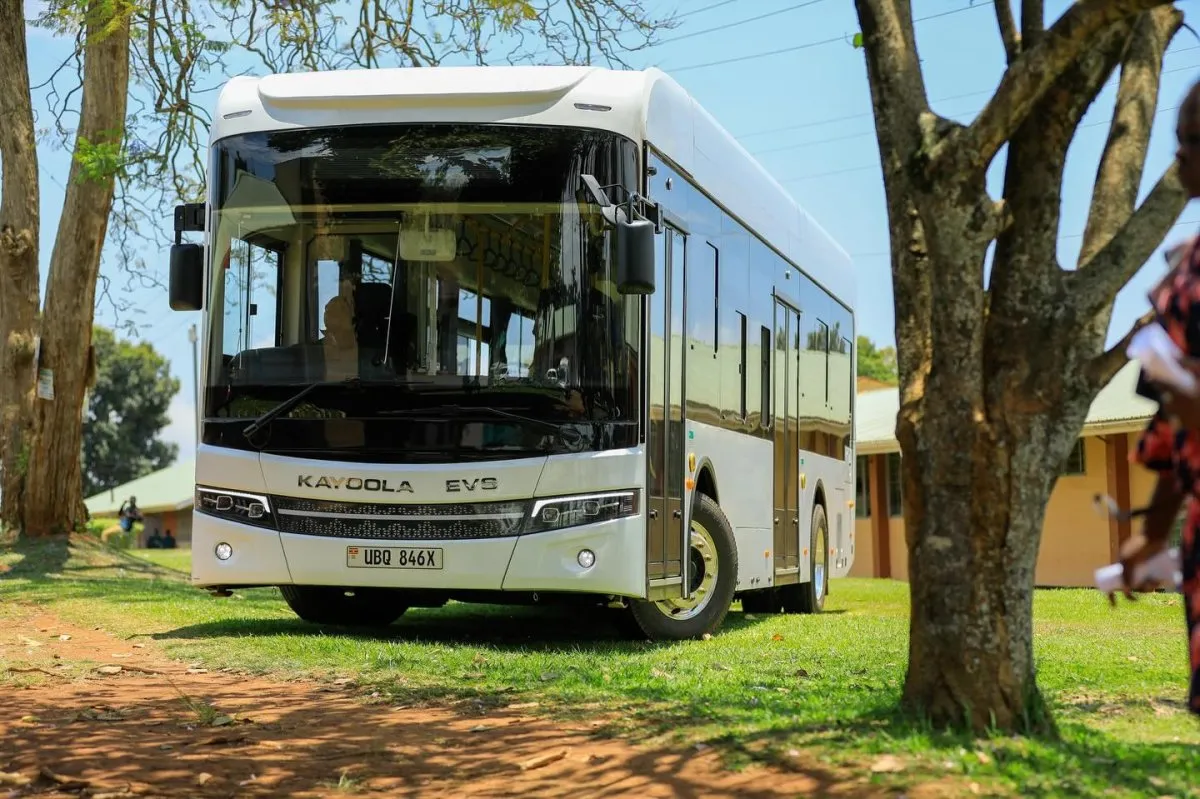 Kayoola Electric Bus, Made by Kiira Motors in Uganda
Kiira Motors built a specific factory. It produces specific electric buses. It has signed a specific export contract worth specific money. That specificity is the industrial argument's most compelling evidence, and its East African origin makes it more directly relevant to Tanzania's graphite processing ambitions, Kenya's manufacturing investment attraction, Rwanda's industrial hub positioning, and Burundi's economic development agenda than any comparable achievement from outside the region.
Africa has spent decades importing the vehicles that move its people and its goods. Uganda is manufacturing them instead. The UGX 1 trillion export contract is the moment that ambition became a commercial reality. Whether East Africa builds the capital, the supply chains, and the regional market integration that makes Kiira Motors the blueprint rather than the exception is the industrial question whose answer the next decade will produce.
FAQ
What has Kiira Motors achieved and why does it matter? Kiira Motors Corporation has secured a UGX 1 trillion export contract, approximately USD 250 million, to supply 820 electric buses, confirming commercial demand for its Kayoola EVS electric vehicles at scale. The Kiira Vehicle Plant in Jinja has an annual production capacity of 5,000 vehicles, targets 60% to 65% local content by 2030, and has USD 1.74 billion in long-term capital investment mapped for operational optimisation. It matters because Uganda has built Africa's largest dedicated electric bus manufacturing facility from a Makerere University student project, positioning East Africa with its first credible automotive original equipment manufacturer rather than an assembly plant for imported kits.
What is the local content target and what does it produce for Uganda's economy? KMC targets 60% to 65% local content participation by 2030, meaning the majority of each vehicle's value would be produced within Uganda and the region. This catalyses supply chain development across minerals and metallurgy using Uganda's iron ore deposits, chemicals and plastics for interior components, energy infrastructure through USD 180 million in e-mobility investment, and future lithium beneficiation for domestic battery manufacturing using East Africa's critical mineral deposits. Local content at that level creates the supplier ecosystem, engineering skills, and industrial learning that compound into productive complexity rather than simply providing assembly employment.
What regional markets is the Jinja plant sized to serve? The 5,000-vehicle annual production capacity is sized for regional rather than purely Ugandan demand. Kenya's urban transport modernisation, Rwanda's green city initiatives, Tanzania's Bus Rapid Transit expansion, and broader sub-Saharan export markets are the demand base whose access AfCFTA and EAC preferential trade provide. The UGX 1 trillion export contract's geographic destination has not been fully disclosed but the production scale implies regional rather than domestic demand as the primary market.
What is the Makerere University connection? KMC began as a student research project at Makerere University and maintains a 4% equity link that establishes a direct pipeline between academic innovation and industrial application. The workforce trained at the Jinja plant is developing powertrain calibration, battery management systems, and robotics competencies whose transferability into adjacent manufacturing sectors creates the engineering skills base that industrial complexity requires. This transitions East Africa's labour market from low-margin manual work toward highly technical engineering capabilities.
What is the capital challenge and what does it require to resolve? The Ugandan government has mapped USD 1.74 billion in long-term capital investment to optimise Kiira Vehicle Plant operations at full production scale. Automotive manufacturing is among the most capital-intensive industrial activities available, requiring the production volume, supply chain depth, quality management infrastructure, and technology investment that the USD 1.74 billion programme is designed to enable. Resolving the capital challenge requires state capitalisation, development finance institution lending, and private sector investment whose attraction the UGX 1 trillion export contract's commercial validation is beginning to support. The East African Development Bank's regional industrial financing mandate makes it a natural development finance partner for the programme.
 Uchumi360
Business Intelligence
Uchumi360
Business Intelligence
- Kiira Motors Corporation, UGX 1 trillion export contract announcement, 820 electric buses, early 2026
- All production capacity, local content target, and contract figures cited from official KMC documentation.Available at kiiramotors.com
- Kiira Motors Corporation, Kiira Vehicle Plant Jinja Industrial and Business Park specifications
- 5,000 vehicles annual capacity, Kayoola EVS product documentation.Available at kiiramotors.com
- Kiira Motors Corporation, USD 1.74 billion long-term capital investment programme documentation
- Available at kiiramotors.com
- Makerere University, KMC 4% equity link and academic innovation pipeline documentation
- Available at mak.ac.ug
- Uganda Bureau of Statistics, export composition data
- Coffee, tea, fish, and minerals concentration.Available at ubos.org
- Uganda Bureau of Statistics, automotive import data and foreign exchange expenditure.Available at ubos.org
- East African Community Secretariat, regional industrialisation policy and AfCFTA framework documentation
- Available at eac.int
- AfCFTA Secretariat, automotive sector trade facilitation documentation
- Available at au-afcfta.org
- East African Development Bank, regional industrial financing mandate documentation.Available at eadb.org
- Kenya National Bureau of Statistics, Nairobi urban transport and Bus Rapid Transit documentation
- Available at knbs.or.ke
- Rwanda Development Board, Kigali green city initiative and electric vehicle procurement documentation
- Available at rdb.rw
- Tanzania Ports Authority and DART, Dar es Salaam Bus Rapid Transit expansion documentation
- Available at tanzaniaports.go.tz
- Uganda Ministry of Energy, Karuma and Isimba hydropower project operational data
- Available at energy.go.ug
- Uganda Investment Authority, e-mobility investment data
- USD 180 million public-private investment figure
- Available at ugandainvest.go.ug
- DRC Institut National de la Statistique, cobalt and critical minerals data relevant to battery supply chain context
- Available at ins-rdc.org
- National Bureau of Statistics Tanzania, graphite and critical minerals data
- Available at nbs.go.tz
- USGS, Mineral Commodity Summaries
- East Africa critical minerals for battery manufacturing context
- Available at usgs.gov
- World Bank, sub-Saharan Africa automotive import expenditure data
- Available at worldbank.org
Uchumi360 covers business, investment, and economic policy across East, Central, and Southern Africa.
For the serious reader
You read to the end. That places you in a small group.
Uchumi360 is built for readers who demand precision over speed, structure over sentiment, and analysis that holds uncomfortable conclusions rather than softening them. If this work sharpens how you think about Africa's economy, help us keep building the infrastructure behind it.
Institutional Partners
Commission intelligence. Shape the conversation.
Uchumi360 works with development finance institutions, investment firms, sovereign bodies, and strategic organisations across the coverage region. Institutional partnership unlocks:
- Commissioned sector and country intelligence reports
- Branded research series under your institution's authority
- Exclusive data briefings for internal strategy teams
- Speaking and editorial presence at Uchumi360 events
- Co-published investment outlooks for your markets
Support Our Work
Independent analysis has a cost. Help us bear it.
Uchumi360 does not carry advertising. It does not take editorial direction from sponsors. Every article is produced without commercial compromise. Your contribution funds the reporting, research, and editorial infrastructure that keeps this analysis free from influence.
Secure checkout: One-time and monthly support are processed securely. Add payment credentials to enable checkout here.
Stay Connected
Keep up with every new insight.
Follow our latest analysis, policy coverage, and market intelligence as soon as it is published. If you need something specific, reach out directly and we will point you to the right research.
