

Black Gold: How East Africa Can Dominate the Global Coffee Market and Finally Keep the Value at Home
Retail coffee prices globally can be 3–10x higher than the green bean export value. That means if just 20% of East Africa’s exports were converted into branded, packaged coffee, the region could realistically unlock $3 billion to $5 billion in additional annual value. This is not a theory. It is arithmetic.
There is a quiet contradiction sitting at the heart of the global coffee economy. East Africa is producing some of the most sought-after beans in the world, yet the real money is still made elsewhere.
Walk into any café in London, Dubai, or New York. The label might read Ethiopian single origin, Kenyan AA, or Tanzanian Kilimanjaro. But the brand, the packaging, the retail margin, and the real value rarely belong to Africa.
That is beginning to change. But not fast enough.
The Math the Market Doesn’t Hide
Let’s strip the romance out of coffee and look at the numbers.
Globally, coffee production reached 178.7 million bags in 2025/26, with Africa contributing roughly 10–15% of supply—a share that is growing again after decades of decline.
East Africa sits at the center of that growth. Ethiopia and Uganda alone now export millions of bags annually, with Uganda exporting over 6.5 million bags and steadily increasing volumes due to improved farming practices.
But here is where the imbalance becomes clear. A kilogram of green coffee exported from East Africa earns significantly less than its processed equivalent. In Kenya, roasted coffee earns about Sh240 (≈$1.6) more per kilogram than raw beans, a direct premium from value addition alone.
Now scale that. If East Africa exports roughly 1 million tonnes of coffee annually (a reasonable regional approximation), even a $1–$2 uplift per kilogram translates into $1 billion to $2 billion in additional value annually
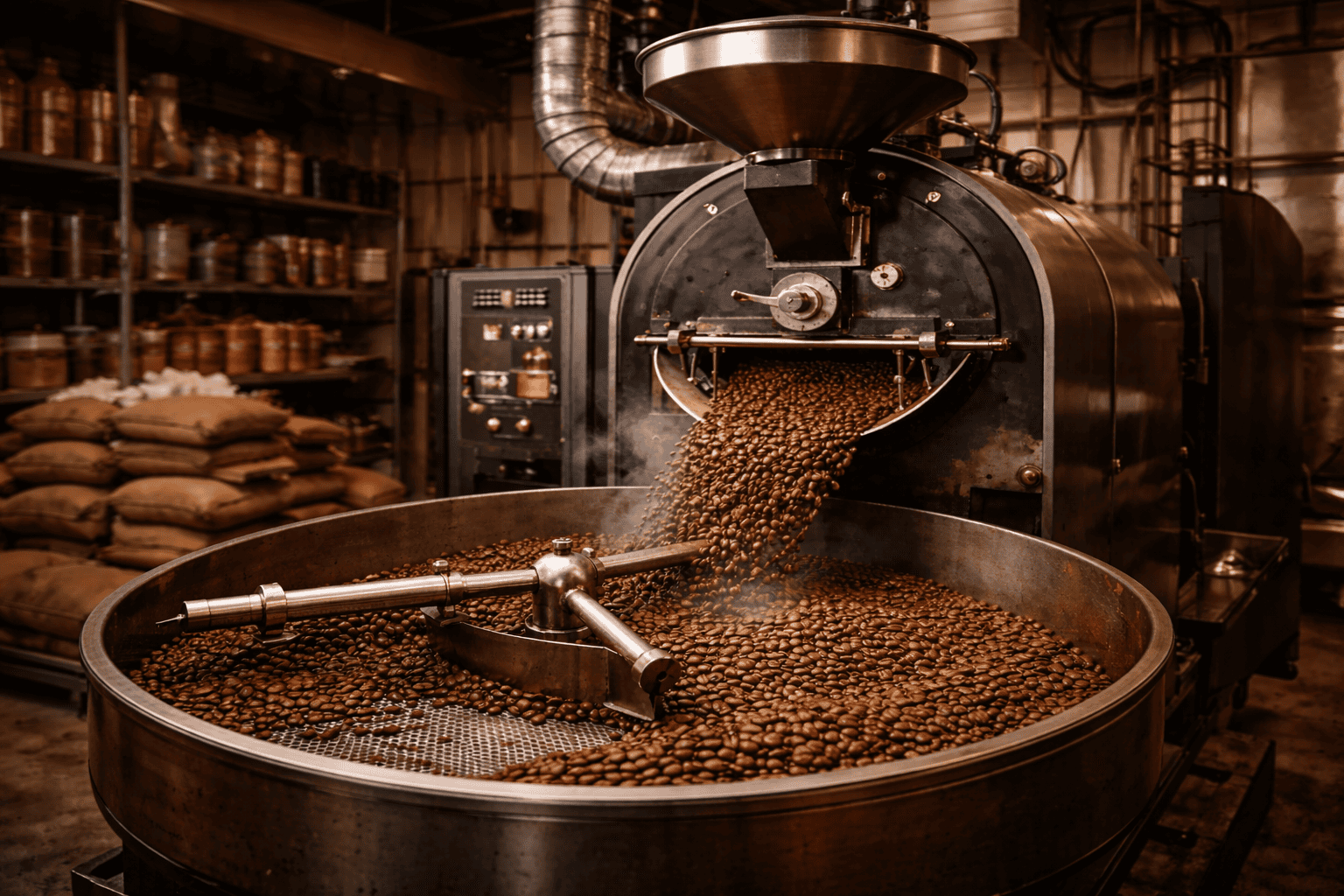
And that’s just from basic roasting, not branding or retail. Now push further. Retail coffee prices globally can be 3–10x higher than the green bean export value. That means if just 20% of East Africa’s exports were converted into branded, packaged coffee, the region could realistically unlock $3 billion to $5 billion in additional annual value. This is not a theory. It is arithmetic.
Why the Value Still Leaves
The current system is not accidental; it is structural.
Exporting green beans is easier, less capital-intensive, and less risky. Roasting, packaging, and branding, on the other hand, require quality control, logistics, market access, and consumer trust.
That’s why most coffee is still roasted close to where it is consumed. And that’s also why Africa remains stuck at the lowest end of the value chain. Even regional policy discussions acknowledge this gap: low local roasting capacity, weak distribution systems, and an export-first mindset continue to limit domestic value capture.
But the Shift Has Already Started
What’s different today is that the foundation for change already exists. Across East Africa, a new layer of coffee businesses is emerging, not just growers, but brand builders. Some examples already in motion: Dormans Coffee (Kenya), a regional brand exporting roasted coffee and operating café chains; Kaldi's Coffee Ethiopia, building domestic consumption and retail presence; Africafé, one of the few large-scale value-added exports from Tanzania; and Uganda Coffee Development Authority brands pushing origin branding globally.
These are not yet global giants. But they are proof of concept. They show that East Africa can move beyond being a supplier and start becoming a competitor.
The Real Opportunity: Build a Coffee Economy, Not Just Exports
The next step is not just scaling exports. It is redesigning the system. Think of coffee as a value chain, not a crop. Each additional step creates exponential economic impact:
- Farm level → higher prices for farmers
- Processing → factory jobs
- Packaging → SMEs and manufacturing
- Branding → marketing and creative industries
- Retail & cafés → urban employment and culture
Even domestic consumption matters here. Tanzania, for example, aims to increase value-added coffee and grow local consumption beyond its current low base. And the market is responding. The roasted coffee segment alone is projected to grow at over 8% annually, driven by rising demand for specialty and premium coffee.
That is the early signal of something bigger: Africa is not just producing coffee, it is starting to drink and experience it.
A More Honest Strategy
The smartest path forward is not ideological. It is a hybrid. East Africa should continue exporting green coffee for volume and liquidity, strategically divert a portion into value-added processing, and aggressively build regional brands before global ones.
Even shifting 10–20% of exports into roasted and branded products would stabilize incomes, reduce exposure to commodity price swings, and create thousands of non-farm jobs. This is how coffee becomes industrial policy.
Tanzania’s Strategic Play
Tanzania, in particular, has a unique opportunity. It is not yet locked into high-volume export dependence like Uganda or Ethiopia. That gives it room to design a different path: become a regional roasting and blending hub, build export-ready African coffee brands, and capture growing demand in Africa, the Middle East, and Asia.
In other words, Tanzania doesn’t need to win on volume. It needs to win on positioning.
The Bottom Line
East Africa already grows the coffee the world wants. The next phase is making sure it also sells the coffee the world buys, because the real value of coffee is not in the bean. It is in everything that happens after. And for the first time in decades, East Africa has both the scale and the momentum to claim it.
