

China’s Zero-Tariff Offer to Africa: What It Means for Tanzania Under 2050 Vision and the Shifting China-US Geopolitical Contest
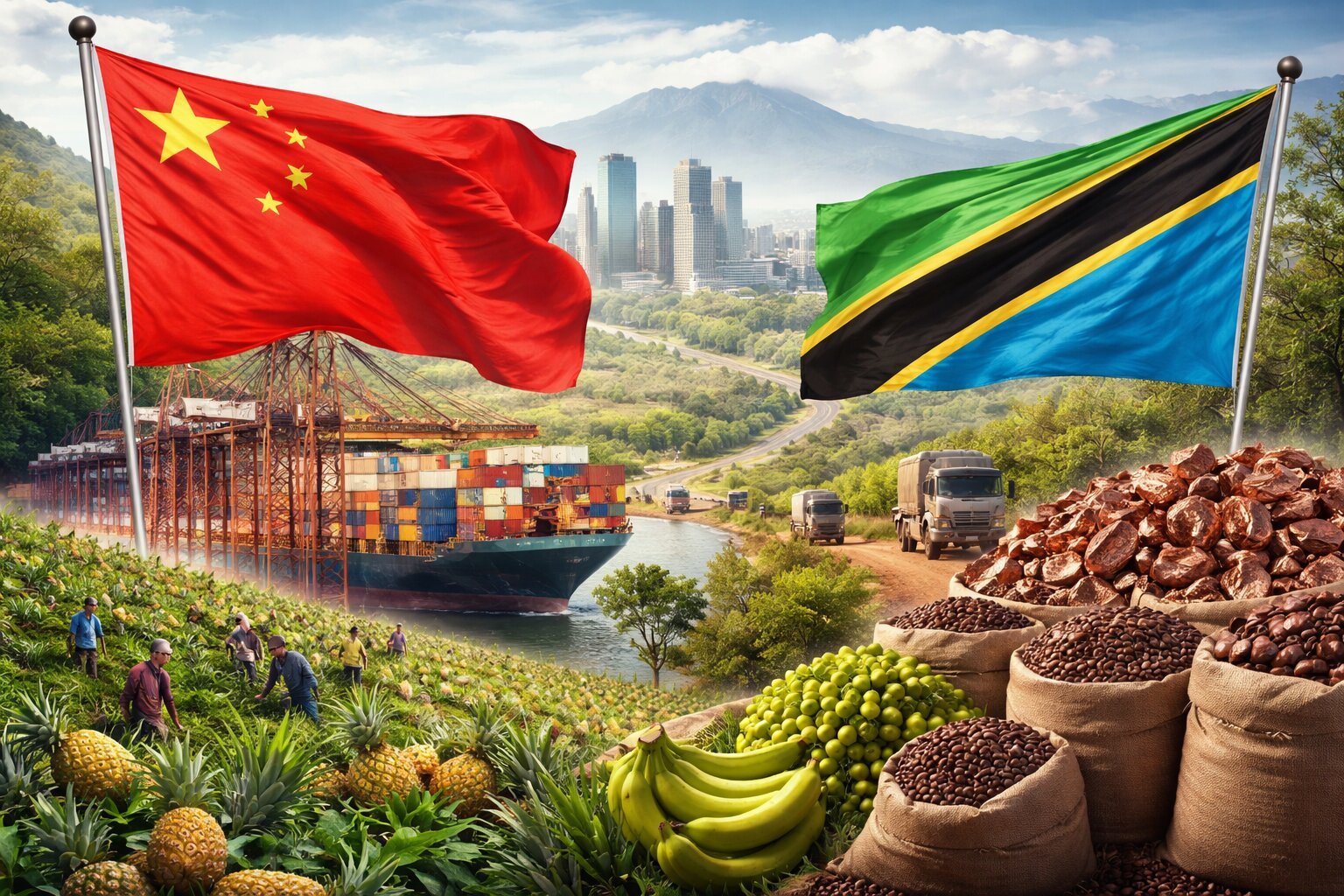
China’s decision to eliminate tariffs on imports from 53 African countries from 2026 marks a decisive shift in global trade alignments. For Tanzania, the move intersects directly with the Fourth Five-Year Development Plan (FYDP IV), which prioritises employment-centred industrialisation, export diversification and deeper integration into global value chains. The zero-tariff framework presents a strategic opening to expand agricultural, mineral and manufactured exports to China, but it also raises structural questions about value addition, trade dependency and geopolitical balance amid intensifying China-US competition in Africa.
China’s announcement that it will eliminate tariffs on imports from all 53 African countries with which it maintains diplomatic relations, effective May 1, 2026, marks a deliberate recalibration of global trade dynamics and deepens Beijing’s economic footprint in Africa. The policy removes import duties across virtually all product categories, expands China’s “green channel” market access mechanisms, and lays the groundwork for new joint economic partnership agreements with African states.
What China’s Zero-Tariff Policy Means for Africa
The move represents a clear shift from preferential access limited to least-developed countries toward a continent-wide free-trade orientation with China. This expands market opportunities for exports ranging from agricultural commodities to manufactured goods. Chinese state media and analysts describe the initiative as part of a larger effort to strengthen economic ties and support African export diversification.
For many African exporters facing tightening access to Western markets due to rising tariffs and trade protectionism, notably under recent U.S. trade policies, China’s zero-tariff regime offers a strategically significant alternative.
The Tanzania and 2050 Vision
From a Tanzanian perspective, the timing of this development intersects with key strategic ambitions articulated in the Fourth Five-Year Development Plan (FYDP IV) 2026/27–2030/31. The Plan’s core policy thrusts include employment-centred industrialisation, export diversification, formalisation of trade infrastructure, private-sector competitiveness, and deepening integration into global value chains. These are central to FYDP IV’s framework for sustainable growth and structural transformation.
China’s zero-tariff policy introduces both opportunity and challenge:
- Opportunity in export markets: Tanzania can gain tariff-free access to China for products where it has comparative advantage, agricultural produce, horticulture, minerals and value-added processed goods. If Tanzania expands processing capacity and regional value chains, this could translate into higher export revenues aligned with FYDP IV’s employment goals.
- Industrialisation leverage: The policy incentivises Tanzanian firms and policymakers to accelerate value addition and manufacturing, particularly in sectors targeted by FYDP IV such as agro-processing and light manufacturing. Zero tariffs alone will not create industrial competitiveness; strategic capacity building is necessary.
- Competition risks: Without complementary domestic industrial policy, tariff-free access can depress emerging local industries if Tanzania remains solely a raw materials supplier. FYDP IV’s emphasis on productivity and local content must be activated to manage this.
- Data and market intelligence: Understanding Chinese demand patterns, clinical granular data on import trends in food, minerals, textiles, and consumer goods, becomes essential for Tanzanian exporters and trade negotiators.
China-US Geopolitics in Africa
The broader geopolitical context frames this trade initiative as a strategic counterweight to U.S. trade policy and influence in Africa. As the United States has introduced high tariffs on several African exporters, Beijing’s zero-tariff offer sends a political signal: China positions itself as a reliable market partner against what many African leaders describe as unilateral protectionist measures.
This dynamic creates a policy choice for African states. Aligning more deeply with China can unlock export opportunities and investment, particularly in infrastructure and industrial capacity, but it also deepens economic dependence on a single trade partner. Meanwhile, the U.S. response is evolving toward favouring strategic trade blocs, critical minerals partnerships, and reciprocal tariff frameworks designed to limit China’s dominance in key supply chains.
For Tanzania, navigating this competition means balancing its trade and strategic partnerships. Maximising access to the Chinese market must be matched with efforts to maintain diversified trade relations, including with the U.S., EU, and regional blocs like the East African Community, to safeguard national economic resilience.
Strategic Implications for Tanzania
- Export Prioritisation: Align export strategy with sectors where Tanzania can competitively serve China’s market, agricultural value chains, minerals, and processed goods.
- Industrial Policy Integration: Use FYDP IV’s industrialisation framework to build export-ready manufacturing clusters that convert tariff access into jobs and value addition.
- Trade Infrastructure Upgrading: Strengthen logistics, customs efficiency and digital trade platforms to reduce transaction costs and improve competitiveness in China and beyond.
- Policy Diplomacy: Leverage bilateral dialogue mechanisms like FOCAC (Forum on China-Africa Cooperation) to negotiate not only tariff terms, but also investment in skills, technology transfer and supply-chain servicing.
- Geopolitical Balance: Maintain policy autonomy by diversifying trade and strategic partnerships beyond a single economic superpower, consistent with Tanzanian strategic interests outlined in FYDP IV
In sum, China’s zero-tariff initiative is a significant trade and geopolitical pivot that intersects with Tanzania’s long-term development agenda. It presents a concrete opportunity to deepen export reach and scale industrialisation, but only if complemented by robust domestic policy execution and strategic positioning in an increasingly multipolar global economy.