
Africa Paid $87 Billion in Debt Interest as 25 Countries Spent More on Interest Than Healthcare
Ready
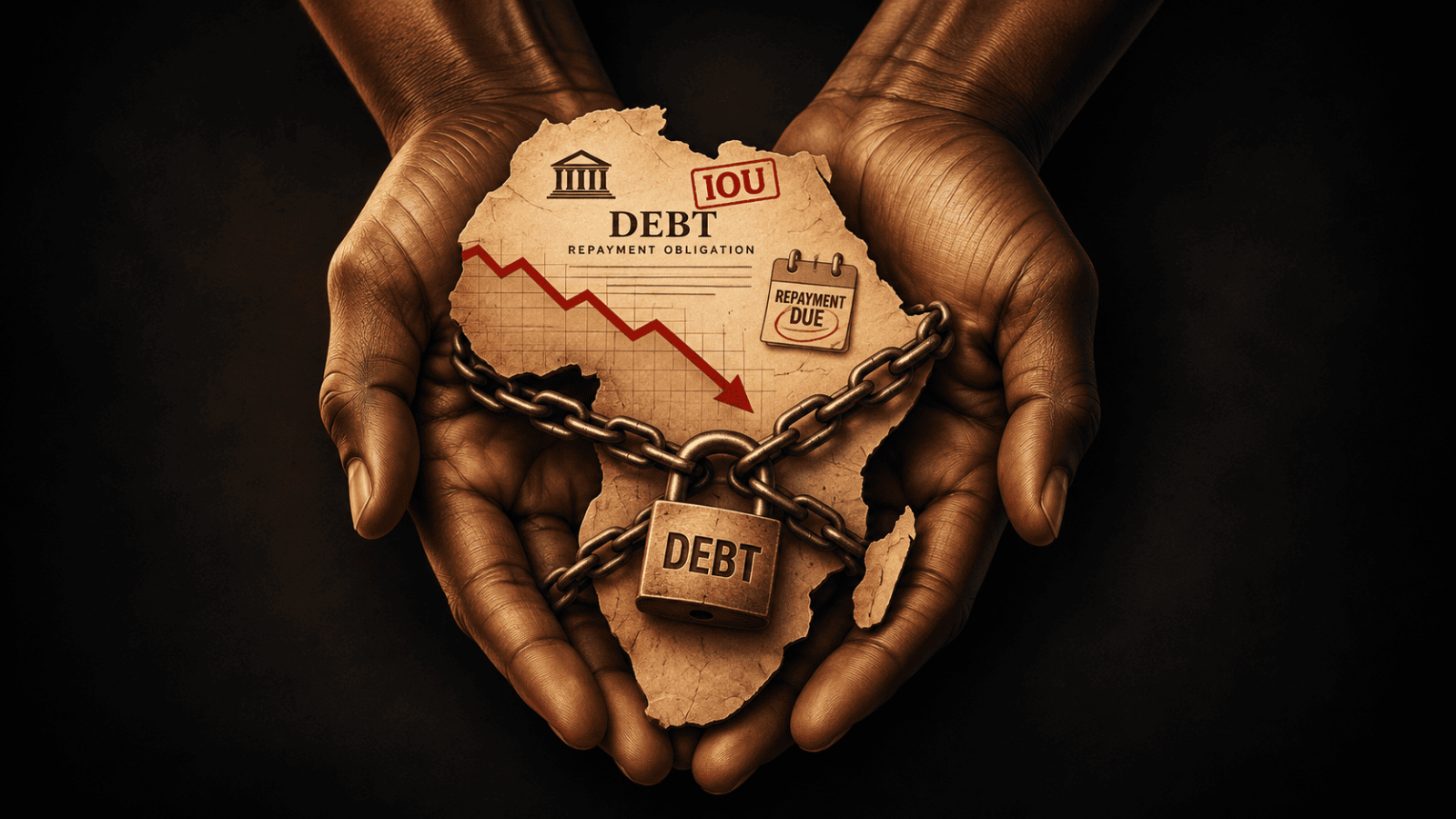
African governments paid approximately $87 billion in external debt interest between 2022 and 2024, according to the African Development Bank's November 2026 outlook. External debt servicing absorbed 31% of government revenue in 2024, compared with 23.7% in 2017, while 25 of 51 African countries with available data spent more on interest payments than healthcare during 2021 to 2023. Although Africa's overall debt to GDP ratio is projected to decline towards 2030, expensive commercial borrowing, currency exposure and refinancing requirements continue constraining public finances and investment.
African countries paid approximately $87 billion in external debt interest between 2022 and 2024, according to the African Development Bank's November 2026 outlook. External debt servicing absorbed 31% of government revenue in 2024, compared with 23.7% in 2017, while 25 of 51 African countries with available data spent more on interest payments than healthcare during 2021 to 2023. The findings expose the fiscal consequences of increasingly expensive borrowing, even as Africa's overall public debt ratio is projected to decline towards 2030.
African governments paid approximately $87 billion in interest on external debt between 2022 and 2024, as the increasing cost of borrowing absorbed a growing proportion of public revenue and reduced the resources available for healthcare, education and infrastructure investment. The African Development Bank's latest Africa's Macroeconomic Performance and Outlook, published in November 2026, estimates that external debt servicing consumed 31% of government revenue in 2024, up from 23.7% in 2017, while 25 of the 51 African countries for which comparable data were available spent more on interest payments than on healthcare during the three years ending in 2023.
The findings illustrate a persistent financing problem confronting African economies. Governments require substantial investment in electricity, transport, education, healthcare and industrial infrastructure, but the interest and repayment obligations associated with existing borrowing are consuming an increasing share of the public resources available to finance those services. The burden has become more pronounced as countries rely increasingly on commercial creditors, international bonds, syndicated loans and domestic debt markets rather than the relatively inexpensive concessional financing historically provided by development institutions.
According to the African Development Bank's November 2026 report, interest accounted for approximately 19% of Africa's external debt service payments between 2022 and 2024. The remaining payments largely represented principal repayments, which reduce outstanding debt obligations but require governments to mobilise cash or obtain additional financing when debts mature. The $87 billion figure therefore refers specifically to interest expenditure and should not be confused with total debt repayments, domestic debt interest or the outstanding amount owed by African governments.
The increase in debt servicing costs has occurred even as African economies continue expanding. The AfDB expects continental GDP growth of 4.6% in 2026 and 4.5% in 2027, compared with 4.5% in 2025, while the region's public debt to GDP ratio is projected to decline from 62.6% in 2025 to approximately 60.7% by 2030. However, the bank warns that this apparent improvement in debt ratios does not necessarily translate into lower borrowing costs or stronger fiscal positions, particularly where countries must refinance expensive commercial loans, manage currency depreciation or increase domestic borrowing to finance budget deficits.
The distinction between the amount owed and the cost of servicing it is central to understanding Africa's debt problem. A government may reduce its debt relative to national output while continuing to spend a larger proportion of its revenue on interest and repayments. This can occur when borrowing costs increase, revenues grow more slowly than GDP, or previously contracted loans reach repayment. For governments with narrow tax bases, the resulting pressure can be substantial even where headline debt indicators appear to be improving.
Africa's External Debt Service Has Become More Expensive
The composition of African sovereign borrowing has changed considerably over the past two decades. Concessional loans from multilateral and bilateral development institutions generally provide longer repayment periods, relatively low interest rates and grace periods intended to make infrastructure and development expenditure affordable. Commercial borrowing, including Eurobonds and syndicated loans, can provide larger amounts of capital and greater financing flexibility, but it generally comes with higher interest costs and stronger exposure to changes in international financial markets.
The African Development Bank identifies this shift towards commercial and nonconcessional borrowing as a major source of vulnerability. Governments have increasingly sought financing from commercial banks, international bond investors and creditors outside the traditional Paris Club arrangements, while domestic debt issuance has expanded as countries attempt to meet public expenditure requirements amid declining availability of inexpensive external finance.
The consequences are visible in debt servicing indicators. External debt service absorbed 23.7% of government revenue in 2017, rising to approximately 31% in 2024. Interest payments on external debt alone accounted for 6.3% of government revenue in 2024, demonstrating that a substantial portion of public resources is required simply to maintain existing debt obligations without reducing principal balances.
The AfDB's earlier 2026 macroeconomic assessment, drawing on World Bank International Debt Statistics, estimated external debt service payments of approximately $135 billion in 2022, $148 billion in 2023 and $165 billion in 2024. Over the same period, interest payments increased from approximately $22 billion to $33 billion annually. The November update reports approximately $87 billion in cumulative interest expenditure during those three years, illustrating the scale of the financing costs associated with external public borrowing.
These payments are not inherently evidence that the original borrowing was economically unproductive. Governments frequently borrow to finance roads, ports, electricity generation, water systems and other infrastructure that may generate economic benefits over several decades. However, the financial sustainability of such investments depends on the relationship between the cost of borrowing, the productivity of the assets constructed and the ability of the government to generate sufficient revenue to meet repayments.
A railway or electricity project may have substantial long term economic benefits but limited immediate cash revenue for the government responsible for servicing its debt. Where infrastructure is financed through expensive short maturity loans, the repayment schedule may begin placing pressure on public finances before the investment generates the anticipated economic returns. This mismatch becomes particularly difficult when governments also face higher spending requirements for education, healthcare and social services.
In 25 African Countries, Interest Expenditure Exceeded Healthcare Spending
One of the most consequential findings in the AfDB's November assessment concerns the relationship between debt interest and public healthcare expenditure. The bank reports that 25 of 51 African countries with available data spent more on interest payments than healthcare during the period from 2021 to 2023.
The comparison illustrates the opportunity cost of borrowing. Public expenditure is constrained by the revenue governments can collect, the financing they can obtain and the obligations they have already undertaken. When interest payments increase substantially, governments have less flexibility to finance additional services without raising taxes, reducing other expenditure or borrowing further.
The economic consequences extend beyond the immediate condition of hospitals and schools. Healthcare expenditure affects workforce productivity by reducing illness, disability and premature mortality, while education spending contributes to the development of skills required by businesses and public institutions. Infrastructure investment influences transport costs, energy availability and the movement of goods. Reduced spending in these areas can therefore weaken the productive capacity of economies over time.
The AfDB's finding does not establish that the same 25 countries spent more on interest than healthcare in every individual year, nor does the November report provide a complete country by country breakdown within its principal discussion. The comparison should therefore be attributed to the bank's specified dataset and reporting period rather than used to identify individual countries without additional national budget evidence.
The relationship between interest expenditure and healthcare spending also requires an understanding of how government budgets are structured. Some countries finance healthcare through central government allocations, local authorities, insurance arrangements, development partners and other financing channels. The AfDB's cross country comparison provides an indication of fiscal priorities and constraints, but the precise expenditure categories must be examined before drawing conclusions about individual health systems.
Nevertheless, the central economic consequence remains clear. A government allocating a substantial proportion of available revenue to creditors has fewer resources available to respond to new development requirements or unexpected emergencies, unless it can increase revenue, obtain additional financing or improve the efficiency of public spending.
This becomes particularly consequential during periods of inflation, food supply disruptions and economic uncertainty, when households may require greater public support precisely as governments face higher financing costs.
Africa's Debt Ratio Is Projected to Decline, but 22 Countries Remain in or at High Risk of Distress
The AfDB expects Africa's average public debt to GDP ratio to decline from approximately 62.6% in 2025 to 60.7% by 2030, continuing a gradual reduction from the 63.9% average recorded during 2023 and 2024. The bank attributes the projected improvement principally to economic growth, narrowing primary fiscal deficits and debt restructuring in selected countries.
However, the report identifies 22 African countries that were either already in debt distress or at high risk of distress as of July 2026. Eight countries were classified as being in debt distress, while another 14 were assessed as facing high risk. This represents a substantial group of economies whose capacity to meet debt obligations is constrained or vulnerable to adverse economic developments.
Debt distress classifications depend on several factors, including the present value of obligations, repayment schedules, export earnings, government revenue and the country's capacity to obtain financing. A country with a relatively low debt to GDP ratio can face serious repayment difficulties if its export earnings are weak, its creditors demand repayment within a short period or its foreign exchange reserves are insufficient. Conversely, a country with a larger debt stock may remain capable of servicing obligations where revenue is stable and financing conditions are favourable.
The African Development Bank emphasises that the composition and cost of debt are increasingly relevant to sustainability assessments. A portfolio containing long term concessional loans can place different pressures on government finances from one dominated by short term commercial borrowing, even when both have similar debt to GDP ratios.
Currency movements introduce another source of risk. Many African governments borrow in US dollars or other foreign currencies while collecting substantial portions of their tax revenue in domestic currency. If the domestic currency depreciates, the local currency amount required to service foreign debt increases, even where the original dollar obligation remains unchanged.
These pressures can be intensified when governments face large refinancing requirements. A bond reaching maturity may need to be repaid using government revenue or replaced through new borrowing. If international interest rates have risen since the original bond was issued, refinancing may require the government to accept substantially higher borrowing costs.
The World Bank's International Debt Report 2026, published on November 5, provides additional context. It reports that external debt across low and middle income economies increased 5.5% to a record $9.4 trillion in 2025, while debt service payments reached $1.4 trillion, marking a fifth consecutive annual increase.
The World Bank's figures cover developing economies globally and are not directly comparable with the AfDB's African interest payment totals. They nevertheless demonstrate that expensive external borrowing is affecting a wider group of developing countries, particularly those reliant on commercial financing and exposed to international interest rate movements.
The World Bank also reported that countries eligible for concessional finance through its International Development Association faced particularly high borrowing costs, even as access to international markets improved. The findings suggest that regaining access to commercial financing does not necessarily resolve debt pressures when the funds available carry expensive repayment obligations.
Debt Restructuring Is Creating Relief, but Negotiations Remain Slow
Several African governments have attempted to reduce debt pressures through restructuring agreements with creditors. These arrangements may involve extending repayment periods, reducing interest rates, postponing scheduled payments or negotiating reductions in the value of outstanding obligations.
Ghana and Zambia are among the countries that have undertaken substantial debt restructuring programmes after experiencing debt distress. Ethiopia has also engaged creditors through the G20 Common Framework, while other countries have faced different forms of repayment difficulty and negotiations.
The AfDB reports that six African countries have restructured debt since 2020, but the process has often taken considerable time because of the need to negotiate with multiple creditor groups. Bilateral lenders, multilateral institutions, international bondholders and commercial banks may hold different claims and operate under different legal and contractual arrangements.
The G20 Common Framework was introduced to improve coordination between official creditors and provide a mechanism for debt treatment in eligible countries. However, negotiations can become prolonged when creditors disagree over how losses or repayment adjustments should be shared.
For governments, the economic consequences of delayed restructuring can be substantial. Uncertainty about future repayment obligations may complicate budget planning, while unresolved financing requirements can weaken investor confidence and reduce the availability of new capital. Businesses may also face consequences where government payment delays, reduced infrastructure spending or foreign exchange shortages affect commercial activity.
Zambia provides an example of the potential benefits of restructuring, particularly where repayment relief creates additional fiscal space and improves the predictability of public finances. The AfDB's November report also references a debt for energy conversion undertaken with its support in 2026. Such arrangements seek to connect financing relief with investment in productive infrastructure, although their economic benefits depend on the contractual terms and implementation of the projects supported.
The broader challenge is ensuring that debt restructuring addresses the causes of financial pressure rather than simply postponing future repayment difficulties. Governments emerging from restructuring may still face weak domestic revenue, substantial infrastructure needs and limited access to affordable financing. Without stronger public financial management and productive investment, repayment pressures can reappear as new obligations accumulate.
East Africa's Growth Ambitions Depend on Managing Debt Costs
East Africa is projected to remain Africa's fastest growing region in 2026, with expected economic expansion of 6.7%, according to the same AfDB November outlook. Ethiopia, Rwanda, Tanzania, Kenya and Uganda are pursuing major infrastructure, industrial and public investment programmes, but their ability to finance development depends partly on borrowing conditions and the fiscal resources available after servicing existing obligations.
The region's strong growth outlook therefore needs to be considered alongside its financial pressures. The AfDB has increased its projected fiscal deficit for East Africa from 4.2% to 4.4% of GDP and its current account deficit from 3.4% to 3.8%, indicating that public and external financing requirements are expected to be greater than previously anticipated.
Countries face different debt circumstances. Ethiopia has been undertaking debt negotiations and wider economic reforms, while Rwanda's infrastructure investments have contributed to substantial public borrowing and external financing requirements. Kenya faces recurring fiscal pressure associated with public debt servicing and domestic revenue mobilisation, while Tanzania and Uganda continue financing infrastructure and development programmes through combinations of domestic resources, concessional loans and other borrowing arrangements.
These differences mean that Africa's debt problem cannot be reduced to a single continentwide debt ratio or a uniform policy response. Each government must consider the cost of its existing obligations, the maturity profile of its debt, its exposure to foreign currencies and the expected economic return from additional borrowing.
A large infrastructure investment financed on favourable terms may be sustainable where it increases production, exports or economic activity sufficient to support the associated repayments. A smaller project financed at a high interest rate may create substantial fiscal pressure if it generates little revenue or fails to produce the expected economic benefits.
The relationship between public investment and economic growth is therefore central to debt sustainability. Roads, railways, electricity facilities and other public assets can improve the productive capacity of an economy, but their financing arrangements must correspond to realistic implementation schedules and expected economic returns.
For countries with ambitious long term development programmes, including Tanzania's Vision 2050, the quality of public investment decisions will influence how effectively borrowed resources contribute to economic expansion. Governments will need to assess whether projects increase productivity, attract additional private investment and generate sufficient fiscal benefits to justify their financing costs.
The AfDB's recommendations emphasise stronger debt management, transparent reporting, improved oversight of state owned enterprises and more efficient public investment. These measures are intended to reduce financial risks while ensuring that limited fiscal resources support activities capable of strengthening economic production and government revenue.
Africa's Borrowing Problem Will Increasingly Be Measured Through Revenue, Not Debt Alone
The latest African Development Bank assessment presents two developments that must be understood together. Africa's public debt ratio is projected to decline gradually through 2030, supported by economic growth and fiscal adjustments. At the same time, borrowing costs remain sufficiently high that many governments are allocating substantial portions of their revenue to interest and principal repayments.
The $87 billion paid in external debt interest between 2022 and 2024 demonstrates the financial cost of existing obligations, while the comparison showing 25 countries spending more on interest than healthcare illustrates the constraints affecting public expenditure. These figures do not establish that borrowing should be avoided altogether. They demonstrate that the economic benefits of public debt must be sufficient to justify its cost and the obligations it creates for future budgets.
Africa continues to require substantial investment in energy, transport, education, healthcare and industrial development. Financing those investments will require domestic revenue, private capital, development finance and carefully structured borrowing. The terms of that financing will matter as much as the amount secured, particularly in economies where export earnings and government revenue remain limited.
The capacity of African governments to manage debt will therefore depend on stronger revenue mobilisation, productive investment, transparent financial management and the ability to negotiate sustainable borrowing arrangements. Where debt obligations become difficult to service, timely restructuring may be necessary to restore fiscal stability and prevent repayment pressures from undermining essential public expenditure.
The AfDB's November findings show that the next stage of Africa's debt challenge will be determined by whether governments can reduce the cost of financing development while maintaining the investment required for economic growth. Lower debt ratios may improve the appearance of national balance sheets, but the fiscal benefits will remain limited where interest payments continue absorbing resources needed for public services and productive investment.
 Uchumi360
Business Intelligence
Uchumi360 covers business, investment, and economic policy across East, Central, and Southern Africa.
For the serious reader
You read to the end. That places you in a small group.
Uchumi360 is built for readers who demand precision over speed, structure over sentiment, and analysis that holds uncomfortable conclusions rather than softening them. If this work sharpens how you think about Africa's economy, help us keep building the infrastructure behind it.
Institutional Partners
Commission intelligence. Shape the conversation.
Uchumi360 works with development finance institutions, investment firms, sovereign bodies, and strategic organisations across the coverage region. Institutional partnership unlocks:
- Commissioned sector and country intelligence reports
- Branded research series under your institution's authority
- Exclusive data briefings for internal strategy teams
- Speaking and editorial presence at Uchumi360 events
- Co-published investment outlooks for your markets
Support Our Work
Independent analysis has a cost. Help us bear it.
Uchumi360 does not carry advertising. It does not take editorial direction from sponsors. Every article is produced without commercial compromise. Your contribution funds the reporting, research, and editorial infrastructure that keeps this analysis free from influence.
Secure checkout: One-time and monthly support are processed securely. Add payment credentials to enable checkout here.
Stay Connected
Keep up with every new insight.
Follow our latest analysis, policy coverage, and market intelligence as soon as it is published. If you need something specific, reach out directly and we will point you to the right research.
