
A Dormant Shell Company, a Missing Bank Code, and a Sh147 Billion Claim Kenya's Courts Can't Verify
Ready
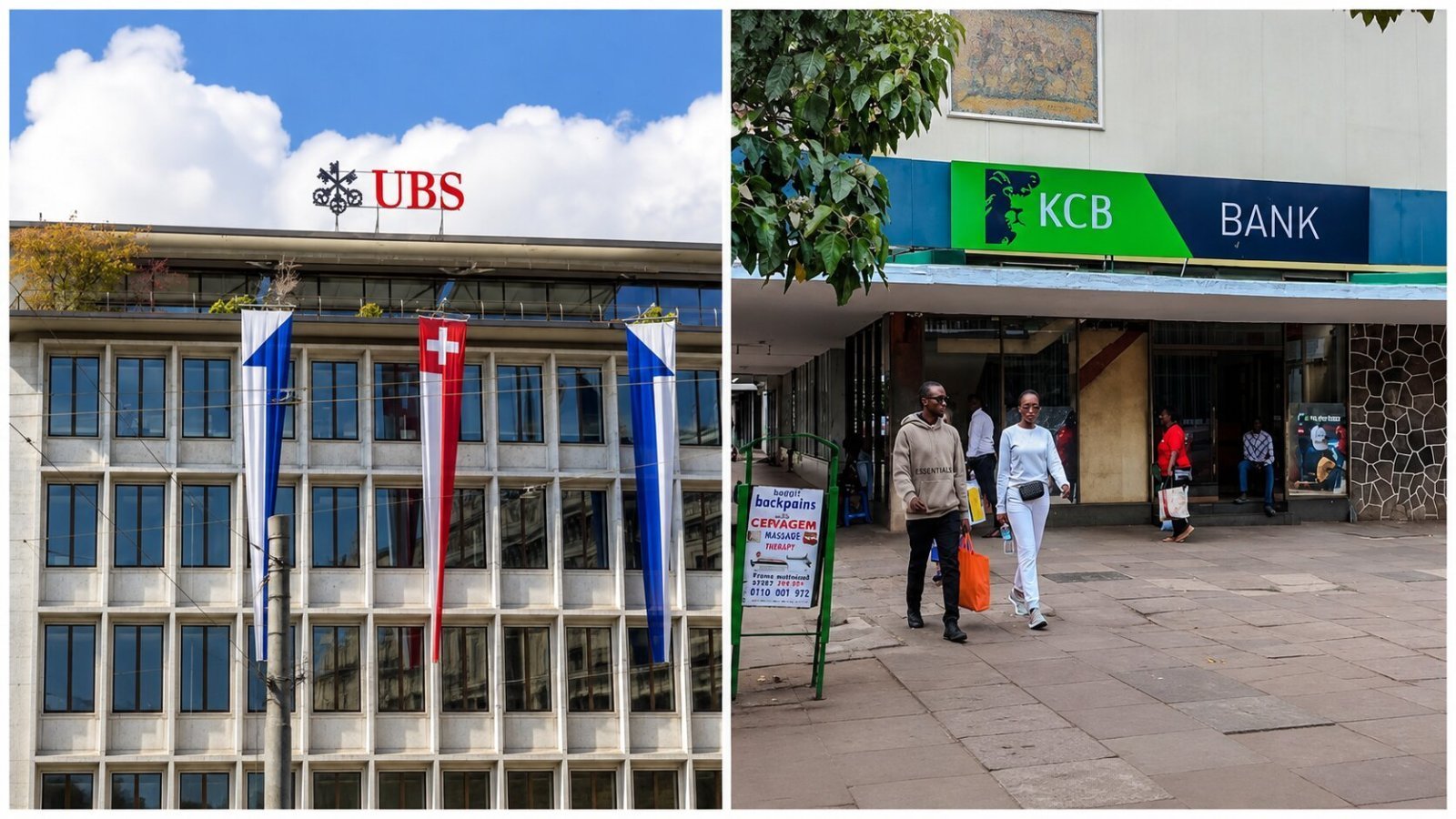
A disputed €978.68 million transfer, roughly Sh146 to Sh148 billion, has put KCB Bank, Foxcapital Investment Limited and the name of UBS Switzerland AG at the centre of one of the more extraordinary banking disputes currently before a Kenyan court. Foxcapital says the money arrived at its KCB account in November 2025 and was wrongly withheld. KCB says the transaction doesn't exist in its systems and has asked Kenya's Directorate of Criminal Investigations to examine documents it says were falsified, including internal reports attributed to named compliance officers who deny writing them. Publicly available court filings add a further complication: an alleged UBS communication that appears to contradict what KCB says UBS told it weeks earlier. The one piece of evidence that would settle this cleanly, a valid 36-character SWIFT transaction reference, is conspicuously absent from every document filed so far.
NAIROBI — A dispute over whether nearly a billion euros ever reached a Kenyan bank account has produced two competing sets of bank-grade documents, a criminal complaint, a UK shell company, and a missing technical detail that should have settled the question already.
What Foxcapital Says Happened
According to filings in Kenya's High Court, Foxcapital Investment Limited entered a partnership agreement with BB Biotech AG Limited, later renamed Bay Bionics Ltd, on 21 October 2025, covering financing and implementation of investment projects in Kenya spanning Treasury bonds, public-private partnerships and renewable energy. Foxcapital's case is that €978,675,835 moved from an account associated with Bay Bionics at UBS Switzerland AG into Foxcapital's euro account at KCB's Sarit Centre Branch on 28 November 2025, and that KCB received the inward remittance but never credited it, instead routing it into a suspense process under what Foxcapital's court filings describe as Incident Number KCB FIN IT 2026 0417.
KCB disputed that account in court, arguing Foxcapital had not established the funds were ever received or held by the bank. The High Court nonetheless issued interim orders preserving the disputed amount while the underlying commercial dispute proceeds, later extending those orders and restraining KCB from transferring, trading with or otherwise dealing with the sum pending the next hearing on 17 September 2026. That preservation order is not a finding that KCB actually holds the money. It is a step courts take to prevent an asset from being dissipated while a dispute over its existence and ownership gets resolved.
KCB's Response Escalated Into a Criminal Complaint
KCB's position moved beyond a simple denial on 28 August 2026, when the bank filed a complaint with the DCI's Banking Fraud Investigations Unit. That complaint, part of the public record in Kenyan court reporting, challenges several of the documents Foxcapital filed in High Court Commercial Suit No E533 of 2026: purported SWIFT messages including an MT103 allegedly from UBS, a purported P1 Incident Report dated 17 April 2026 attributed to KCB's Head of Compliance and Ethics, John Ndegwa, and a purported Financial Crime Review and AML/CFT Clearance dated 18 May 2026 attributed to KCB's AML Compliance Manager, Chanya Kombo. According to KCB's complaint, both officers have denied preparing, approving or authorising the documents attributed to them.
That is a materially different allegation than simply saying a payment cannot be located. If genuine, those internal-looking KCB documents would have corroborated Foxcapital's account from inside the bank itself, showing that KCB's own compliance function had identified and processed the transaction. KCB's complaint asks investigators to establish how documents bearing its named officers' identities came to exist and how they ended up as court exhibits. None of this has been adjudicated. The DCI has to investigate, and the allegations of falsification remain allegations rather than findings.
Two Different Accounts of What UBS Said
The most consequential contradiction in the public record concerns UBS's own position, and it appears twice, in two different forms, roughly two weeks apart. KCB's 28 August DCI complaint states that on 13 August 2026 the bank contacted UBS Switzerland AG directly, supplied the documents Foxcapital had filed, and was told by a UBS representative that the documents shown to them had not originated from UBS and could not be authenticated.
A separate document dated 27 August 2026, circulating publicly and purporting to be a UBS communication addressed to KCB with Foxcapital's representatives copied, appears to say something close to the opposite: that the transaction, identified by amount (€978,675,835), value date (28 November 2025) and a transaction reference (CH12010406632432), had been "traced and independently verified through the applicable payment and SWIFT infrastructure," and that receiving or correspondent institutions had reconciled it against their SWIFT, Nostro and Vostro records.
These two positions, both attributed to UBS, are not straightforwardly compatible. Either the 13 August exchange concerned different documents than the ones referenced later, UBS revisited and reversed its position between the two dates, or the 27 August document is not a genuine UBS communication. There is no public confirmation from UBS itself resolving which of these is correct, and Uchumi360 has not independently verified the 27 August document with UBS.
The Missing Detail That Should Have Settled This Already
SWIFT's own documentation is unambiguous on this point: every MT103 customer payment carries a 36-character Unique End-to-End Transaction Reference, or UETR, specifically designed to let a payment be tracked across every institution in the payment chain, from the originating bank through any intermediaries to the beneficiary. Banks use it to confirm whether a payment was credited, held or rejected, independent of whatever paperwork any party to a dispute produces.
The transaction reference in the 27 August document, CH12010406632432, is not a 36-character UETR. It may carry some internal significance, but it is not the reference SWIFT's architecture requires for independent verification. That absence does not by itself prove the transaction never happened. It does mean the single piece of evidence capable of resolving this dispute without relying on any party's documents, the authenticated UETR tied to a genuine MT103, has not surfaced in the public record so far. If UBS genuinely initiated this transfer, that reference exists inside UBS's own systems and inside every correspondent bank the payment passed through. It would not require Foxcapital, KCB or Uchumi360 to produce it. It would require UBS, and the intermediary banks, to confirm it.
A Dormant Company at the Centre of a Billion-Euro Claim
The alleged originating company also warrants scrutiny that the scale of this claim demands. UK Companies House records confirm Bay Bionics Ltd as an active company, number 12720741, incorporated 5 July 2020, registered at 20 Elgin Mews in London, with stated activities spanning investment company activities, financial leasing, securities dealing and fund management. The company previously operated under the names BB Biotech AG Ltd and, before that, Goldmines AG Limited. Its most recently filed accounts, made up to 31 July 2025 and filed as dormant company accounts in March 2026, show approximately £100 in recorded assets. Companies House records separately show Srikanth Kalyanam registered as the company's person with significant control from 1 October 2025, holding more than 75% of its shares, weeks before the alleged €978 million transfer.
None of this proves Bay Bionics could not have controlled or moved substantial funds after its last filed accounts; a company's financial position can change after its reporting date, and dormant-account status describes historical filings rather than current reality. But a claimed transfer of this size from a company whose most recent public filing shows £100 in assets is precisely the kind of gap that ordinary due diligence, and any competent investigation, would need to close before treating the underlying transaction as established.
What Would Actually Settle This
The dispute does not need another filed document or press statement to resolve. It needs primary banking records that exist independently of what either party has presented in court. UBS can confirm or deny, from its own systems, whether it ever debited an account for €978,675,835 on 28 November 2025, whether it generated an MT103 for that payment, and what UETR was attached to it. Any correspondent bank in the payment chain can confirm whether it received and forwarded that specific, authenticated transaction. KCB can produce its own incoming SWIFT logs, Nostro reconciliation records and the internal audit trail for the specific incident number Foxcapital cites, records that would either show a genuine suspended transaction or show that no such incident exists. And forensic examination of the disputed documents, including the 27 August communication and the internal KCB reports attributed to Ndegwa and Kombo, can establish their origin from email headers, server logs and document metadata rather than how convincingly they read on the page.
Until those records surface, either through the DCI's investigation or the ongoing High Court proceedings, the honest position is that the claim rests on documents whose authenticity is actively disputed by the institution best positioned to verify them, and lacks the one independent technical reference that would let anyone outside the dispute check it directly.
What Hasn't Been Decided
No court has ruled that KCB received the money. No court has ruled that any document filed in this case was forged. No individual has been charged with, or found to have committed, fraud or forgery. The High Court's preservation order reflects a decision to freeze an alleged asset while its existence and ownership are litigated, not a finding on the underlying facts. The DCI's investigation, prompted by KCB's own complaint, is ongoing. The next scheduled court hearing is 17 September 2026.
What can be said on the current public record is narrower and more precise: a transaction of extraordinary size is alleged to have moved through a system, SWIFT, specifically designed to make such transactions independently traceable, and the one reference that would allow that independent tracing has not appeared in any document made public so far. That gap is the actual story here, more than either side's competing account of what happened.
Editorial note: This article is based on publicly available court filings, KCB's DCI complaint as reported in Kenyan media, UK corporate registry records, and SWIFT's own published technical documentation. Allegations concerning Foxcapital, KCB, UBS, and the authenticity of specific documents remain disputed and unresolved. No finding of fraud, forgery or wrongdoing has been made against any party or named individual. Uchumi360 has not independently authenticated the 27 August document with UBS.
FAQ
What is the Foxcapital-KCB dispute about? Foxcapital Investment Limited says €978,675,835 was transferred through UBS Switzerland AG to its account at KCB's Sarit Centre Branch in November 2025 and wrongly withheld. KCB says it has no record of the transaction and has asked Kenya's DCI to investigate whether supporting documents were falsified.
Has a court found that KCB actually received the money? No. Kenya's High Court has issued interim orders preserving the disputed amount while the case proceeds, which is not the same as a finding that the funds exist or reached KCB. The matter returns to court on 17 September 2026.
Why did KCB go to the DCI instead of just contesting the case in court? KCB's complaint alleges that specific documents filed in the case, including internal compliance reports attributed to named KCB officers who say they never wrote them, may have been fabricated, a criminal allegation distinct from simply disputing the underlying commercial claim.
Does the alleged UBS email prove the transfer happened? No. The document has not been independently authenticated by UBS, and it reportedly contradicts what KCB says UBS told it two weeks earlier, when the bank says UBS indicated similar documents were not genuine.
What is a UETR, and why does it matter here? It's a 36-character reference SWIFT attaches to payment messages specifically so a transaction can be independently traced across every bank in the chain. The reference cited in the disputed documents is not in that format, meaning the one piece of evidence that could settle the dispute without relying on either party's paperwork has not appeared publicly.
Is Bay Bionics a real company? Yes, it's an active UK-registered company, but its most recently filed accounts describe it as dormant with approximately £100 in assets, a detail that doesn't disprove the alleged transfer but does warrant independent verification of the claimed source of funds.
Has anyone been charged with fraud? No. The allegations of document falsification are part of an active DCI complaint and remain unproven. No individual has been charged or found to have committed any offence in connection with this matter.
 Uchumi360
Business Intelligence
Uchumi360
Business Intelligence
- Citizen Digital, "Court extends interim orders preserving disputed Ksh.146.3B held by KCB bank," 2026
- High Court preservation order details, 17 September 2026 hearing date
- Tech-Hub Kenya, "KCB seeks DCI probe over alleged Sh147bn remittance as document fraud claims deepen," 2026
- Details of KCB's 13 August 2026 contact with UBS and UBS's reported response
- Capital FM Africa, "KCB reports Foxcapital to DCI over alleged forged documents in Sh126bn suit," 2026
- Details of KCB's 28 August 2026 DCI complaint, including the disputed P1 Incident Report and AML/CFT Clearance documents
- allAfrica.com, "Kenya: KCB Reports Foxcapital to DCI Over Alleged Forged Documents in Sh126bn Suit," 2026
- Corroborating detail on the DCI complaint
- SWIFT, "What is a Unique End-to-end Transaction Reference (UETR)?" Swift.com
- Technical specification of the 36-character UETR and its role in payment tracing
- UK Companies House, "Bay Bionics Ltd overview," company number 12720741, accessed 2026
- Incorporation date, registered office, prior company names, filed accounts status, and persons with significant control
Uchumi360 covers business, investment, and economic policy across East, Central, and Southern Africa.
For the serious reader
You read to the end. That places you in a small group.
Uchumi360 is built for readers who demand precision over speed, structure over sentiment, and analysis that holds uncomfortable conclusions rather than softening them. If this work sharpens how you think about Africa's economy, help us keep building the infrastructure behind it.
Institutional Partners
Commission intelligence. Shape the conversation.
Uchumi360 works with development finance institutions, investment firms, sovereign bodies, and strategic organisations across the coverage region. Institutional partnership unlocks:
- Commissioned sector and country intelligence reports
- Branded research series under your institution's authority
- Exclusive data briefings for internal strategy teams
- Speaking and editorial presence at Uchumi360 events
- Co-published investment outlooks for your markets
Support Our Work
Independent analysis has a cost. Help us bear it.
Uchumi360 does not carry advertising. It does not take editorial direction from sponsors. Every article is produced without commercial compromise. Your contribution funds the reporting, research, and editorial infrastructure that keeps this analysis free from influence.
Secure checkout: One-time and monthly support are processed securely. Add payment credentials to enable checkout here.
Stay Connected
Keep up with every new insight.
Follow our latest analysis, policy coverage, and market intelligence as soon as it is published. If you need something specific, reach out directly and we will point you to the right research.
