
Tanzania’s New Vehicle Market Grows as Chinese Brands Gain Ground
Ready
Toyota still leads new light-vehicle sales. A broader range of Chinese SUVs and pickups is raising the stakes in retail, and demand from freight and mining is giving Tanzanian assemblers a foothold in commercial vehicles.
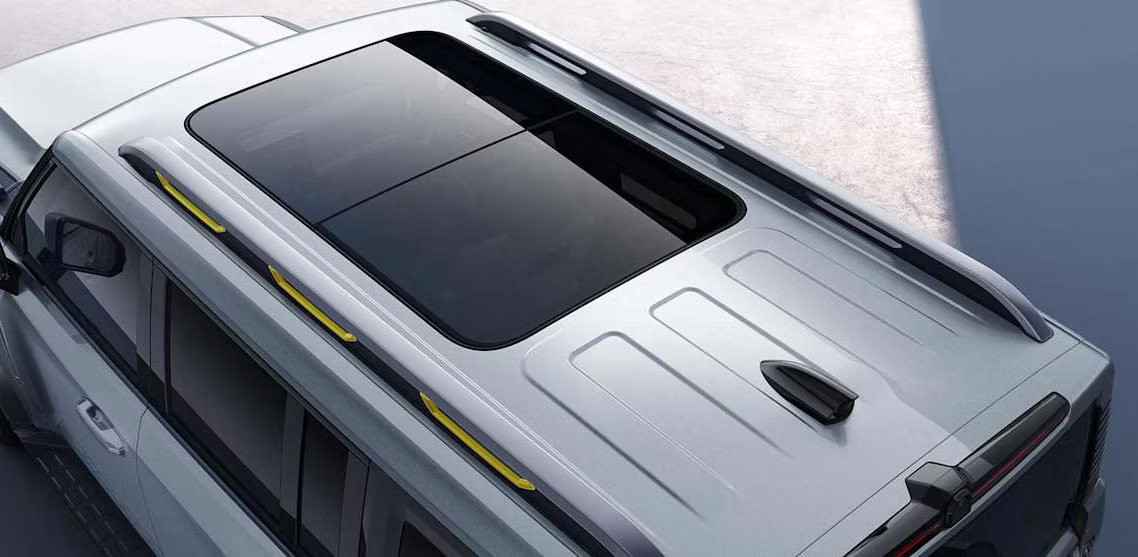
When Africarriers formally launched Jetour in Dar es Salaam in June, the Chinese SUV brand had already placed fifth in Focus2Move’s 2025 review of Tanzania’s light-vehicle market. Jetour climbed to third in the January to September 2026 ranking, behind Toyota and Isuzu. A month before the Jetour launch, Saturn Corporation had inaugurated an expansion of its Kigamboni assembly plant for pickups and light commercial vehicles. The plant was already assembling Sinotruk HOWO heavy trucks.
Dealerships have more brands competing for customers who can afford a factory-new vehicle. Truck operators have a growing choice of imported and locally assembled equipment. For Tanzania, the industrial opportunity is to secure enough repeat orders to keep assembly lines working and give local suppliers more of the work.
A sales surge from a small base
Focus2Move tracked 3,720 new light-vehicle sales from January to September 2026, up 33.1% from the same period in 2025. The nine-month figure exceeded the 3,590 vehicles it tracked in all of 2025. The increase began before this year’s wave of launches. The same series moved from 1,929 vehicles in 2023 to 2,802 in 2024, then climbed another 28.1% in 2025.
Ford and Nissan rounded out the top five, followed by JAC, Changan, Chery, BYD and Kia. Five Chinese marques in the top ten give buyers more alternatives, from urban SUVs to pickups. Companies still have to earn repeat purchases. A three-year-old vehicle’s resale price, the wait for a warranty repair and the parts a workshop can supply outside Dar es Salaam will tell buyers more about a brand’s staying power than its launch-year rank.
South Africa’s automotive industry association, Naamsa, gives Tanzania a 2025 vehicle-sales figure of 3,314, 276 lower than Focus2Move’s light-vehicle count. The published reports leaves the difference unexplained, and the International Organization of Motor Vehicle Manufacturers gives Tanzania no separate line in its public 2025 world total. On the Focus2Move base, an illustrative order of 100 vehicles is equivalent to about 2.8% of full-year volume. A few fleet orders can materially affect a brand’s annual position.
Japan and China lead different import markets
The Ministry of Industry and Trade reported 50,919 inspections of imported used vehicles by April 2026 in its review of FY2025/26. The count covers inspections and has a different reporting window and vehicle scope from the new light-vehicle series. Its scale helps explain why a new-car dealer competes for a buyer’s budget with independent importers, used-car yards and garages that already know how to maintain those vehicles. Dealers interviewed by The Citizen earlier this year reported stronger interest in smaller vehicles with lower fuel consumption.
Japan accounted for about 71% by value of Tanzania’s passenger-vehicle imports under HS 8703 in 2024, a category that includes new and used vehicles. In the same year, China accounted for about 72% by value under the truck-tractor heading for vehicles designed to pull semi-trailers. Those are shares of declared import value in two specific categories. Together, they explain why Japanese passenger vehicles can remain central to household purchases at the same time Chinese equipment has a deep presence in freight.
China supplied about US$990 million of Tanzania’s US$2.08 billion in Chapter 87 imports in 2025, or 47.5% of the value. Its share was about 44.9% in 2024. The chapter also covers motorcycles, trailers, parts and other road vehicles. The change shows more automotive-related spending going to Chinese supply chains. It leaves open how much of that spending went to new passenger cars, and how those vehicles ultimately reached Tanzanian customers.
The government also changed the relative cost of buying used. Since 1 July, age-based excise on vehicles covered by the amended provision is 18% from eight through ten years, 35% over ten through twenty years, and 40% over twenty years. Importers can respond by sourcing younger used units, and some households may consider a new vehicle when financing narrows the difference in upfront cost. The model-year mix of first registrations will show which response is stronger.
A wider group of buyers can consider new vehicles
The U.S. Commercial Service identifies a growing middle class as a source of consumer demand in Tanzania. Urban growth adds more households within reach of dealerships, lenders and authorised workshops. For buyers who can manage a deposit and a regular instalment, a warranty and a known maintenance schedule can make a factory-new vehicle worth considering. Parts that are already easy to find and the ability to resell a well-known used model still matter when households compare costs.
Another source of demand is emerging among owners of locally run businesses. The Mining Commission’s FY2024/25 report puts procurement from Tanzanian companies at about US$1.8 billion, roughly 88% of mining purchases covered by its figures. The commission also reported issuing 5,983 small-scale mining licences between July and December 2025 and agreed with CRDB Bank in February 2026 to support access to finance for small-scale gold miners. For a mine contractor or a supplier working across sites, a pickup can carry crews, spares and equipment and earn its place on the balance sheet through daily use.
The 2025 International Visitors’ Exit Survey put national tourism earnings at US$4.41 billion, up 13%, and international arrivals at about 2.29 million. Tour operators in the northern circuit, hospitality businesses and airport transfer operators buy vehicles to meet different demands. A safari operator needs clearance, parts and repairs on a tight itinerary. A hotel transfer fleet may place more weight on comfort, easy luggage loading and a predictable maintenance schedule. Sector receipts show why these customers warrant attention. Seasonal bookings and cash flow determine when an operator can place an order.
An employed household may value a repayment schedule timed to monthly income. A tourism business may earn most of its cash in a high season, and a mining contractor can have several months between incurring costs and collecting a large invoice. Dealer finance that fits those cash flows can turn enquiries into orders. A vehicle that spends a week awaiting parts can consume much of the margin a small operator expected from bringing it into service.
Dealers are competing on finance and time off the road
Exim Bank announced a financing partnership with Toyota Tanzania in April, then another with Africarriers in June that included vehicles from Jetour and JAC Motors. The agreements show why dealer-linked credit is becoming part of the sales offer for established brands and newer entrants. Buyers can compare the amount due at delivery, the full cost of repayments, and warranty and service terms. A lower deposit can free working capital even when it raises the eventual financing cost.
The Bank of Tanzania put the overall bank lending rate at 15.54% in September 2026, a benchmark across bank lending. The shilling averaged 2,654.91 to the US dollar that month, down 7.4% from a year earlier. Currency changes affect the cost of imported vehicles, kits and spares. The National Bureau of Statistics put annual transport inflation at 14.9% in October, within a broader consumer price index that rose 4.2%.
For a diesel pickup covering 60,000 kilometres a year, reducing fuel consumption by one litre per 100 kilometres saves about TZS 2.48 million per year at Dar es Salaam’s November diesel price cap of TZS 4,128 a litre. On those assumptions, it would take about four years of fuel savings alone to recover a TZS 10 million difference in purchase price. Financing costs, residual value, the cost of replacement vehicles during downtime and actual fuel consumption can all move that calculation.
This is one reason familiar pickups are hard to displace. Naamsa names the Toyota Hilux, Ford Ranger, Isuzu D-Max and Nissan Navara among the higher-volume light vehicles exported from South Africa to Tanzania during 2021–25. A new rival has to persuade operators that it can deliver the payload, maintain the vehicle near its route and return a credible resale value when the fleet is renewed. Testing those points on a customer’s own route gives a dealer a chance to earn a second order.
Buyers are getting to know brands before they visit a showroom
Chinese marques are entering through distributors with different strengths. Africarriers has introduced Jetour’s SUVs locally, Harmony ICAR opened BYD’s Dar es Salaam flagship in January, and CMC Group markets GWM alongside Ford. For a new brand, the local importer determines whether a buyer can book a test drive, get parts after purchase and obtain a firm answer on warranty coverage. Those responsibilities matter more once the first cars are out on the road.
Social media gives local influencers and motoring creators more ways to show buyers how vehicles fit their lives. Research by Baraza and Wowzi across Kenya, Uganda and Tanzania points to an appetite for short videos and creator content. A Kiswahili walkaround on TikTok or Instagram can show what fits in a family SUV. A test drive on a familiar road can make a pickup’s performance easier to judge. Longer YouTube reviews and owner reports can answer questions about fuel, servicing and parts.
Toyota Tanzania invites customers to message its sales team on WhatsApp as well as book test drives. Jetour launched an owners’ club in September with plans for road trips and convoy drives. Owners can see other vehicles in use and ask people who have driven them about their experience. The commercial value of that attention will show up in enquiries that proceed to test drives, financing applications and deliveries.
Freight gives local assembly a starting point
Dar es Salaam port handled about 33.6 million tonnes of cargo in FY2025/26, up 26.5% from the revised previous year, according to Bank of Tanzania figures sourced from the Tanzania Ports Authority. Industrial transport equipment imports, a broader category than road vehicles, reached about US$1.62 billion in the year to September 2026, up about 30%. Truck demand depends on how much cargo moves by road, how intensively fleets use their existing vehicles and how much work goes to vehicles registered abroad.
Truck and coach buyers have more suppliers to compare. CFAO Mobility distributes SHACMAN trucks, and Mobimotors sells and supports Foton commercial vehicles. Yutong estimated its own share of Tanzania’s intercity and long-distance coach segment at about 63% for 2025 and said it delivers roughly 500 vehicles annually. The same report put Yutong’s potential local assembly at the feasibility stage. Scania’s investment in workshops shows how service capacity remains part of the competition.
Tanzania’s strongest evidence of operating four-wheel assembly is in heavy commercial vehicles. GF Vehicle Assemblers in Kibaha, Pwani Region, has assembly, body and paint shops capable of handling complete and semi-knocked-down kits. Its work includes FAW trucks, SAIC Hongyan and XCMG products. The company quotes a design capacity of 2,500 vehicles a year. The published figures describe capacity. Production and domestic and export deliveries are the measures that will show how fully the plant is being used.
Saturn assembles HOWO trucks in Kigamboni, Dar es Salaam. It named the Sinotruk Bolden pickup in the May expansion and has outlined plans for CNG truck assembly. Hongwang’s October update puts a separate vehicle assembly project in the development stage at Bagamoyo, where plans include gas-powered heavy trucks. These moves could extend local capability to new products. The next evidence will come from vehicles delivered to customers and the work contracted to Tanzanian suppliers.
Regional orders could help support higher utilisation. On 19 November, Presidents Yoweri Museveni and Samia Suluhu Hassan commissioned Double Q’s Sinotruk plant at Mpigi in Uganda. Uganda’s Science, Technology and Innovation Secretariat says it has capacity for 4,000 trucks a year and that Double Q has assembled trucks in Uganda since 2020. Vehicle makers now have more assembly options within East Africa. Plants will have to win orders on the price and support they offer fleets and meet origin requirements where they seek preferential trade treatment.
The East African Community’s assembly and manufacturing regulations took effect on 1 July 2026. They set out different levels of assembly, including how major components can be imported and what must be done at the plant. Getting an assembly line running can create jobs in fitting, painting and quality control. A longer-term industrial gain comes when suppliers develop repeat orders for qualified locally made components and workshops can service the vehicles at scale. The evidence is in how much of each vehicle’s value is earned locally and in the volume that companies can sell outside Tanzania.
Gas and electric vehicles have different markets
The Bank of Tanzania reported 16,354 vehicles using compressed natural gas in FY2025/26, up from 7,000 a year earlier. Filling stations rose from nine to 19, with 16 in Dar es Salaam. Those are counts of vehicles using the fuel. They give distributors a reason to offer factory-built CNG trucks, such as the SHACMAN X3000 launched locally in September. For a fleet working from the same depot, the economics depend on refuelling reliability, time spent waiting, maintenance and payload. A route across several regions needs coverage along the way.
Electric and plug-in hybrid vehicles are also beginning to appear in the new-vehicle series. Focus2Move estimated their combined share at 3.8% through September within the vehicles it tracks. BYD opened its flagship with the Shark 6 plug-in hybrid pickup, and Jetour subsequently unveiled plug-in SUV and pickup models in Tanzania. The stronger early cases are likely to be customers with dependable charging and predictable mileage. A fleet that brings vehicles back to the same place overnight can plan charging and maintenance around a schedule it already controls.
Tanzania’s Finance Act created a VAT exemption for imports of qualifying charging stations by licensed charging service providers. An October EAC Gazette notice gave a targeted import-duty remission on specified lithium batteries for approved assembly or manufacturing in Tanzania through 30 June 2027. Operators still need to test the cost of charging equipment, local battery service and the resale price they can expect over a vehicle’s working life.
The numbers that would show lasting growth
Tanzania Revenue Authority and Zanzibar Revenue Authority administer vehicle registration in their respective jurisdictions. A comparable monthly release of first registrations by make, vehicle class, condition and powertrain would reveal which segments are gaining buyers and how the market responds to tax and financing changes. A field for locally assembled versus fully built imports, where recorded, would link the market to industrial policy. LATRA licensing, dealer deliveries and customs values each provide useful context for that release.
Assemblers can report vehicles completed, delivered domestically and exported, together with how much they buy from qualified local suppliers. That would give government and investors a way to judge whether stronger demand sustains production and supports new orders for Tanzanian businesses. It would also help distinguish a fleet tender delivered once from a market that can keep a plant or a workshop busy over several years.
The vehicles sold in 2026 will generate maintenance and resale records that lenders can use when financing the next round of purchases. Models that hold their value and spend more time in service have a better chance of winning replacement orders. With a steady flow of those orders, Tanzania’s assemblers can give local suppliers longer contracts and invest in doing more of the work at home.
 Uchumi360
Business Intelligence
Uchumi360 covers business, investment, and economic policy across East, Central, and Southern Africa.
For the serious reader
You read to the end. That places you in a small group.
Uchumi360 is built for readers who demand precision over speed, structure over sentiment, and analysis that holds uncomfortable conclusions rather than softening them. If this work sharpens how you think about Africa's economy, help us keep building the infrastructure behind it.
Institutional Partners
Commission intelligence. Shape the conversation.
Uchumi360 works with development finance institutions, investment firms, sovereign bodies, and strategic organisations across the coverage region. Institutional partnership unlocks:
- Commissioned sector and country intelligence reports
- Branded research series under your institution's authority
- Exclusive data briefings for internal strategy teams
- Speaking and editorial presence at Uchumi360 events
- Co-published investment outlooks for your markets
Support Our Work
Independent analysis has a cost. Help us bear it.
Uchumi360 does not carry advertising. It does not take editorial direction from sponsors. Every article is produced without commercial compromise. Your contribution funds the reporting, research, and editorial infrastructure that keeps this analysis free from influence.
Secure checkout: One-time and monthly support are processed securely. Add payment credentials to enable checkout here.
Stay Connected
Keep up with every new insight.
Follow our latest analysis, policy coverage, and market intelligence as soon as it is published. If you need something specific, reach out directly and we will point you to the right research.
