
Africa Wants Free Trade. Only 13% Know About AfCFTA.
Ready
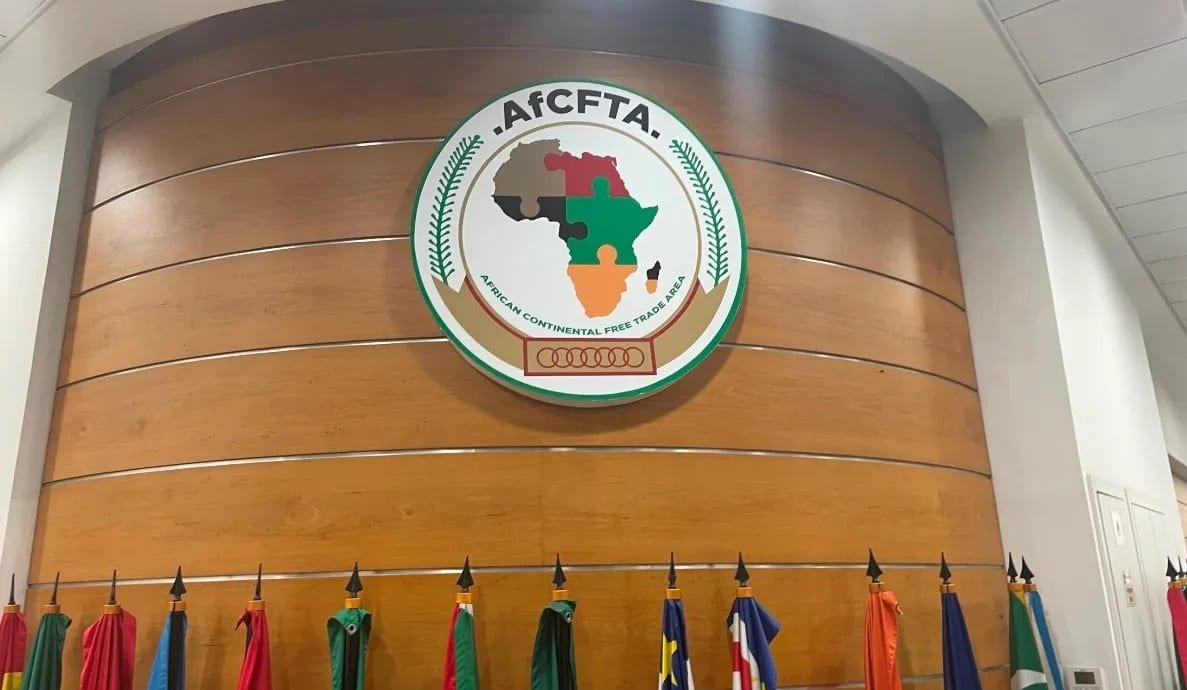
Afrobarometer's 2026 African Insights report finds that only 13% of citizens across 38 African countries have heard of the African Continental Free Trade Area, even as support for free trade has climbed from 51% in 2019/2021 to 62% today, now a majority position in 32 of 38 countries. Awareness tops out at 27% in any single country and falls as low as 4% in Mauritania; even Ghana, home to the AfCFTA Secretariat, registers only 17%. The gap isn't explained by economic pessimism, Afrobarometer finds the opposite pattern from most of the world: countries with worse living conditions show more openness to trade, not less. Awareness instead tracks education, news consumption, and access to information, meaning the deficit is structural and communications-based, not attitudinal.
Africa has a trade problem that has little to do with tariffs. Most Africans support trading more with other countries. Very few know about the continental agreement built specifically to make that trade easier.
Afrobarometer's 2026 African Insights report, drawn from surveys of 38 countries between 2024 and 2025, finds that just 13% of Africans have heard of the African Continental Free Trade Area, AfCFTA. Awareness peaks at 27% in Guinea-Bissau and falls to single digits in several countries, including 4% in Mauritania and 5% in Tunisia. Even Ghana, which hosts the AfCFTA Secretariat and was among the first countries to ratify the agreement, registers only 17% awareness among its own citizens.
The contradiction sharpens under the trade numbers
Set the awareness figure against what Africans actually believe about trade, and the gap becomes harder to explain away as indifference. 62% of Africans say their economy would be better off if government made it easier to trade with other countries. Just 34% favour protecting local producers through restriction. Free trade is now the majority position in 32 of the 38 surveyed countries, and in every subregion Afrobarometer measured.
That's a real shift, not a static preference. When Afrobarometer asked a similar question in Round 8 (2019/2021), only 51% supported greater openness, with 46% favouring protection. Support for trade has climbed 11 percentage points in roughly five years while the institution meant to deliver it has barely registered with the public asked to benefit from it.
Tanzania sits near the bottom of the awareness table
The East African numbers illustrate the pattern clearly. Kenya leads the region at 21% AfCFTA awareness. Uganda sits at 18%. Tanzania registers just 6%, among the lowest awareness figures recorded anywhere in the 38-country sample, and well below the already-thin East African average of 13%.
That's a meaningful gap for a country whose own Vision 2050 industrial strategy leans heavily on regional and continental trade integration as a growth mechanism. A government pursuing deeper participation in African value chains is doing so with a domestic public that, by this measure, largely doesn't know the underlying continental framework exists.
Why the usual explanation doesn't hold
The instinctive read on a finding like this is that economic hardship breeds skepticism of openness, people struggling personally tend to favour protection over exposure to competition. Afrobarometer tested that assumption directly and found the opposite holds in Africa. Countries where more citizens report poor personal living conditions actually show greater, not less, support for trade openness, a reversal of the pattern found in most other global regions.
The report's explanation is structural rather than psychological: citizens in poorer countries often depend directly on imports for basic necessities, food, clothing, medicine, and stand to lose immediately from protectionist price increases. Their economies also tend to be smaller, more trade-dependent, and less able to absorb costs through domestic substitution. Lesotho, deeply integrated with South Africa's economy, and Benin, with high poverty and high trade openness support alike, both illustrate the pattern: for many Africans, open trade reads as a practical necessity rather than a risk.
What actually predicts awareness, if not hardship
If poverty doesn't explain low AfCFTA awareness, something else does. Afrobarometer's data point to education, news consumption, and information access as the real drivers. Awareness among people with post-secondary education reaches 26%, more than double the 5-12% range among less-educated respondents. Newspaper readers show notably higher awareness (23%) than the general population, and higher economic status correlates modestly with awareness (17% among well-off respondents versus 11% among the poorest).
That pattern points toward a specific and fixable gap: AfCFTA's rollout has reached the audiences already consuming policy-adjacent media, national capitals, financial press, business associations, and largely stopped there. It hasn't reached the traders, farmers, and small manufacturers the agreement is ultimately meant to benefit.
The continent-versus-globe wrinkle
There's a second layer to this that complicates a simple "just explain AfCFTA better" fix. When Afrobarometer asked where governments should focus trade expansion efforts, two-thirds of Africans, 66%, said globally, not regionally or continentally. Only 20% prioritised trading within Africa and just 8% within their subregion, the exact geography AfCFTA is built around.
Afrobarometer is careful to note this isn't necessarily in tension with AfCFTA's goals; strengthening intra-African trade ties is explicitly meant to build the competitiveness that helps Africa trade globally, not to replace global trade with regional trade. But it does mean public communication has two jobs, not one: explaining what AfCFTA is, and explaining why deepening trade within Africa first is the path toward the global trade relationships citizens already say they want.
Why the stakes are real, not just rhetorical
AfCFTA isn't a symbolic gesture. It's the world's largest free trade area by member states, geography, and population, more than 1.5 billion people, and its first implementation phase is actively working to cut tariff and non-tariff barriers and build a pan-African payment mechanism. Early results are measurable if modest: formal intra-African trade rose from 13.6% of total trade in 2022 to 14.9% in 2023, and 48 members had submitted AfCFTA-compliant tariff concession offers as of May 2025.
None of that materializes automatically just because leaders signed a treaty. Businesses need to understand the rules to use preferential tariff access. Consumers need to understand what regional integration actually changes for prices and availability. Young people need to know where the new cross-border job and market opportunities are likely to emerge. A trade agreement that stays legible only to ministries, diplomats, consultants, and business associations captures a fraction of the economic activity it was designed to unlock.
The Uchumi360 insight
Africa isn't suffering from public resistance to trade. If anything, resistance is falling and doing so fastest in exactly the countries analysts would expect to resist it most. What Africa is suffering from is a public information deficit about the trade architecture being built in its name, one that tracks cleanly with education and media access rather than economic sentiment. The continent has negotiated the market. It hasn't yet explained the market to the people meant to use it, and that's a solvable problem in a way that public skepticism toward trade itself would not have been.
FAQ
What percentage of Africans have heard of AfCFTA? 13%, across 38 countries surveyed in Afrobarometer's Round 10 (2024/2025), ranging from a high of 27% in Guinea-Bissau to as low as 4% in Mauritania.
Do Africans actually support free trade? Yes, strongly and increasingly. 62% say easier trade with other countries would benefit their economy, up from 51% five years ago, a majority position in 32 of 38 countries surveyed.
Why doesn't economic hardship reduce support for free trade in Africa, unlike elsewhere? Because many citizens in poorer countries depend directly on imports for basic necessities and live in trade-dependent economies, making openness feel necessary rather than threatening.
What drives AfCFTA awareness if not economic status? Education and news consumption. Awareness among people with post-secondary education (26%) is roughly double that of less-educated respondents, and regular newspaper readers show notably higher awareness than the general population.
How aware are Tanzanians of AfCFTA specifically? Just 6%, among the lowest figures recorded in the 38-country survey, and below the East African regional average of 13%.
 Uchumi360
Business Intelligence
Uchumi360
Business Intelligence
- Afrobarometer, African Insights 2026: Beyond Borders — Citizen Perspectives on a Shifting Global Order, Round 10 surveys (2024/2025), 38 countries
Uchumi360 covers business, investment, and economic policy across East, Central, and Southern Africa.
For the serious reader
You read to the end. That places you in a small group.
Uchumi360 is built for readers who demand precision over speed, structure over sentiment, and analysis that holds uncomfortable conclusions rather than softening them. If this work sharpens how you think about Africa's economy, help us keep building the infrastructure behind it.
Institutional Partners
Commission intelligence. Shape the conversation.
Uchumi360 works with development finance institutions, investment firms, sovereign bodies, and strategic organisations across the coverage region. Institutional partnership unlocks:
- Commissioned sector and country intelligence reports
- Branded research series under your institution's authority
- Exclusive data briefings for internal strategy teams
- Speaking and editorial presence at Uchumi360 events
- Co-published investment outlooks for your markets
Support Our Work
Independent analysis has a cost. Help us bear it.
Uchumi360 does not carry advertising. It does not take editorial direction from sponsors. Every article is produced without commercial compromise. Your contribution funds the reporting, research, and editorial infrastructure that keeps this analysis free from influence.
Secure checkout: One-time and monthly support are processed securely. Add payment credentials to enable checkout here.
Stay Connected
Keep up with every new insight.
Follow our latest analysis, policy coverage, and market intelligence as soon as it is published. If you need something specific, reach out directly and we will point you to the right research.
