
A Pew Survey of 36 Countries Found That China Is Now Viewed More Favourably Than the United States in Most of the World. For East Africa, the Finding Confirms What the Investment Data Has Been Saying for Years.
Ready
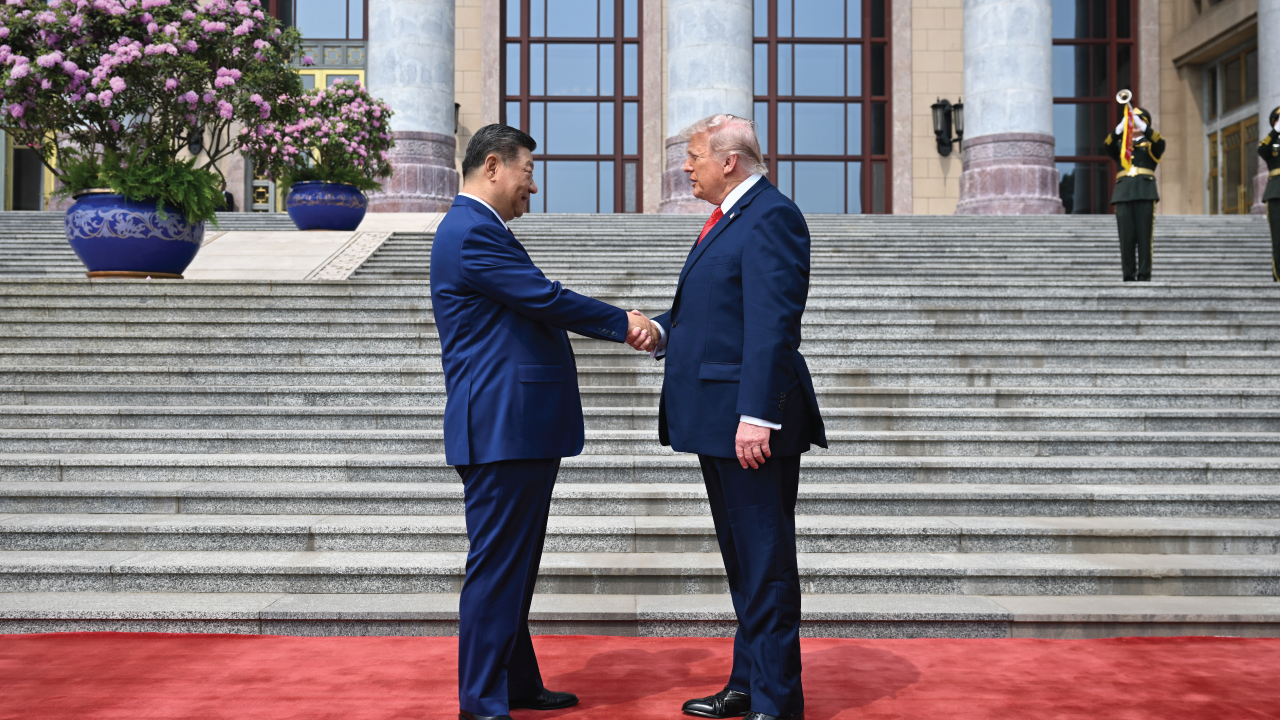
Pew Research Center surveyed 42,151 people across 36 countries between February and May 2026 and found that China is now viewed more positively than the US in most countries surveyed, a reversal from 2024 when the US held a favourability advantage in most nations. Confidence in Xi Jinping now exceeds confidence in Trump across most surveyed countries, though both are generally low. The US retains a lead over China on one dimension: more people say the US government respects its citizens' personal freedoms, but that gap is shrinking sharply, driven by steep declines in the share saying the US respects personal freedoms in nearly every country surveyed. Sweden dropped from 61 percent to 27 percent on that measure since 2021. Among 17 middle-income countries, 75 percent say the US interferes in others' affairs against 45 percent for China, and China is seen as a more reliable partner than the US in most of those nations. South Africa leads the African data points: 72 percent call China a reliable partner versus 46 percent for the US, and 64 percent say China contributes to peace and stability, up from 47 percent in 2023.
NAIROBI / DAR ES SALAAM — China is now viewed more positively than the United States in most of the world, according to a Pew Research Center survey of 42,151 adults across 36 countries published on July 15, 2026. The finding represents a significant shift from 2024, when the US still held a favourability advantage across most nations surveyed.
The survey, conducted between February 8 and May 13, 2026, covered 36 countries spanning Europe, Asia, Latin America, and sub-Saharan Africa, including Kenya, South Africa, Ghana, and Nigeria. It is one of the most comprehensive global snapshots of comparative soft power available and its findings land at a moment when China's commercial and diplomatic footprint in East Africa is more extensive than at any previous point.
The favourability reversal
Views of China have improved in recent years while opinions of the US have worsened, to the point where China is now seen more positively than the US in most of 36 countries surveyed.
The shift is not driven by a single dramatic event. It reflects the compounding effect of two simultaneous trends: global perceptions of China improving gradually while perceptions of the US have deteriorated, particularly since the beginning of Donald Trump's second term. The Canada data point illustrates the pace of the reversal most starkly. A majority of Canadians, 57 percent, had a positive view of the US in 2023, while 14 percent viewed China positively. In 2025, Canadians were equally favourable toward the US and China. Now, more Canadians have a favourable view of China at 44 percent than the US at 33 percent.
The US retains a favourability lead over China in only six of the 36 surveyed countries: India, Japan, the Philippines, South Korea, Israel, and one other. The common thread among the six is geographic proximity to China and specific security concerns that shape perceptions regardless of broader diplomatic sentiment.
Xi versus Trump
Confidence in both Trump and Xi is generally low. But people in many of the 36 countries surveyed view Xi more favourably. In European countries, neither leader receives majority positive ratings, but Xi leads Trump by double digits in Germany, Greece, Italy, the Netherlands, Spain, Sweden, and the United Kingdom, though his highest favourability rating in Europe is just 37 percent from the UK.
The personal freedoms dimension remains the US's most durable advantage. More say the US government respects the personal freedoms of its people than say the same of the Chinese government. But even that advantage is eroding. People in nearly every country surveyed have become less likely to say the US government respects its people's personal freedoms since we last asked this question in 2021. Sweden's drop was from 61 percent to 27 percent. Canada, France, Germany, Italy, the Netherlands, South Korea, and Spain all saw declines of 25 percentage points or more on the same measure.
What the middle-income country data shows
The section of the survey most directly relevant to East Africa covers 17 middle-income countries across Latin America, sub-Saharan Africa, the Middle East, and the Asia-Pacific. The data here is the most consequential for regional policymakers and investors.
A median of 75 percent say that the US interferes in the affairs of other countries a great deal or a fair amount, while 45 percent say the same of China. In nearly every country surveyed, more people see the US as an interferer than China.
On partnership, people in many of these middle-income countries see China as a more reliable partner than the US and are more likely to say China contributes to peace and stability around the world.
South Africa provides the clearest African data point. 72 percent say China is a reliable partner to their country, while 46 percent say the same of the US. And South Africans are much more likely to say China, at 64 percent, accounts for the interests of countries like their own in making international policy decisions than they are to say the same of the US, at 42 percent. Meanwhile, the share of South Africans saying China contributes to peace and stability around the world has increased from 47 percent in 2023 to 64 percent in 2026.
What the survey means for East Africa
The Pew findings confirm at the perception level what East Africa's investment and infrastructure data has been demonstrating at the commercial level for years. China has financed Tanzania's Standard Gauge Railway, Julius Nyerere Hydropower Project, and port infrastructure. Chinese contractors have built roads and bridges across Uganda, Kenya, and Rwanda. Chinese trade financing through the Renminbi Clearing Bank of Africa now covers Tanzania, Kenya, and Uganda directly. Chinese manufacturing investment is the single largest source of TISEZA approvals in Tanzania's industrial park programme.
The survey's finding that middle-income countries see China as less interventionist than the US reflects a perception shaped by exactly this pattern of engagement: infrastructure financing, commercial investment, and commodity trade structured as commercial arrangements rather than conditionality-laden partnerships. Whether that perception accurately captures the terms and consequences of Chinese engagement, which Uchumi360 has examined in the context of debt sustainability and capital flight, is a separate and important analytical question. What the Pew data documents is that the perception itself is now the dominant one across most of the developing world.
The US still holds the advantage on the dimension that matters most to democratic governance: more people believe the US respects personal freedoms. But that advantage is shrinking in absolute terms and is outweighed, in the middle-income country data, by the perception that the US is more likely to interfere in other countries' affairs. For East African governments navigating relationships with both superpowers, the survey documents the soft power environment in which those relationships are being managed. China's commercial architecture in the region is now accompanied by a perception architecture that works in its favour. The US's democratic credibility advantage is real but diminishing.
The survey was conducted across 36 countries by Jonathan Schulman, Laura Silver, Laura Clancy, and William Miner at Pew Research Center. The full report, topline data, and methodology are available at pewresearch.org.
FAQ
Which African countries were included in the Pew survey? South Africa, Ghana, Kenya, and Nigeria were among the 36 countries surveyed. The survey covered 42,151 adults across countries in Europe, Asia, Latin America, the Middle East, and sub-Saharan Africa, conducted between February and May 2026.
What do people in middle-income countries think about US versus Chinese foreign policy? Among 17 middle-income countries surveyed, a median of 75 percent say the US interferes in other countries' affairs a great deal or a fair amount, against 45 percent who say the same of China. Most middle-income countries also see China as a more reliable partner than the US and are more likely to say China contributes to global peace and stability.
Has China always been viewed more favourably than the US globally? No. In 2024, the US still held a favourability advantage in most countries surveyed. The reversal occurred between 2024 and 2026, driven by simultaneously improving views of China and worsening views of the US, particularly since the beginning of Donald Trump's second term.
Where does the US still lead China in global perception? On personal freedoms: more people globally say the US government respects its citizens' personal freedoms than say the same of the Chinese government. The US also leads China in favourability in India, Japan, the Philippines, South Korea, and Israel. However, even the personal freedoms advantage is shrinking, with sharp declines recorded in nearly every country since 2021.
What does this mean for East Africa's diplomatic positioning? For East African governments managing relationships with both superpowers, the Pew data documents a soft power environment that increasingly favours China at the perception level. China's infrastructure financing, manufacturing investment, and commodity trade partnerships in the region are now reinforced by a dominant regional perception that China is a less interventionist and more reliable partner than the US. Whether that perception accurately reflects the terms of Chinese engagement is a separate question from the perception itself, which the survey documents clearly.
 Uchumi360
Business Intelligence
Uchumi360
Business Intelligence
- - Pew Research Center, "People in Many Countries Now View China More Positively Than the U.S.," July 15, 2026
- Survey of 42,151 adults across 36 countries, February 8 to May 13, 2026
- Authors: Jonathan Schulman, Laura Silver, Laura Clancy, William Miner
- Available at pewresearch.org
- - Pew Research Center, "Views of China and Xi Are Improving Globally," July 15, 2026
- Available at pewresearch.org
- Pew Research Center, "Trump Gets Negative Reviews Internationally as Fewer Say U.S
- Is a Reliable Partner," June 23, 2026
- Available at pewresearch.org
- - Uchumi360, "China Has Quietly Built a New Financial Corridor Across 19 African Countries," July 2026
- RMB Clearing Bank of Africa
- Available at uchumi360.com
- - Uchumi360, "Africa Loses More to Capital Flight Each Year Than It Receives in Aid," July 2026
- Available at uchumi360.com
- Uchumi360, "Every East African Government Doubled Its Debt in a Decade," July 2026
- Available at uchumi360.com
Uchumi360 covers business, investment, and economic policy across East, Central, and Southern Africa.
For the serious reader
You read to the end. That places you in a small group.
Uchumi360 is built for readers who demand precision over speed, structure over sentiment, and analysis that holds uncomfortable conclusions rather than softening them. If this work sharpens how you think about Africa's economy, help us keep building the infrastructure behind it.
Institutional Partners
Commission intelligence. Shape the conversation.
Uchumi360 works with development finance institutions, investment firms, sovereign bodies, and strategic organisations across the coverage region. Institutional partnership unlocks:
- Commissioned sector and country intelligence reports
- Branded research series under your institution's authority
- Exclusive data briefings for internal strategy teams
- Speaking and editorial presence at Uchumi360 events
- Co-published investment outlooks for your markets
Support Our Work
Independent analysis has a cost. Help us bear it.
Uchumi360 does not carry advertising. It does not take editorial direction from sponsors. Every article is produced without commercial compromise. Your contribution funds the reporting, research, and editorial infrastructure that keeps this analysis free from influence.
Secure checkout: One-time and monthly support are processed securely. Add payment credentials to enable checkout here.
Stay Connected
Keep up with every new insight.
Follow our latest analysis, policy coverage, and market intelligence as soon as it is published. If you need something specific, reach out directly and we will point you to the right research.
