
Tanzania's Investment Authority Director General Says the Country Had One New Factory Every Day in 2024. He Wants You to Come and See It for Yourself.
Ready
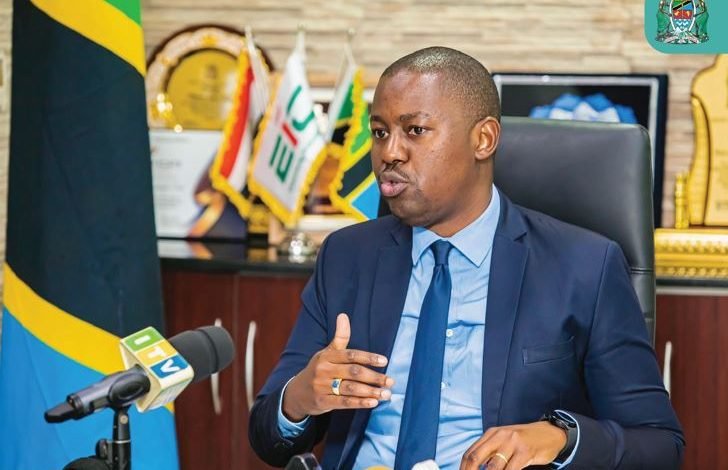
Gilead Teri, Director General of TISEZA, confirmed in a published Global Indian Network podcast interview that Tanzania's investment approval record rose from 252 projects in 2021 to over 900 in 2025 at a combined value approaching USD 11 billion, driven by President Samia's three-phase reform sequence covering the investment code, PPP Act, and institutional merger. Over 400 of 2024's 927 approved projects were manufacturing units worth over USD 1 million each, equating to one new factory per day. Tanzania's SEZs offer land within 24 hours, permits within 48 hours, 2,000 MW of gas-powered electricity, DP World and Adani Ports logistics connectivity, and manufacturing capability within 90 days. A 1,500-metre solar panel factory relocating from Asia will export USD 300 million to North America annually. Teri confirmed that manufacturing investment demand is now so fast that Tanzania anticipates requiring an additional 2,000 MW within four years on top of the Julius Nyerere Hydropower Project's 2,115 MW. He addressed post-election investor concerns, describing the events as an anomaly in 64 years of social cohesion whose resolution through the Commission of Enquiry has restored investor confidence, and described Tanzania's reform trajectory as structurally irreversible across six administrations since 1986. India, China, and the UAE are confirmed as Tanzania's three largest and fastest-growing investor origins, with President Samia scheduled to attend the India-Africa Investment Forum. This article reports Teri's confirmed statements as the official position of Tanzania's investment authority, situates them within Uchumi360's independent coverage of Tanzania's infrastructure and industrial trajectory, and identifies the industrial momentum whose convergence makes the DG's claim of a once-in-a-generation positioning window commercially credible.Gilead Teri is not presenting projections. He is reporting what his institution approved, what is being built, and what the infrastructure can now deliver. One factory every day is what the investment authority's records show happened in 2024. The question the numbers raise is not whether the factories are being approved. It is whether the conversion systems are being built at the same pace.
DAR ES SALAAM — Gilead Teri, Director General of Tanzania Investment and Special Economic Zones Authority, confirmed in a published interview on the Global Indian Network podcast that Tanzania approved over 900 investment projects in 2025 with a combined value approaching USD 11 billion, part of an investment trajectory that has seen project approvals rise from 252 in 2021 to their current level under a reform programme initiated by President Samia Suluhu Hassan from the first year of her administration.
The manufacturing figure within that approval record is the most operationally significant claim Teri made. Of the 927 projects approved in 2024, over 400 were manufacturing units worth over USD 1 million each. "That means we had, for the whole of last year, at least one new factory every day for the whole year, 365 days," he confirmed. The pace has created a demand pressure whose consequence Teri described with equal directness: "In four years' time, we'll need another 2,000 megawatts. That's the reality."
The reform architecture that produced the trajectory
Teri described a sequenced three-phase reform programme whose legislative architecture President Samia constructed from 2021 onward and whose cumulative effect on the investment environment is visible in the approval numbers his institution is recording.
The first reform in 2021 modernised Tanzania's investment code, which had not been substantively updated since 1996. "The first round of reforms that we did in 2021 was change an investment code that was old really. The last time it was tweaked was around 1996. So 25 years later, this is when she started with that." The second reform introduced the Public Private Partnership Act in 2023 to 2024, creating the formal legal structure for public and private sector collaboration whose absence had constrained the investment models that infrastructure-scale projects require. The third reform in 2025 merged the government institutions responsible for private sector support into a single TISEZA authority. "When investors come to Tanzania, they get to have a very good experience and seamless process of setting up and doing business."
Teri's own appointment reflects the philosophy behind the institutional architecture. An economist with experience spanning investment promotion, private sector development, and institutional engagements with the World Bank, IFC, and the European Union, he described his role as representing a structural shift in how Tanzania's government engages the private sector. "There's no way my story would have been possible if it wasn't for this administration, someone with a private sector background to actually head a government institution in a country that used to believe in bureaucracy and now actually believes in business."
Tanzania's economic fundamentals and why they matter now
Teri confirmed the specific macroeconomic fundamentals that he identified as Tanzania's competitive positioning basis at the moment global supply chains are restructuring toward geographic diversification. Government debt is running below 35% of GDP against a self-imposed exposure limit of approximately 50%. The 2022 census confirmed a population of 61 million people across a land area close to one million square kilometres. Tanzania shares borders with eight countries that depend on it for logistics, creating the transit trade corridor whose commercial scale DP World and Adani Ports have entered to modernise.
Tanzania's economic breadth is the specific resilience characteristic Teri cited as the country's most distinctive competitive advantage among East African peers. "Our economy is quite broad. The Tanzanian economy is 20 to 25% agriculture, and we produce everything from cashew to coffee to pyrethrum and tobacco to avocados, which is one of our fastest-growing niches at the moment. 10% of our economy is the largest producer of gold in Africa, and 12% of our GDP" is tourism. "We're a country that has Zanzibar, the Serengeti, Mount Kilimanjaro, and the Ngorongoro Crater."
The breadth produced the pandemic resilience that Teri confirmed as the most direct evidence of its commercial value. "We are the only country out of eight East African countries that did not have the recession during the pandemic. If tourism is not doing well, mining does well. If mining is not doing well, then logistics does well. It's the most resilient economy, I would say, in the eastern and central Africa."
What the Special Economic Zones are delivering
Teri confirmed the specific operational proposition that Tanzania's Special Economic Zones are offering to manufacturers seeking to relocate or establish production outside established Asian manufacturing geographies. Industrial platforms located adjacent to port infrastructure can deliver land within 24 hours, building permits within 48 hours, connectivity to DP World and Adani Ports logistics systems, and 2,000 megawatts of gas-powered electricity. "Pretty much within 90 days, you could be manufacturing your products and supplying it all over the world," he confirmed.
The most specific manufacturing investment Teri cited is a solar panel production facility relocating from Vietnam and China to Tanzania's Special Economic Zone for export to the North American market. "We have a new project and they're moving their operations from Vietnam, from China to develop a solar manufacturing unit, directed to the North American market. So this is a purely export processing zone. And this one enterprise will be exporting USD 300 million worth of solar panels a year. This just doubles Tanzanian trade with the US in just one factory. The size of the factory is a kilometre and a half long, 1,500 metres."
The relocation logic Teri described is consistent with the supply chain restructuring that US-China trade friction has accelerated among manufacturers whose North American market access depends on production outside China. Tanzania's SEZ fiscal incentives, competitive production costs, and export logistics through global port operators provide the alternative production geography whose viability the solar facility's construction confirms at commercial scale.
Teri confirmed that 2024 was Tanzania's best investment year since 2013, and that 2025 beat 2024's record. "It's practically the only African country that had growth in investment in the year of election, and it was quite unique."
The SGR's industrial geography transformation
The Standard Gauge Railway's impact on Tanzania's industrial geography is something Teri described through a specific mechanism whose operational implication for manufacturing investment location decisions extends the SGR's significance beyond its direct logistics cost reduction effect. "Infrastructure annihilates space through time," he said. "A place like Mwanza, which used to be 1,200 kilometres away, is suddenly three hours away by high-speed rail. And all of a sudden, you can actually put up a factory in Mwanza and you don't have to put it close to Dar es Salaam anymore, where cost is cheaper, land is cheaper, raw materials are also in cost, and power is also much more affordable and stable."
The first 200 kilometres of the SGR have already produced a visible industrial geography effect, opening peripheral areas outside Dar es Salaam to new industrial zones whose connectivity to the port through rail freight is attracting the manufacturing investment whose logistics requirements the road transport alternative served less efficiently. Teri confirmed a truck traffic statistic whose scale he described as striking: Tanzania handles 15,000 trucks annually, the second highest in Africa after South Africa. Three new tractor head assembly plants are being commissioned in 2026, two diesel-powered and one LNG-powered.
The regional connectivity dimension of the SGR whose development Uchumi360 documented from Standard Chartered's April 2026 financing announcement is the dimension Teri emphasised most directly for investors evaluating Tanzania against alternatives. "Now you're not talking about only the Tanzanian market of 60 million people. You're talking about the DRC market with around 90 million people, and just shrink that whole space into one solid infrastructure." Tanzania is also developing the port of Bagamoyo, 40 kilometres north of Dar es Salaam, to supplement the current port's capacity as the investment and manufacturing expansion creates logistics demand whose volume exceeds the existing infrastructure's practical throughput.
Power supply keeping pace with manufacturing demand
The Julius Nyerere Hydropower Project's 2,115 megawatts of generation capacity, which Tanzania Electric Supply Company confirmed is operational, is the energy infrastructure whose commissioning made the SEZ's 2,000 MW availability claim commercially credible. But Teri confirmed that the pace of manufacturing investment is creating demand whose growth is outpacing even the JNHPP's contribution. "Last year alone, out of the 927 projects, over 400 projects are manufacturing units. And these are manufacturing units of over a million dollars. What we actually anticipate, we might not have enough power. So with 400, that means we had for the whole of last year, at least one new factory every day for the whole year, 365 days. In four years' time, we'll need another 2,000 megawatts."
Tanzania is testing its first PPP in electricity transmission, building on the PPP framework whose strength in generation the reform programme has established. "The indicative prices are enshrined in the law. If you can come in our economy and produce electricity, this is the price that we'll offtake it. And we'll give you that MOU within a week. Come do your numbers and get your project up and running."
On post-election investor confidence
Teri addressed Tanzania's post-election period with the directness whose absence from official communications in the months following the events created the investor uncertainty that he confirmed produced cancellations, particularly in tourism, between October and December 2025. "Definitely one of the things that we noted between say October to December was a lot of cancellations. If you talk to hotel owners, international brands, there was that nervousness."
He confirmed that December 9th, Tanzania's Independence Day, was the turning point whose significance he described as clarifying for investors who had been monitoring the situation. "There was again an expectation that socially there would be another round of violence. And when that did not happen, a lot of people realised, oh, so this was an anomaly within the Tanzanian society, which has been pretty much forever peaceful really since independence in 1961 and since the union with Zanzibar in 1964."
The Commission of Enquiry report has been released, confirming the social and political causes of the events, with a Legal Commission of Enquiry in place to address specific individual actions that exceeded legal boundaries. "Tanzania being a country that respects the rule of law" was Teri's framing of the institutional response whose credibility he tied to the investor protection provisions embedded in both Tanzania's constitution and investment law. "Nobody's property can be confiscated by government. Nobody should be intimidated when they're doing their economic activities." He confirmed that investors who had disputes with previous administrations have won court cases and received compensation, establishing the track record whose operational reality the legal provisions describe.
Teri placed the events within a comparative framework of reform-period disruptions in other rapidly developing economies. "When you go through a certain kind of reforms in a country, especially the neoliberal reforms, they usually bring a certain point of pain. And sometimes that pain could be social, it could be economic, but we know that once that phase of reform is completed, the benefits are usually much higher." He cited China's Tiananmen Square in 1989, Turkey, Bangladesh, and Kenya as comparable historical episodes whose post-disruption trajectories demonstrate the pattern he described.
On reform irreversibility across administrations
Teri's confirmation that Tanzania's reform trajectory is structurally irreversible across administrations rests on a specific historical account of six successive governments each advancing rather than reversing the preceding phase's achievements since 1986. "Five presidents have actually proceeded through the reform agenda at different pace, at different focuses, in different areas."
He traced the sequence from 1986's market opening under the second administration, through the third administration's commodity market development, the fourth's privatisation programme, the fifth's infrastructure development phase in which the SGR and port modernisation projects were initiated, to President Samia's current phase of legal framework reinforcement, investor protection deepening, and private sector participation in infrastructure. "It is really hard to tell a country of 70 million people that we don't need private sector. I'm not sure what kind of electoral process that politician will be standing on, really. It's pretty much hard to go back now."
India, China, and UAE as priority investor origins
Teri confirmed that India, China, and the UAE are Tanzania's three largest and fastest-growing investor origins and described the deliberate three-year focus on these markets as the strategic decision whose execution produced the investment trajectory his institution is recording. "We focused on Middle East, Near East, and Far East. And our three main focus countries was UAE, India, and China. We were quite deliberate."
His first international engagement as DG was a 21-day, nine-city India mission. "One of the things that I could feel when I travelled through India, whether it's in Gujarat, or in Rajasthan, Surat, and many other places, is the vibrancy and the vibe that is there, that this is a country on the move."
Tanzania's Indian-descent community of approximately 50,000 to 60,000 people, the majority of them Tanzanian citizens, is a commercial network whose entrepreneurial contribution and diaspora connectivity Teri described as structurally important to the bilateral investment relationship beyond the headline FDI figures. "The sons of that land have done wonders for our country," he said.
President Samia is confirmed to be attending the India-Africa Investment Forum in India at the end of May 2026 as part of the diplomatic engagement whose pace Teri described as intensive across multiple markets simultaneously.
What the convergence means
Teri's summary of Tanzania's current positioning is the clearest official statement Uchumi360 has recorded from a senior Tanzanian government official about what the infrastructure decade's specific operational reality means for investors making location decisions now. "We have industrial platforms all across the country, most of them next to the port, where you can pretty much shift your factory or your production zone into a Tanzanian Special Economic Zone, get land within 24 hours, get a building permit within 48 hours, plug into a world-class port infrastructure, new railway infrastructure, 2,000 megawatts of power now readily available on natural gas. And pretty much within 90 days, you could be manufacturing your products and supplying them all over the world."
"It's a once-in-a-lifetime opportunity, and we are really, really working day and night to make it possible.", Teri said.
The convergence of legislative reform, infrastructure investment, SEZ operational capability, logistics partnerships, and energy availability, whose simultaneous presence Teri confirmed is consistent with Uchumi360's independent analysis of Tanzania's infrastructure trajectory across its 2026 coverage. One new factory every day is what the official record shows happened in 2024. The industrial conversion question, whose answer will determine whether Tanzania's infrastructure decade produces the household prosperity transformation that Vision 2050 requires, rather than a much larger economy without proportionally broader prosperity, is the analytical frame within which the DG's remarkable approval figures must ultimately be assessed.
FAQ
What did TISEZA's Director General confirm about Tanzania's 2024 investment record? Gilead Teri confirmed that TISEZA approved 927 investment projects in 2024, of which over 400 were manufacturing units worth over USD 1 million each, equating to at least one new factory every day for the full year. The combined value of projects approved between 2021 and 2025 approaches USD 11 billion. Teri confirmed 2024 was Tanzania's best investment year since 2013 and that 2025 beat 2024's record.
What does Tanzania's Special Economic Zone operationally offer? According to Teri, Tanzania's SEZs deliver land within 24 hours, building permits within 48 hours, 2,000 MW of hydro-powered electricity, DP World and Adani Ports logistics connectivity, SGR rail access, and manufacturing capability within 90 days. A 1,500-metre solar panel factory relocating from Vietnam and China will export USD 300 million worth of panels annually to North America, doubling Tanzania's trade with the United States from a single facility.
How did Teri describe the post-election investor confidence situation? He confirmed a period of tourism cancellations between October and December 2025, followed by a restoration of investor confidence after December 9th, when anticipated further violence did not occur. The Commission of Enquiry report has been released. Investor protection is embedded in both Tanzania's constitution and investment law, with compensation for investors who had disputes with previous administrations establishing the operational track record whose credibility goes beyond the legal provision itself.
Why does Teri describe Tanzania's reform as irreversible? Because five successive administrations since 1986 have each advanced the reform agenda rather than reversing the preceding phase, creating a reform continuity across governments whose logic is reinforced by the structural impossibility of telling a 70 million-person economy that the private sector is not needed. He described the reform trajectory as moving from market opening through privatisation, regulatory strengthening, infrastructure development, and President Samia's legal framework and investor protection deepening as a sequential institutional progression rather than a policy preference.
Why are India, China, and the UAE Tanzania's priority investor origins? Teri confirmed these as Tanzania's three largest and fastest-growing investor origins and the deliberate focus of TISEZA's international engagement strategy from his first year as DG. His 21-day nine-city India mission was his first international engagement. The commonality he identified across all three is developmental-stage relatability and investor patience that make long-horizon Tanzania investments commercially compatible with their investment mandates, alongside the specific diaspora network whose commercial contribution the Indian-descent Tanzanian community of 50,000 to 60,000 people provides.
 Uchumi360
Business Intelligence
Uchumi360
Business Intelligence
- Gilead Teri, Director General, Tanzania Investment and Special Economic Zones Authority, interview on Global Indian Network podcast, May 2026
- Tanzania Investment and Special Economic Zones Authority, official investment approval data
- Available at tiseza.go.tz
- Standard Chartered Bank, SGR financing announcement, 28 April 2026
- Available at sc.com
- Tanzania Electric Supply Company, Julius Nyerere Hydropower Project 2,115 MW capacity data
- Available at tanesco.co.tz
- Tanzania Ports Authority, Dar es Salaam and Bagamoyo port development data
- Available at tanzaniaports.go.tz
- DP World Tanzania, logistics operations documentation
- Available at dpworld.com
- Adani Ports Tanzania, logistics operations documentation
- Available at adaniports.com
- National Bureau of Statistics Tanzania, census data
- 61 million population 2022 census
- Available at nbs.go.tz
- Tanzania Investment Act 2022, investor protection provisions
- Available at parliament.go.tz
- Tanzania PPP Act 2023-2024, public-private partnership framework
- Available at parliament.go.tz
- World Bank, Tanzania investment environment documentation
- Available at worldbank.org
- India-Africa Investment Forum, event documentation
- Commission of Enquiry Tanzania, post-election events report, 2026
- Available through official government channels
- OECD, East Africa infrastructure investment requirement
- USD 42 billion annually through 2040 figure cited in interview
- Available at oecd.org
Uchumi360 covers business, investment, and economic policy across East, Central, and Southern Africa.
For the serious reader
You read to the end. That places you in a small group.
Uchumi360 is built for readers who demand precision over speed, structure over sentiment, and analysis that holds uncomfortable conclusions rather than softening them. If this work sharpens how you think about Africa's economy, help us keep building the infrastructure behind it.
Institutional Partners
Commission intelligence. Shape the conversation.
Uchumi360 works with development finance institutions, investment firms, sovereign bodies, and strategic organisations across the coverage region. Institutional partnership unlocks:
- Commissioned sector and country intelligence reports
- Branded research series under your institution's authority
- Exclusive data briefings for internal strategy teams
- Speaking and editorial presence at Uchumi360 events
- Co-published investment outlooks for your markets
Support Our Work
Independent analysis has a cost. Help us bear it.
Uchumi360 does not carry advertising. It does not take editorial direction from sponsors. Every article is produced without commercial compromise. Your contribution funds the reporting, research, and editorial infrastructure that keeps this analysis free from influence.
Secure checkout: One-time and monthly support are processed securely. Add payment credentials to enable checkout here.
Stay Connected
Keep up with every new insight.
Follow our latest analysis, policy coverage, and market intelligence as soon as it is published. If you need something specific, reach out directly and we will point you to the right research.
