
Uganda Logs 2.73 Billion Mobile-Money Transactions in a Quarter, But 23 Million Wallets Go Unused
Ready
Ugandans are using mobile money more often, but paying a shop digitally is still far less common than sending or receiving money. The next test for MTN, Airtel and Uganda’s fintechs is whether they can make it easier for merchants to accept payments, settle them and use the proceeds without first withdrawing cash.
Uganda’s mobile-money platforms processed 2.73 billion transactions between July and September 2026, nearly 30 million a day, according to a market report published on Friday by the Uganda Communications Commission (UCC). The regulator counted 39.1 million active mobile-money accounts at the end of September. About 23 million of roughly 62 million registered accounts went three months without a transaction.
Transactions rose about 7.1 per cent from the second quarter, when platforms processed 2.55 billion, while active accounts grew about 3.4 per cent from 37.8 million. The share of registered wallets used in the preceding 90 days remained close to 63 per cent. More transactions are flowing through the system, but the proportion of wallets being used has barely moved. The figures count accounts, not people: someone can leave one wallet idle while regularly using another.
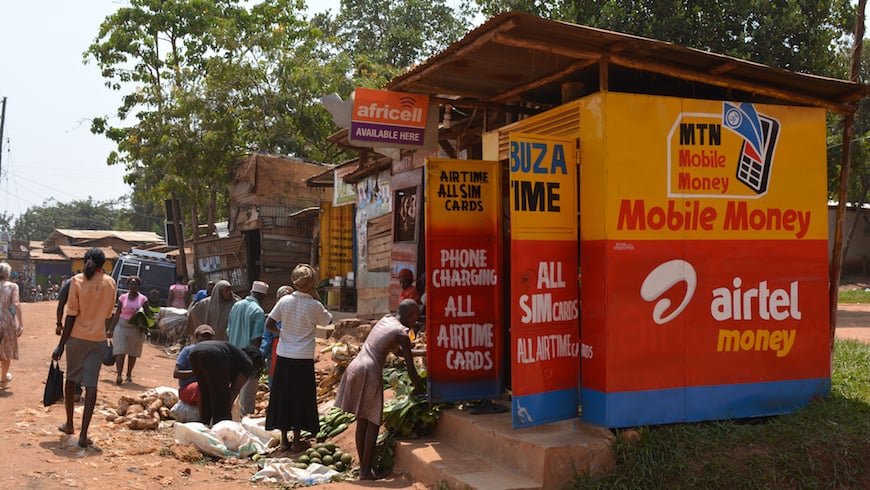
Sending money is common. Paying a shop is not.
Uganda’s mobile-money transaction count has more than doubled in four financial years, from 4.76 billion in 2021/22 to 9.71 billion in the year ended June 2026, according to the Bank of Uganda. Total transaction value reached UGX 421 trillion in the latest year, up 29.1 per cent. That is money moved, not provider revenue or new economic output: the same funds can be counted several times as they pass from one account to another or are withdrawn.
A World Bank survey helps explain why that scale has not translated into universal acceptance at the till. In 2024, 70.6 per cent of Ugandan adults aged 15 and older reported making or receiving a digital payment in the previous year, but only 11.7 per cent said they had paid a merchant digitally. The merchant figure was up from 10.3 per cent in 2021 but below the 2024 sub-Saharan African average of 19.5 per cent. It covers purchases made by card or phone, not just mobile wallets, and measures people rather than accounts.
For a shopkeeper, the decision is less about whether a customer can send money than about what happens after it arrives. Can the shop match the payment to a sale, confirm receipt while the customer is still at the counter and use the balance to pay a supplier? If the owner has to withdraw the day’s takings to restock, digital acceptance adds a step and may add a charge. A provider that solves those problems has a better chance of winning repeat business than one that simply signs up more merchants.
Why basic phones still matter to the fintech business
The UCC counted 50.6 million active mobile subscriptions at the end of September, including 19.6 million active mobile-internet subscriptions. It recorded 21.3 million smartphones on networks, against a combined 39.6 million feature and basic phones. Those are device and subscription counts, not a census of owners. They cannot say how many mobile-money customers lack internet access, but they show why an app-only payment strategy would leave out a large part of the market.
Short codes that work without mobile data remain important for customers. Smartphone apps, meanwhile, can give merchants QR codes, transaction histories and sales reports. The two channels need not compete: a retailer can use an app to manage receipts while accepting a payment initiated by a customer on a basic phone.
Network investment is expanding what operators can offer. MTN Uganda said it spent UGX 397.7 billion on capital expenditure excluding leases in the nine months to September, up 32.6 per cent, as it added network capacity, modernised sites and rolled out fibre. Its 4G network carried 82.8 per cent of its data traffic. Airtel Uganda, reporting for the six months to June, said data revenue rose 16.1 per cent to UGX 610.6 billion, faster than voice revenue, while its data customer base grew to 8.9 million. The reporting periods differ, but both results show why operators are investing beyond voice.
MTN and Airtel are competing for the merchant
MTN Uganda’s fintech revenue rose 11.6 per cent to UGX 902.8 billion in the nine months to September, exceeding its data revenue of UGX 860.6 billion. Together, fintech and data accounted for 62 per cent of service revenue. MTN reported 15.5 million fintech subscribers active over 30 days and said its merchant base had more than doubled to 202,800. The 30-day subscriber measure is not directly comparable with the national 90-day wallet count, and the merchant total does not show how often customers paid those businesses. MTN’s proposed structural separation of its fintech business remained under regulatory review in its November filing.
Airtel Money launched a merchant platform with fintech company Axieva in Uganda in March, following a rollout in Tanzania in September 2025. Airtel says the platform supports digital sign-up, QR payments and transaction reporting. Those tools can make collections easier for retailers, but an operator’s QR rollout is not the same as a nationwide system that lets consumers pay any merchant from any wallet.
Banks and independent payment companies are building distribution of their own. On 4 November, Housing Finance Bank and Interswitch announced that the bank’s customers could make deposits and card-based withdrawals through Interswitch’s Quickteller network, which the partners said had more than 23,000 participating agents. That is an agency-banking agreement, not a connection between every wallet and bank. But it shows how a bank can extend its reach without building branches and how a fintech can compete by connecting existing networks rather than issuing another wallet. The Bank of Uganda licensed ten institutions as payment service providers or payment system operators in the financial year ended June.
The cost of getting back to cash
Small transactions make pricing consequential. In its March 2026 financial stability review, the Bank of Uganda said more than 89 per cent of mobile-money transactions were below UGX 50,000. Uganda levies a 0.5 per cent excise dutyon the value of a mobile-money cash withdrawal. On a UGX 20,000 withdrawal, that is UGX 100 in tax alone, before the provider’s withdrawal charge. A merchant who can pay a supplier directly may avoid that cash-out step; one whose suppliers insist on cash has no such choice.
Cash agents therefore remain part of the digital economy. The central bank counted 1.25 million agent registrations at the end of June, not necessarily that many distinct outlets. For customers, the useful measure is whether the agent nearby has enough cash or electronic balance to complete a transaction. For providers, keeping agents viable while expanding direct digital payments is a commercial trade-off: cash access makes wallets useful in more places, but a system that requires cashing out after every transfer limits what those wallets can do.
The national payment switch is the next structural test
The Bank of Uganda is developing a National Payment Switch intended to connect banks, mobile-money operators and fintechs. Its latest annual report describes preparatory work and stakeholder consultations, not an operational launch. The design brief calls for pricing options and access through channels including short codes, apps, agents and QR codes. The question is not only whether those systems can connect, but also who can join, what they will pay and who will resolve failed transactions.
The distinction matters regionally, too. The existing East African payment system links the central-bank settlement systems of Uganda, Kenya, Tanzania and Rwanda for bank transfers. The East African Community’s separate cross-border masterplan calls for an instant retail switch. That could make it easier for a Ugandan trader to pay a Tanzanian supplier, but the plan does not establish that customers can already send money between any two wallets across the bloc, or at what cost. cmis.parliament.go.ug
The next figures to watch are repeat merchant payments, the share of wallets used regularly and the full cost of a payment across networks. Registrations tell operators how far they have reached. Whether a shopkeeper can accept a customer’s payment and use the proceeds to buy tomorrow’s stock will tell them how much of Uganda’s retail economy they have changed.
 Uchumi360
Business Intelligence
Uchumi360 covers business, investment, and economic policy across East, Central, and Southern Africa.
For the serious reader
You read to the end. That places you in a small group.
Uchumi360 is built for readers who demand precision over speed, structure over sentiment, and analysis that holds uncomfortable conclusions rather than softening them. If this work sharpens how you think about Africa's economy, help us keep building the infrastructure behind it.
Institutional Partners
Commission intelligence. Shape the conversation.
Uchumi360 works with development finance institutions, investment firms, sovereign bodies, and strategic organisations across the coverage region. Institutional partnership unlocks:
- Commissioned sector and country intelligence reports
- Branded research series under your institution's authority
- Exclusive data briefings for internal strategy teams
- Speaking and editorial presence at Uchumi360 events
- Co-published investment outlooks for your markets
Support Our Work
Independent analysis has a cost. Help us bear it.
Uchumi360 does not carry advertising. It does not take editorial direction from sponsors. Every article is produced without commercial compromise. Your contribution funds the reporting, research, and editorial infrastructure that keeps this analysis free from influence.
Secure checkout: One-time and monthly support are processed securely. Add payment credentials to enable checkout here.
Stay Connected
Keep up with every new insight.
Follow our latest analysis, policy coverage, and market intelligence as soon as it is published. If you need something specific, reach out directly and we will point you to the right research.
