
Kenya's Ruto Orders Tata Chemicals to Exit Magadi Soda Ash Operation
Ready
Kenyan President William Ruto has ordered Tata Chemicals to end its operations at Lake Magadi, escalating a dispute that began in July 2026 with a government-ordered suspension of mining activity over unresolved compliance issues. Ruto says the Indian company held a century-long contract in Kajiado County without building local manufacturing capacity, and that two new investors will be required to establish glass and chemical processing plants in the area instead. Tata Chemicals says it has submitted every document the government requested and remains "fully compliant," and has not treated the presidential order as final. Underneath the political standoff sits a genuinely difficult commercial reality: Tata's own financial disclosures show the Magadi plant has been losing money for its parent company well before this dispute began, largely due to rising energy costs, complicating a story that isn't simply about corporate neglect.
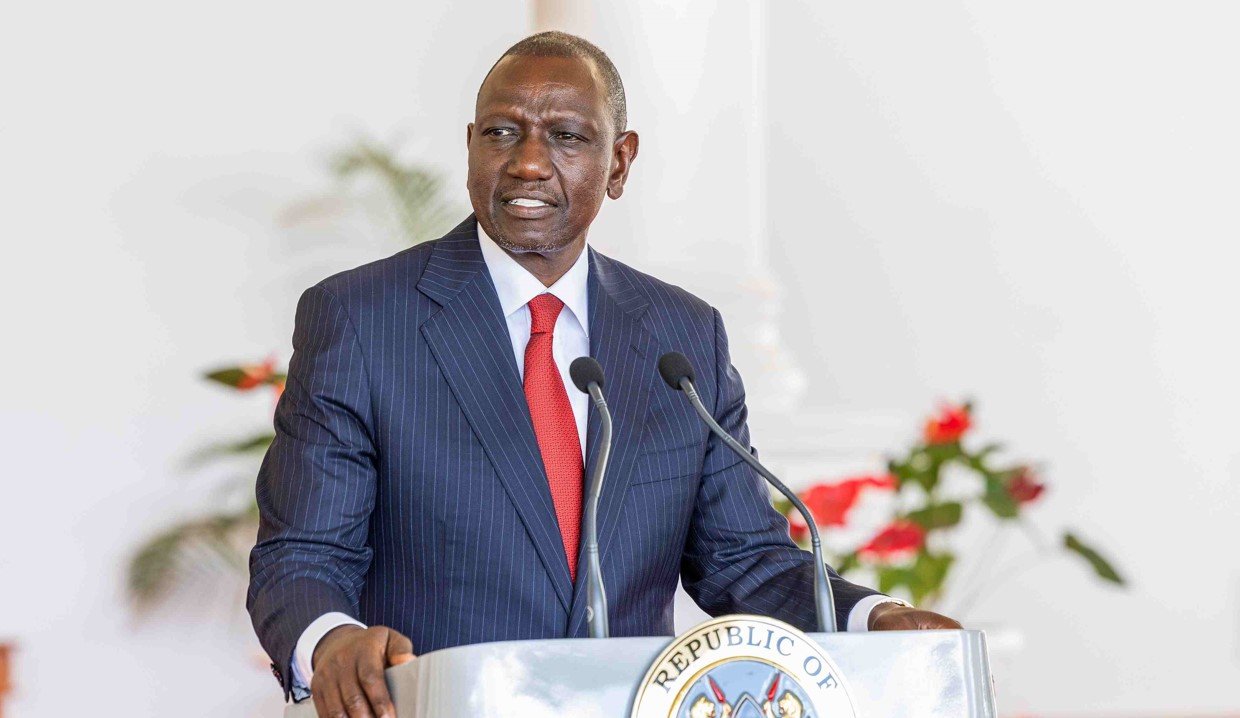
NAIROBI — President William Ruto delivered the clearest signal yet that Kenya intends to end Tata Chemicals' presence at Lake Magadi, telling MSME traders at State House Nairobi on 2 September 2026 that he had already instructed the company to leave, and repeating the message the following day during a visit to Kajiado County, the heart of the operation itself.
"We have Lake Magadi, we have a big company, we have resources that can change Kajiado County and Kenya as a whole. Tata Chemicals Company, which is here in Kajiado, has been running its contract for over 100 years," Ruto said. "They have not constructed anything in Kajiado, including even employing people here. I recently told them to vacate and get out of this country. Let them go. They have been taking our resources to India."
From Suspension to Eviction
The dispute did not begin with Ruto's remarks. It started on 28 July 2026, when Kenya's Mining Cabinet Secretary Hassan Joho ordered Tata Chemicals Magadi Limited to suspend all mining operations, citing a list of unresolved compliance issues the ministry said had been raised with the company for years: royalty reconciliation and payments, export reporting, mineral beneficiation and value addition, community development agreements, employment and skills transfer for Kenyan citizens, local procurement, and environmental compliance.
Tata disputed the characterisation at the time and has maintained that position since. In a statement to stock exchanges, the company said its Kenyan subsidiary received the suspension letter dated 28 July and, on 11 August, submitted "all the required information, reports and documentation" the ministry had requested, and is now "awaiting the Ministry's review of our submissions and its further direction." The company has been explicit that it does not treat Ruto's public remarks as the final word on the matter, continuing to frame its position around compliance and "constructive engagement" through legal and regulatory channels rather than acceptance of an exit order.
What Ruto Wants Instead
Ruto's demand goes beyond resolving the compliance dispute. He has said the government will bring in two replacement companies to take over operations at Magadi, with explicit conditions attached: one company would be required to establish a large glass manufacturing plant in Kajiado, and the other would produce chemicals locally. "We will bring a new company which will have condition to build glass manufacturing plant and another to manufacture chemicals," Ruto said.
The framing is deliberate and consistent with a broader pattern across African resource politics: Ruto is not simply objecting to alleged non-compliance, he is arguing that a century of extraction should have produced local industrial capacity by now, and that continued access to Magadi's resources should be conditioned on building that capacity going forward rather than continuing to export raw or lightly processed soda ash. "Are we slaves to other people?" he asked.
The Legal Fight Underneath the Politics
Tata challenged the July suspension in court, seeking relief to resume operations. Kenya's High Court declined to lift the suspension, finding that the 28 July order had already taken legal effect before Tata sought relief, and noting the government's position that the company had received earlier notices regarding its obligations. Central to the government's case: it said Tata did not currently hold a valid mining licence, with its application, covering approximately 63.5 square kilometres of Kajiado County for soda ash extraction according to a Kenya Gazette notice, still under review rather than approved.
Kajiado Governor Joseph Ole Lenku added a sharper claim at the same rally where Ruto spoke, saying Tata's mining rights had in fact expired in 2023, a claim that, if accurate, would mean the company has been operating without valid rights for roughly three years, a materially more serious legal position than an application simply pending review. Tata has separately noted a partial legal win from the same period: in 2025, Kenya's Court of Appeal ruled in the company's favour in a dispute with Kajiado County over land rate demands, finding the county's claimed arrears were arbitrary and illegal in the absence of a transparent, accountable rate-setting framework. That ruling addressed a narrower county-level tax dispute, not the mining licence or compliance questions now driving the national government's suspension.
What Tata Says It's Actually Contributing
Tata has pushed back directly against the claim that its presence has generated little local benefit. In an 17 August statement, the company said around 500 employees and their families, along with contractors, suppliers, transporters and local businesses, depend directly or indirectly on the economic activity the operation generates, and that approximately 30,000 people in the Magadi community benefit from company-supported water, healthcare, education and infrastructure programmes.
The scale of the underlying business supports treating this as more than a marginal operation. Tata Chemicals Magadi is valued locally at roughly Ksh 10 billion and describes itself as one of Africa's leading manufacturers of natural soda ash, alongside salt production for industrial and animal-feed use. More than 95% of its output is exported, with the company citing annual soda ash exports exceeding 350,000 tonnes to markets across Southeast Asia, India, the Middle East and Africa. Kenya ranks as the world's fourth-largest producer of natural soda ash, according to the US Geological Survey, giving the Magadi dispute genuine relevance to global supply chains for a chemical used in glassmaking, detergents, water treatment and, increasingly, electric vehicle battery manufacturing.
A Longer History Than the Current Dispute Suggests
Commercial soda ash production at Lake Magadi dates to 1911, when the site operated as the Magadi Soda Company under British ownership. The operation later passed to Brunner Mond Ltd before Tata Chemicals acquired it in 2005, making Tata's own tenure at Magadi roughly two decades, considerably shorter than the "100-year contract" framing suggests, even though extraction rights at the site do trace back closer to a century. That distinction matters for assessing Ruto's central claim: whether it is fair to hold Tata accountable for a full century of underinvestment, or whether the more precise question is what the company has built, or failed to build, during its own roughly 20-year ownership period.
The Part of the Story That Complicates a Simple Narrative
What's largely absent from the political framing on both sides is a detail buried in Tata Chemicals' own financial disclosures: the Magadi operation has been a source of real financial strain for its parent company, independent of the current political dispute. In an earlier fiscal year, Tata Chemicals reported a consolidated net loss driven substantially by higher provisioning for impairment of overseas assets, with the company's managing director specifically citing higher energy costs at the Magadi plant as the driver of a roughly Rs 924 crore impairment charge against the operation's fixed assets and goodwill.
That detail doesn't excuse whatever compliance gaps the Kenyan government has documented, but it does complicate the "extraction without reinvestment" narrative driving Ruto's public remarks. A plant that has required major impairment write-downs due to rising energy costs is not necessarily a company simply choosing not to invest; it may be an operation whose underlying economics have deteriorated enough that further capital investment, a glass factory, a chemical processing plant, became harder to justify to Tata's own shareholders, regardless of what Kenya's government wanted to see built. Neither government statements nor Tata's own public responses to this dispute have directly addressed that financial history, leaving a real gap in the public record about how much of Magadi's limited local industrial development reflects corporate choice versus genuine commercial constraint.
What Happens Next
Kenya's stated intent is now unambiguous: replace Tata Chemicals with two new investors bound by conditions Tata itself was never required to meet at the outset of its ownership. Whether that transition proceeds smoothly depends on questions neither side has fully resolved publicly: whether Tata's compliance submissions, still awaiting ministry review, satisfy the government's concerns enough to avoid a forced exit, what compensation or asset-transfer framework would govern any replacement, and whether new investors can realistically commit to glass and chemical manufacturing facilities in a location whose own incumbent operator has just taken a major impairment charge over rising energy costs.
For Kajiado, the practical stakes are immediate regardless of how the legal and diplomatic dispute resolves: 500 direct jobs, a far larger network of contractors and suppliers, and community services roughly 30,000 residents currently rely on, all now sitting inside a standoff between a foreign investor asserting compliance and a head of state who has already declared the relationship over in public, twice, within 48 hours.
FAQ
Why does President Ruto want Tata Chemicals to leave Kenya? Ruto says the company held a roughly century-long contract at Lake Magadi without building meaningful local manufacturing capacity or creating sufficient jobs in Kajiado County, and wants replacement investors required to build glass and chemical processing plants instead.
When did this dispute actually start? On 28 July 2026, when Kenya's Mining Cabinet Secretary Hassan Joho ordered Tata Chemicals Magadi to suspend all mining operations over unresolved compliance issues, including royalties, export reporting, local employment and environmental requirements.
Has Tata Chemicals accepted the presidential order to leave? No. The company says it is fully compliant with applicable regulations, submitted all requested documentation on 11 August, and is awaiting the Ministry of Mining's formal review and further direction, rather than treating Ruto's public remarks as a final legal decision.
Does Tata Chemicals currently hold a valid mining licence? The government says Tata's licence application, covering approximately 63.5 square kilometres in Kajiado County, remains under review. Kajiado Governor Joseph Ole Lenku has separately claimed the company's mining rights actually expired in 2023.
How significant is the Magadi operation? Tata Chemicals Magadi is valued at roughly Ksh 10 billion, employs about 500 people directly, and exports more than 350,000 tonnes of soda ash annually. Kenya ranks as the world's fourth-largest producer of natural soda ash, according to the US Geological Survey.
Is there evidence the dispute is only about politics, or does Tata have genuine financial challenges at the site? Tata Chemicals' own financial disclosures show the Magadi plant previously triggered a major impairment charge for the parent company, driven by rising energy costs, evidence the operation has faced real commercial strain independent of the current political dispute, a factor neither government statements nor Tata's public responses have directly addressed.
 Uchumi360
Business Intelligence
Uchumi360
Business Intelligence
Uchumi360 covers business, investment, and economic policy across East, Central, and Southern Africa.
For the serious reader
You read to the end. That places you in a small group.
Uchumi360 is built for readers who demand precision over speed, structure over sentiment, and analysis that holds uncomfortable conclusions rather than softening them. If this work sharpens how you think about Africa's economy, help us keep building the infrastructure behind it.
Institutional Partners
Commission intelligence. Shape the conversation.
Uchumi360 works with development finance institutions, investment firms, sovereign bodies, and strategic organisations across the coverage region. Institutional partnership unlocks:
- Commissioned sector and country intelligence reports
- Branded research series under your institution's authority
- Exclusive data briefings for internal strategy teams
- Speaking and editorial presence at Uchumi360 events
- Co-published investment outlooks for your markets
Support Our Work
Independent analysis has a cost. Help us bear it.
Uchumi360 does not carry advertising. It does not take editorial direction from sponsors. Every article is produced without commercial compromise. Your contribution funds the reporting, research, and editorial infrastructure that keeps this analysis free from influence.
Secure checkout: One-time and monthly support are processed securely. Add payment credentials to enable checkout here.
Stay Connected
Keep up with every new insight.
Follow our latest analysis, policy coverage, and market intelligence as soon as it is published. If you need something specific, reach out directly and we will point you to the right research.
