
Kenya Spent $207 Million Dressing Itself in Other People's Old Clothes Last Year
Ready
World Bank WITS data for 2024 shows ten African countries, led by Kenya ($207.1 million), Uganda ($106.4 million) and Tanzania ($89.7 million), spent a combined total well over $600 million importing worn clothing under HS code 630900, with China the leading supplier in most markets. The pattern holds even in countries with real textile manufacturing bases, like Madagascar, which exports garments internationally while importing used ones domestically, evidence that export-oriented manufacturing and affordable domestic supply have developed on separate tracks. The underlying problem isn't the used-clothing trade itself, which supports large informal employment in trading and retail, but that African factories generally can't yet match imported used clothing on price, scale, financing or energy costs, a competitiveness gap the AfCFTA's regional value chains are positioned to help close.
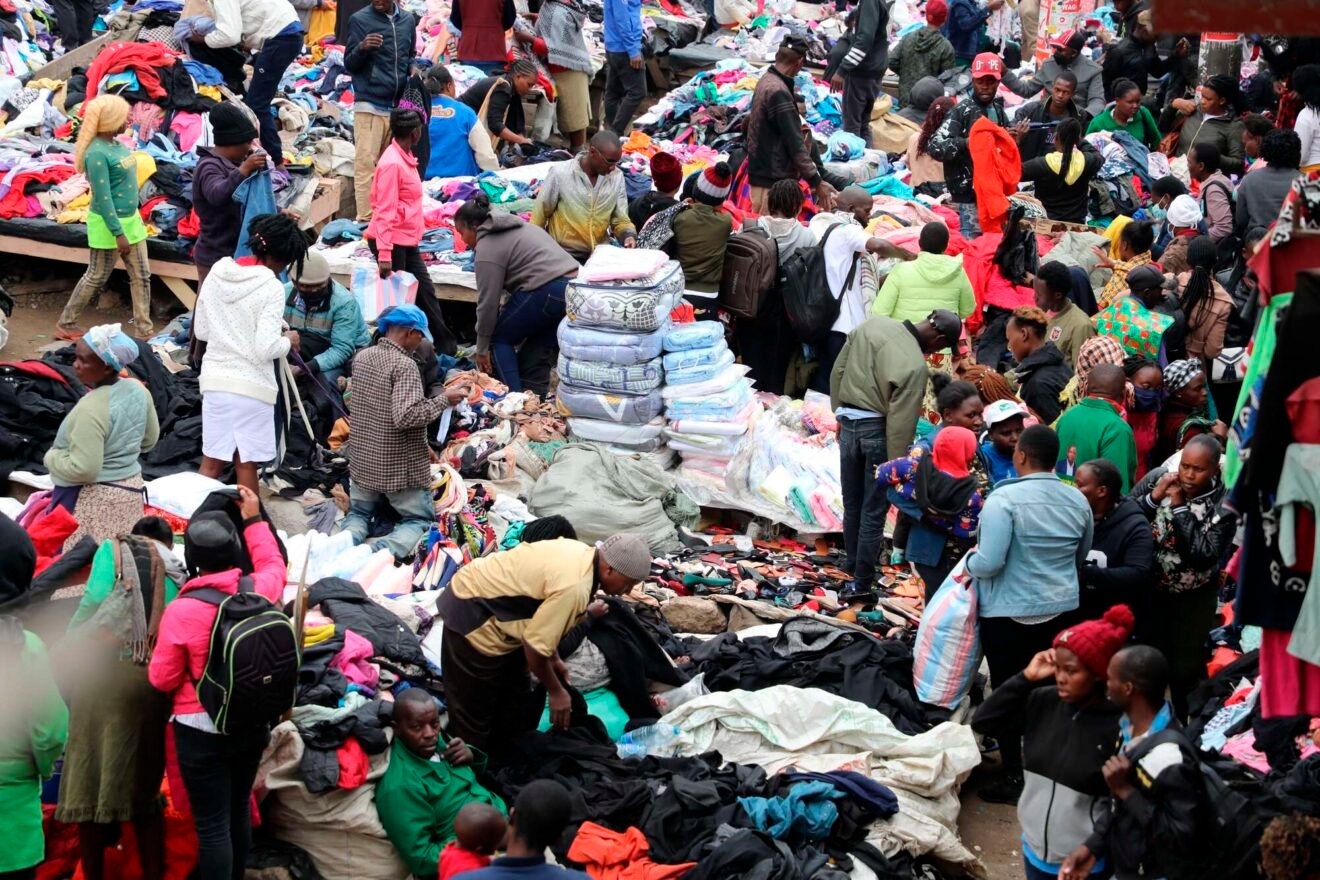
NAIROBI — Africa has spent decades talking about industrialisation. Governments want textile factories. National development plans promise manufacturing jobs. The African Continental Free Trade Area was designed, in part, to make it easier for African manufacturers to sell finished goods to a continental market of 1.4 billion people. And in 2024, the same countries pursuing those ambitions collectively spent hundreds of millions of dollars importing clothing that had already been worn.
The latest comparable data, drawn from UN Comtrade through the World Bank's World Integrated Trade Solution, puts a number on that contradiction. Under HS code 630900, "worn clothing and other worn articles," ten of Africa's largest markets for the trade combined for well over $600 million in imports in 2024 alone.
The Ten Countries, Ranked
| Rank | Country | Import Value (2024) | Volume | Leading Supplier |
| 1 | Kenya | $207.1 million | 230.3 million kg | China ($110.6m) |
| 2 | Uganda | $106.4 million | 88.4 million kg | China ($52.9m) |
| 3 | Tanzania | $89.7 million | 82.8 million kg | China ($54.3m) |
| 4 | Madagascar | $87.2 million | 61.4 million kg | China ($61.2m) |
| 5 | Malawi | $78.4 million | 38.9 million kg | China ($48.9m) |
| 6 | Benin | $45.3 million | 121.6 million kg | China ($10.1m) |
| 7 | Togo | $37.3 million | 86.6 million kg | Multiple, no single dominant supplier reported |
| 8 | Angola | $34.1 million | Not separately reported | China ($21.8m) |
| 9 | Mozambique | $12.4 million | 66.2 million kg | Portugal (56m+ kg) |
| 10 | Central African Republic | $5.7 million | 7.3 million kg | Belgium, China, UAE, Netherlands |
Source: World Bank WITS, UN Comtrade, HS 630900, 2024.
Kenya sits well clear of the rest of the field, and its position is the clearest version of the underlying contradiction. The country has an established textile history, a large consumer market and a genuine export manufacturing sector, yet its domestic clothing market remains heavily supplied by used garments, with China ($110.6 million), the United States ($29.1 million) and Pakistan ($15.4 million) its three largest suppliers.
Tanzania's case is arguably more pointed still, since the government has repeatedly named textiles and garments as priority manufacturing industries. The country has the raw materials and the market. What it hasn't built is enough factory capacity to serve either at a price ordinary consumers can afford, leaving $89.7 million a year flowing to used-clothing imports instead, more than half of it from China alone.
Volume and Value Don't Always Move Together
Two entries in the table complicate a purely value-based reading. Benin imported only $45.3 million worth of used clothing in 2024, but that translated to 121.6 million kilograms, a volume disproportionate to its declared value and a sign of how cheap this trade can be per kilogram once it reaches West Africa's large regional resale markets. Mozambique shows the same pattern even more sharply: $12.4 million in recorded value against 66.2 million kilograms of volume, more than 56 million kilograms of it from Portugal alone, illustrating why import value on its own understates how much used clothing is actually moving through some of these markets.
Benin's case carries a further complication worth taking seriously before treating this trade purely as a problem to solve. West Africa has built an enormous commercial ecosystem around imported used garments, employing traders, transporters and retailers at real scale. Removing that trade without an affordable domestic alternative in place wouldn't create a textile industry. It would destroy existing livelihoods and replace them with nothing.
Madagascar's Contradiction Is a Different One Entirely
Madagascar's position on this list is the most counter-intuitive. The country imported $87.2 million worth of used clothing in 2024, roughly 61.4 million kilograms, despite having a genuine textile and apparel manufacturing industry that serves international buyers. Madagascar can manufacture clothing competitively enough to export it, while its own domestic consumers still rely heavily on imported used garments.
That isn't necessarily a policy failure. It's evidence that export-oriented manufacturing, built around international buyer specifications, financing and shipping logistics, and domestic consumer retail, built around price points ordinary Malagasy households can actually afford, have developed as two separate systems rather than one integrated industry. Angola's presence on the list illustrates a related but distinct dynamic: an oil-financed economy can easily afford to import $34.1 million in used clothing a year, but oil revenue alone doesn't build domestic manufacturing capability, since financing imports and building competitive factories are two different problems entirely.
Why "Ban the Imports" Isn't a Real Answer
It would be simple to frame this as a policy failure requiring a ban on used-clothing imports. It would also be wrong. For millions of African consumers, used clothing is cheaper than new, locally manufactured alternatives. For traders across Benin, Togo and similar markets, it's a livelihood. Banning the trade without a competitive domestic alternative already in place tends to produce higher consumer prices and larger informal, harder-to-regulate markets, not a thriving local garment industry.
The more useful question isn't whether used clothing should be allowed. It's whether African manufacturers can build a domestic alternative ordinary consumers would actually choose to buy. Right now, the answer across all ten of these markets is no, and the reasons are structural rather than aspirational: African factories generally can't compete with imported used clothing on price, scale, quality, financing or energy costs. A Tanzanian garment factory cannot compete globally if its electricity costs are high. A Kenyan manufacturer cannot match Asian import pricing if machinery financing is prohibitively expensive. A Ugandan textile producer cannot achieve scale without a reliable domestic cotton supply chain. These are the constraints industrial policy needs to target, not the existence of the used-clothing trade itself.
Two Paths Forward That Don't Require a Ban
There are at least two ways this contradiction could resolve without treating imported used clothing as an enemy to be legislated away. The first is building a genuine recycling and reuse industry around the trade itself, since imported garments eventually become waste requiring sorting, repair, fibre recovery and remanufacturing, extending the value chain from cotton→textile→garment→consumer→waste into cotton→textile→garment→consumer→collection→recycling→new textile, a considerably more sophisticated industrial system than either banning imports or ignoring the waste stream entirely.
The second is regional specialisation under the AfCFTA. No single country in this ranking needs to build a fully independent textile industry covering cotton production, spinning, fabric manufacturing, garment assembly and distribution on its own. Cotton grown in one country, spun in another, woven into fabric in a third, assembled into garments in a fourth, and distributed regionally through AfCFTA's trade framework, could create an industry capable of competing with imported used clothing on genuine scale, rather than trying to protect ten separate, individually uncompetitive national industries behind trade barriers.
The Real Number Isn't the Import Bill
The $207.1 million Kenya spent, or the roughly $600 million these ten countries spent combined, isn't really the most important figure here. It's the economic activity that market represents if African manufacturers ever build something competitive enough to capture it: factory jobs, cotton demand, textile machinery investment, design and packaging work, logistics, retail employment, tax revenue and, eventually, exports. Every imported garment is a small transaction. Millions of them, repeated year after year across ten major markets, represent an industrial opportunity nobody has yet built the factory to capture.
Africa's problem was never that Africans buy second-hand clothes. It's that African industry hasn't yet made the product its own consumers would rather buy instead.
FAQ
Which African country imports the most used clothing? Kenya, by a wide margin. It imported $207.1 million worth of worn clothing in 2024, more than 230 million kilograms, nearly double the next-largest market, Uganda, at $106.4 million.
Who supplies most of Africa's used clothing imports? China is the leading supplier in most of the ten markets ranked here, including Kenya, Uganda, Tanzania, Madagascar, Malawi and Angola, though a few markets, like Mozambique (Portugal) and Togo, draw more heavily from European suppliers.
Is the used clothing trade bad for Africa's economy? Not straightforwardly. It provides affordable clothing for millions of consumers and supports real employment in trading, transport and retail, particularly in West African markets like Benin. The economic problem isn't the trade's existence, but that domestic manufacturers haven't yet built a competitive alternative consumers would choose instead.
Why does Madagascar import used clothing if it manufactures garments for export? Its export manufacturing sector is built around international buyers, financing and logistics, while domestic consumers are served by a separate market built around affordability. The two systems have developed independently rather than as one integrated industry.
Would banning used clothing imports help African manufacturing? Not on its own. Evidence from similar policy debates suggests bans without a ready, affordable domestic alternative tend to raise consumer prices and push the trade into less regulated informal channels, rather than automatically creating local manufacturing capacity.
What would actually help African countries compete with imported used clothing? Addressing the structural cost disadvantages African factories face, expensive electricity, costly machinery financing, unreliable cotton supply chains, and building regional value chains under the AfCFTA so no single country has to build a fully self-contained textile industry to compete at scale.
 Uchumi360
Business Intelligence
Uchumi360
Business Intelligence
- World Bank World Integrated Trade Solution (WITS), UN Comtrade data, "Worn clothing and other worn articles imports by country," HS code 630900, 2024, individual country pages for Kenya, Uganda, Tanzania, Madagascar, Malawi, Benin, Togo, Angola, Mozambique and Central African Republic
- Primary source for all import values, volumes and top-supplier figures in this piece
Uchumi360 covers business, investment, and economic policy across East, Central, and Southern Africa.
For the serious reader
You read to the end. That places you in a small group.
Uchumi360 is built for readers who demand precision over speed, structure over sentiment, and analysis that holds uncomfortable conclusions rather than softening them. If this work sharpens how you think about Africa's economy, help us keep building the infrastructure behind it.
Institutional Partners
Commission intelligence. Shape the conversation.
Uchumi360 works with development finance institutions, investment firms, sovereign bodies, and strategic organisations across the coverage region. Institutional partnership unlocks:
- Commissioned sector and country intelligence reports
- Branded research series under your institution's authority
- Exclusive data briefings for internal strategy teams
- Speaking and editorial presence at Uchumi360 events
- Co-published investment outlooks for your markets
Support Our Work
Independent analysis has a cost. Help us bear it.
Uchumi360 does not carry advertising. It does not take editorial direction from sponsors. Every article is produced without commercial compromise. Your contribution funds the reporting, research, and editorial infrastructure that keeps this analysis free from influence.
Secure checkout: One-time and monthly support are processed securely. Add payment credentials to enable checkout here.
Stay Connected
Keep up with every new insight.
Follow our latest analysis, policy coverage, and market intelligence as soon as it is published. If you need something specific, reach out directly and we will point you to the right research.
