
Where Tanzania's TZS 20.8 Trillion Development Budget Will Go in 2026/27
Ready
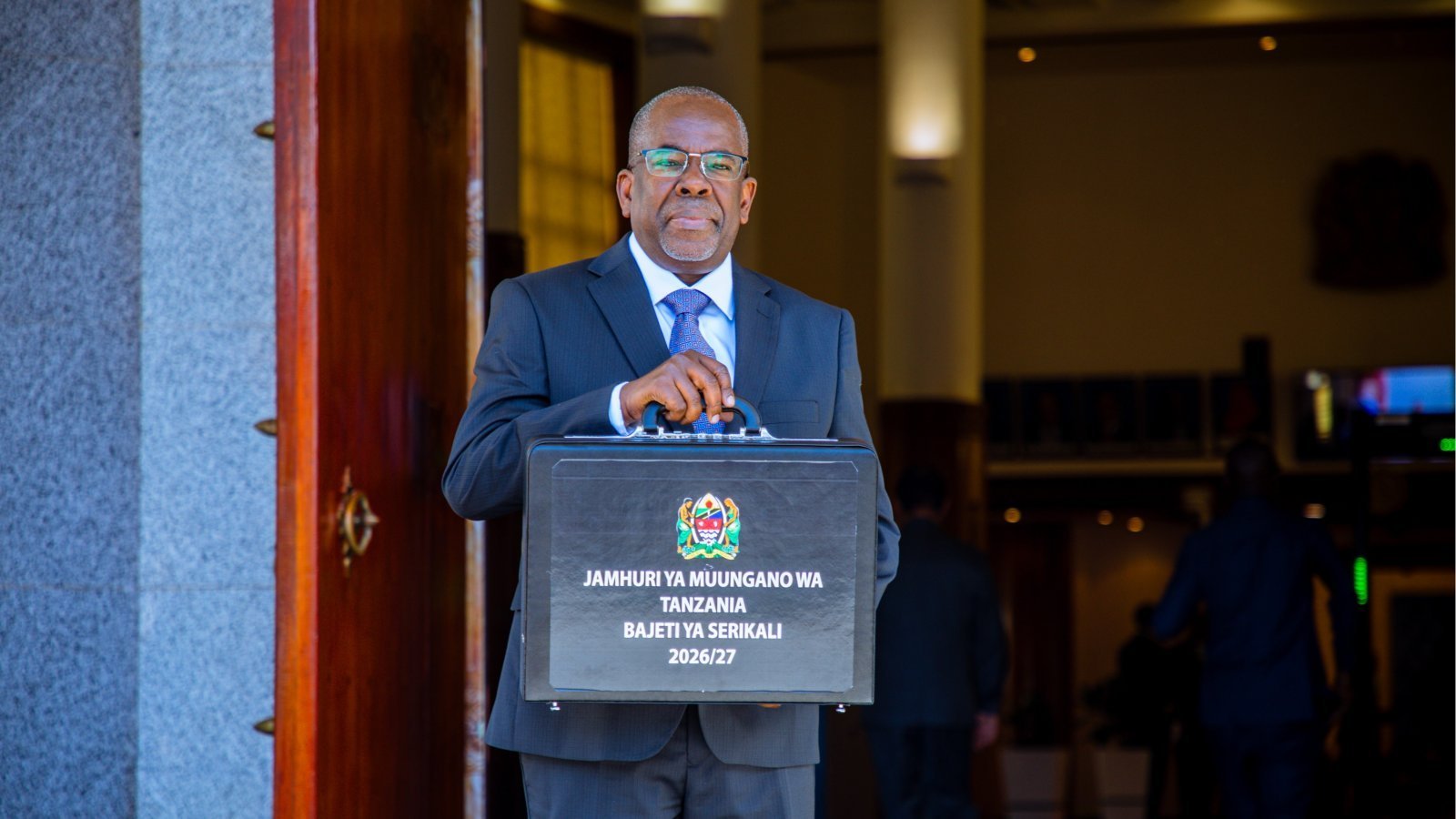
Tanzania's FY2026/27 development budget is TZS 20,819.8 billion, 33.3 percent of the TZS 62,334.2 billion national budget, spread across 379 named projects. The largest allocations by sector are: transport infrastructure including roads and SGR over TZS 2.1 trillion combined, energy including JNHPP continuation and grid expansion over TZS 1.5 trillion, education including student loans TZS 1,115.3 billion, health including medicines TZS 459.9 billion, and water sector projects over TZS 1 trillion. Financing comes from domestic revenue, external concessional loans and grants at TZS 563.14 billion confirmed, private sector investment at TZS 60.1 trillion projected, and innovative financing including bonds and carbon markets. Public enterprise investment adds TZS 5.5 trillion. The government contribution of TZS 20.8 trillion covers 33.3 percent; the remaining 66.7 percent is expected from private sources. The budget's geographic distribution includes the Bagamoyo coastal corridor, the Mchuchuma-Liganga southern highlands complex, the Central Corridor SGR spine, the Lake Zone industrial development, and the Dodoma minerals hub. Tanzania is not asking the government alone to build Vision 2050. It is asking the government to create conditions in which the private sector builds it instead.
DAR ES SALAAM — Tanzania's National Development Plan for FY2026/27 commits TZS 20,819.8 billion to development expenditure, representing 33.3 percent of the TZS 62,334.2 billion national budget. Across 379 named projects, the development budget attempts to simultaneously advance infrastructure, human capital, productive capacity, and governance, covering every major economic and social sector.
The largest allocations
Transport infrastructure dominates the development budget by value. The SGR Central Corridor expansion, covering phases three through seven from Makutupora toward the western regions and borders, receives TZS 1,572.8 billion, the single largest project allocation. Road construction and rehabilitation across 89 named road projects totals over TZS 1,047.4 billion. The Dar es Salaam Metropolitan Development Project Phase II adds TZS 137.5 billion. Bus Rapid Transit phases one through five receive TZS 213.8 billion. Aviation infrastructure across regional airports, including Kigoma, Tabora, Mwanza, Songwe, Sumbawanga, and Shinyanga, absorbs TZS 42.1 billion.
Energy is the second largest category. The Julius Nyerere Hydropower Project continuation draws TZS 350 billion. Village electrification in remaining hamlets receives TZS 350 billion. Grid strengthening including the National Grid Strengthening project takes TZS 265 billion. The 400kV transmission line from Chalinze to Dodoma receives TZS 200 billion. The Ruhudji hydropower project at 358MW takes TZS 115 billion. The LNG development receives TZS 20 billion for the year, reflecting early-stage preparation.
Education absorbs the largest single social sector allocation. Student loan financing at TZS 1,115.3 billion is the second-largest individual project in the entire plan after the SGR. Free primary education programme funding is TZS 14 billion and free secondary education TZS 10.3 billion. Higher education skills transformation under the HEET project receives TZS 127.9 billion. TVET and vocational training across multiple programmes totals TZS 142.8 billion.
Health is the second social sector by allocation. Medicines and health products receive TZS 459.9 billion. Immunisation strengthening receives TZS 132.9 billion. The national malaria programme receives TZS 30 billion. Referral hospital strengthening receives TZS 124.6 billion. National Health Insurance Fund expansion for universal health coverage implementation is embedded across multiple budget lines.
Water infrastructure including urban supply expansion, rural water supply, and strategic dam construction totals over TZS 900 billion across 22 named water projects.
The financing architecture
The TZS 20.8 trillion public development expenditure is the smaller part of Tanzania's total investment programme. Public enterprises are expected to contribute TZS 5.5 trillion from their own revenues. The private sector is projected to invest TZS 60.1 trillion, maintaining the 70:30 private-public ratio that has characterised Tanzania's investment structure since 2018.
Domestic revenue finances the majority of the government's contribution. External grants confirmed at TZS 563.14 billion and concessional loans at TZS 15,542.89 billion supplement domestic sources. Innovative financing mechanisms being developed include the Tanzania Carbon Exchange, green bonds for the energy transition, data monetisation revenues, and capital market instruments including corporate bonds.
The PPP pipeline adds a layer of financing beyond both the government budget and conventional private investment. Seven PPP projects reached implementation stage by April 2026, with contract negotiations ongoing for three more and 22 at feasibility study stage. The Dar es Salaam port operations concession at TZS 2,700 billion and the TAZARA rehabilitation concession at TZS 3,200 billion are the largest individual PPP pipeline items.
Geographic concentration and planned rebalancing
Dar es Salaam and its metropolitan corridor continue to receive the largest share of development expenditure, reflecting its role as Tanzania's commercial and logistics centre. But the plan explicitly targets geographic rebalancing: the Mwanza Lake Zone economic hub, the Mchuchuma-Liganga southern highland complex, the Dodoma rare minerals hub, and the Bagamoyo coastal investment city all receive dedicated flagship programme status designed to build economic activity outside the Dar es Salaam corridor.
The SGR network's extension toward Tabora, Mwanza, Kigoma, and eventually the borders with Rwanda, Burundi, and the DRC is the infrastructure investment whose completion will most directly determine whether the geographic rebalancing aspiration converts into actual economic activity in Tanzania's western and southern regions.
 Uchumi360
Business Intelligence
Uchumi360
Business Intelligence
Uchumi360 covers business, investment, and economic policy across East, Central, and Southern Africa.
For the serious reader
You read to the end. That places you in a small group.
Uchumi360 is built for readers who demand precision over speed, structure over sentiment, and analysis that holds uncomfortable conclusions rather than softening them. If this work sharpens how you think about Africa's economy, help us keep building the infrastructure behind it.
Institutional Partners
Commission intelligence. Shape the conversation.
Uchumi360 works with development finance institutions, investment firms, sovereign bodies, and strategic organisations across the coverage region. Institutional partnership unlocks:
- Commissioned sector and country intelligence reports
- Branded research series under your institution's authority
- Exclusive data briefings for internal strategy teams
- Speaking and editorial presence at Uchumi360 events
- Co-published investment outlooks for your markets
Support Our Work
Independent analysis has a cost. Help us bear it.
Uchumi360 does not carry advertising. It does not take editorial direction from sponsors. Every article is produced without commercial compromise. Your contribution funds the reporting, research, and editorial infrastructure that keeps this analysis free from influence.
Secure checkout: One-time and monthly support are processed securely. Add payment credentials to enable checkout here.
Stay Connected
Keep up with every new insight.
Follow our latest analysis, policy coverage, and market intelligence as soon as it is published. If you need something specific, reach out directly and we will point you to the right research.
