
Who Benefits From Congo's Cobalt Export Restrictions?
Ready
The Democratic Republic of Congo, which supplies nearly three quarters of the world's mined cobalt, has announced another suspension of exports from November 30 after earlier restrictions failed to sustain higher prices. The decision has already triggered a sharp market response, but its economic benefits will be distributed unevenly among the Congolese government, mining companies, Chinese refiners, competing producers and battery manufacturers.
The Democratic Republic of Congo has announced a new suspension of cobalt exports beginning November 30, 2026, escalating its efforts to control global supplies of a mineral essential to electric vehicle batteries, industrial alloys and advanced manufacturing. The decision, announced by the Authority for the Regulation and Control of Strategic Mineral Substances Markets (ARECOMS) on November 23, will halt exports until a subsequent regulatory decision establishes the conditions for resumption. It follows an earlier export ban introduced in February 2025 and a quota system that had allowed limited shipments from October of that year but failed to prevent renewed pressure on prices during 2026.
The announcement has already affected international markets. According to BMO Capital Markets analysts cited by The Northern Miner on November 26, London Metal Exchange cobalt futures rose from approximately $33,080 per tonne on November 23 to $43,855 later in the week, an increase of about 33%. The price movement reflects expectations of tighter future supply rather than evidence that exports have already stopped, since the suspension does not take effect until November 30. It also demonstrates the influence Kinshasa can exert on international prices by changing the availability of a mineral for which Congo accounts for most global mine production.
The policy could improve returns for producers holding exportable cobalt and strengthen the government's bargaining position with international mining companies. However, the financial consequences are more complicated than the immediate price increase suggests. Mining companies whose products cannot leave Congo may accumulate inventories without receiving corresponding sales revenue, while buyers with access to existing stocks could benefit from rising prices. Refineries in China, which dominate global cobalt processing, face uncertainty over future raw material supplies, while producers in Indonesia and other countries could gain opportunities to supply customers seeking alternatives.
The restrictions also raise questions about the allocation of economic benefits within Congo. The government wants to prevent excessive exports from depressing global prices and has increasingly argued that the country's mineral resources should generate greater value domestically. Yet much of the cobalt is produced by large mining companies with foreign ownership, while domestic processing capacity remains limited relative to the size of the mining industry. Higher international prices do not automatically translate into higher government revenue, improved wages or greater income for artisanal miners, particularly when restrictions prevent producers from selling their output.
Congo controls most mined cobalt but not most of its processing.
Congo's influence derives from the extraordinary concentration of global cobalt production within its borders. The United States Geological Survey estimates that the country produced approximately 230,000 tonnes of cobalt in 2025, compared with global mine production of about 310,000 tonnes, equivalent to roughly 74% of the world's total. Indonesia was the second largest producer, with approximately 44,000 tonnes, followed by considerably smaller volumes from Russia, Australia and other producing countries. Congo also holds substantial identified cobalt reserves, giving it a central position in the long-term supply of a metal used in batteries, aerospace applications and industrial manufacturing.
Who mined the world's cobalt in 2025?
Estimated cobalt content, thousand metric tonnes Source: US Geological Survey, Mineral Commodity Summaries 2026. Figures are rounded 2025 estimates; other producers are calculated as the residual from the rounded global total.
The geographical concentration of production gives Congo unusual influence over global supply, but its position in the processing industry is much weaker. The International Energy Agency's Global Critical Minerals Outlook 2026 estimates that China accounted for more than 75% of refined cobalt production in 2025, maintaining its position as the principal processor of material originating from Congo and other producing countries. Much of the value added through refining and the manufacture of battery materials is consequently generated outside the country where the mineral is extracted.
This separation between mining and processing explains why export restrictions have become an increasingly attractive policy instrument for Kinshasa. The government can influence the international supply of cobalt by controlling shipments, but it has less direct influence over the prices and margins associated with refining, cathode manufacturing and battery production. Restricting exports creates an opportunity to negotiate more favourable commercial arrangements and encourage investment in domestic processing facilities, although the effectiveness of that strategy depends on whether companies can obtain electricity, finance, technology and suitable infrastructure to expand operations within Congo.
Cobalt is also commonly recovered as a secondary product of copper mining in Congo. Large mining operations can therefore continue producing copper even when cobalt exports are restricted, creating additional cobalt inventories that cannot immediately enter international markets. This complicates efforts to manage global cobalt supply through export limits alone because mining companies make production decisions according to the combined economics of copper and cobalt. Strong copper prices can encourage continued operations even when cobalt prices are weak, allowing cobalt output and stockpiles to increase despite restrictions on shipments.
The difference between controlling exports and controlling production is central to the latest restrictions. Congo can prevent cobalt from entering international markets, but it does not automatically reduce the amount produced at mines or the metal already held in storage. If exports resume while large accumulated inventories remain available, additional shipments could again place downward pressure on prices unless the government maintains sufficiently strict quotas or producers reduce output.
Why the first export ban failed to secure a lasting price recovery
Congo's initial intervention followed a prolonged decline in cobalt prices caused partly by substantial increases in supply and changes in battery manufacturing. ARECOMS suspended exports on February 22, 2025, seeking to reduce the amount of cobalt entering the international market and reverse the deterioration in prices. The authorities subsequently extended the restrictions before introducing a quota system in October 2025, allowing the government to regulate shipment volumes rather than maintaining a complete prohibition on exports.
The quota system established a maximum export volume of 96,600 tonnes of contained cobalt annually for 2026 and 2027, including 87,000 tonnes available under the regular allocation mechanism and 9,600 tonnes reserved for strategic purposes. The ceiling was substantially below Congo's estimated 2025 mine output of approximately 230,000 tonnes, demonstrating the scale of the planned restriction. However, the quantities are not directly interchangeable because the quota concerns exports of contained cobalt, while mine output includes cobalt produced regardless of whether it is exported, processed, consumed or stored domestically.
Congo's cobalt production versus its export ceiling
 Sources: USGS 2026 Mineral Commodity Summaries and ARECOMS quota framework. The mine production estimate and export ceilings cover different periods and activities; the chart illustrates their relative scale, not the quantity of unexported cobalt.
The restrictions initially supported a substantial price recovery. Reuters reported in April 2026 that cobalt metal prices had risen approximately 160% from February 2025 to around $57,320 per tonne, reflecting the impact of reduced exports on international availability. However, the recovery weakened as additional material entered the market through authorised shipments and buyers adjusted their purchasing behaviour. By November, the authorities were again concerned about excess supply, weakening prices and the accumulation of inventories, leading to the decision to suspend exports for a second time.
The price movements demonstrate that Congo can influence short-term market conditions through supply restrictions, but they do not establish that the country can maintain prices at a preferred level indefinitely. Buyers can draw on existing inventories, reduce purchases when prices rise, increase recycling or adjust the technologies used in batteries and other products. Competing producers may also respond to higher prices by expanding output. These reactions can reduce the effectiveness of restrictions, particularly if the underlying problem is persistent supply growth rather than a temporary disruption.
ARECOMS has acknowledged the need to reassess the system. In August, its chairman, Patrick Mpoyi Luabeya, told Fastmarkets that Congo could reduce export quotas further if the imbalance between global supply and demand persisted. The November suspension now gives the regulator additional control over the timing and scale of future exports but also increases uncertainty for companies that had already received allocations under the previous framework.
Under the latest decision, previously allocated quantities that have not been exported before the suspension begins will not automatically be restored or carried over when shipments resume. Existing 2026 and 2027 allocations also do not confer an unconditional right to retain equivalent quotas under the next system. The regulator has stated that a separate decision will determine the date of resumption, authorised volumes and allocation requirements, giving the government considerable discretion over future market access.
Higher prices benefit some mining companies more than others
The largest companies operating in Congo include China's CMOC Group, Glencore, Eurasian Resources Group and enterprises associated with Huayou Cobalt. Their commercial exposure differs according to the amount of cobalt they produce, the quantities they can export, their inventory positions and the relative importance of copper to their operations. A general increase in international prices can improve the value of cobalt held by these companies, but restrictions that prevent them from selling can also reduce cash flow and increase storage and working capital requirements. The immediate beneficiaries are therefore not necessarily the companies producing the largest quantities of cobalt.
CMOC is particularly exposed because it operates major copper and cobalt projects in Congo and has become the world's largest cobalt producer. According to industry reporting, the company accumulated approximately 87,000 tonnes of cobalt material that it could not monetise during the first nine months of 2026 because of restrictions on exports. The figure illustrates the commercial consequences of a system in which production can continue while access to foreign customers is limited. An increase in market prices may raise the estimated value of inventories, but that appreciation does not provide equivalent cash to the producer until the material can be sold.
Glencore has adopted a different operating response. Its October 2026 production update indicated that cobalt output fell by approximately 52% to 13,700 tonnes during the first nine months of the year, as the company increasingly retained cobalt in solution rather than converting it into saleable hydroxide. The approach allowed Glencore to continue focusing on copper production while limiting the accumulation of processed cobalt awaiting export. It also demonstrates that companies with different processing arrangements can respond differently to the same restrictions, affecting both the volume of cobalt they produce and the costs they incur.
Glencore had previously indicated support for the quota system, while CMOC opposed the approach, according to Reuters reporting on the policy's initial implementation. Their contrasting positions suggest that export restrictions affect producers according to their market share, production strategy and capacity to manage unsold material. A company with lower production relative to its export allocation may benefit from the higher market price without accumulating substantial excess stock, whereas a rapidly expanding producer can face the opposite outcome if its quota permits only a fraction of its output to reach customers.
The distinction also matters for producers outside Congo. A company operating a cobalt mine in another country may receive the higher international price without being subject to ARECOMS export quotas. Where production costs remain unchanged, the resulting increase in selling prices can improve margins and encourage investment. Producers holding inventories that were acquired or produced before the price increase may also benefit from appreciation, provided their customers accept the higher prices and the material can be sold.
Congo's restrictions can therefore transfer part of the commercial benefit of higher prices to competitors operating beyond its borders. This is a recurring risk when a dominant producer attempts to influence commodity prices by reducing exports: the resulting market value increase is available to every supplier capable of selling the commodity, while the costs of the restriction are concentrated among producers whose shipments have been limited.
Indonesia could become one of the largest external beneficiaries
Indonesia occupies a particularly advantageous position because it has emerged as the world's second largest cobalt producing country through the rapid development of nickel processing facilities. Much of its cobalt is recovered as a secondary product from nickel operations, particularly those supplying materials used in rechargeable batteries. The USGS estimates that Indonesia produced approximately 44,000 tonnes of cobalt in 2025, giving it around 14% of global mine output. Although this remains far below Congo's production, the scale is sufficient for Indonesian supply to influence the market when Congolese exports are restricted.
The country's cobalt industry has developed alongside substantial investment in nickel processing, including facilities involving Chinese companies and international investors. Indonesia's position provides an alternative source of raw materials for refiners and battery manufacturers seeking to reduce their dependence on Congo. If restrictions support higher cobalt prices, Indonesian producers may obtain greater revenue from the cobalt recovered during nickel processing, even where cobalt is not the principal product driving the original investment.
The economic benefit depends on the technical and commercial characteristics of Indonesian production. Cobalt recovered from nickel processing may enter international markets in forms requiring additional refining, while its output is influenced by the economics of nickel mining and processing. Consequently, higher cobalt prices do not necessarily produce an immediate proportional increase in supply, particularly where facilities are operating according to nickel demand, financing conditions and environmental requirements. However, the presence of an established processing industry makes Indonesia better positioned than countries that possess cobalt resources but lack the infrastructure required to bring new production to market.
Australia, Canada, Morocco and other countries pursuing cobalt projects may also benefit from stronger prices and increased interest in alternative sources. However, prospective projects should not be confused with commercially available production. A mineral deposit requires financing, environmental approvals, processing facilities and market agreements before it can supply customers. Congo's restrictions may improve investment incentives for competing projects, but they do not guarantee that those developments will become operational or offer commercially competitive material.
The resulting shift could eventually reduce Congo's influence over international cobalt prices. If prolonged export restrictions encourage buyers to finance alternative production, develop new processing technologies or accumulate inventories outside Congo, the market may become less dependent on Congolese supply over time. The country's existing resource advantage remains substantial, but policies that strengthen competing suppliers could limit the durability of any price premium obtained through export controls.
China retains substantial influence over the value of cobalt
China is central to the distribution of economic benefits because its companies are involved in Congolese mining, international mineral trading, cobalt refining and battery manufacturing. The IEA estimates that China accounted for more than 75% of the world's refined cobalt production in 2025, while Congo supplied most mined cobalt internationally. This relationship means that Congolese export restrictions affect Chinese businesses at several stages of production, although their financial consequences differ considerably.
Chinese mining companies with operations in Congo face the direct consequences of restrictions, particularly where their output exceeds permitted export volumes. Refineries in China that depend on Congolese cobalt intermediates may experience higher acquisition costs or reduced access to material, particularly if existing stocks become insufficient. However, refiners holding substantial inventories purchased before the latest price increase could benefit from higher market values, while companies able to obtain material from Indonesia or other suppliers may gain a competitive advantage over competitors more dependent on Congolese shipments.
The impact on battery manufacturers is similarly mixed. Some rechargeable battery technologies use cobalt as part of their cathode chemistry, particularly nickel manganese cobalt (NMC) and nickel cobalt aluminium (NCA) batteries. Other technologies, notably lithium iron phosphate (LFP), do not require cobalt in their cathodes. The increasing adoption of LFP batteries has already reduced the amount of cobalt required for some categories of electric vehicles, particularly in China, where manufacturers have developed extensive production capacity using the chemistry.
The USGS noted in its 2026 Mineral Commodity Summaries that cobalt free battery technologies using iron and phosphorus had gained a substantial share of the Chinese market, while manufacturers continued to reduce cobalt content in other lithium ion battery designs. This matters because sustained increases in cobalt prices can reinforce the economic attraction of batteries that use less cobalt or none at all. A policy intended to raise the value of Congo's mineral exports could consequently accelerate changes in downstream technology that reduce future demand for the same mineral.
The IEA's 2026 outlook nevertheless projects continued growth in certain cobalt products, including an increase of nearly 60% in the market for cobalt sulphate by 2035. Cobalt demand therefore cannot be described as disappearing, since the mineral continues to serve battery technologies and industrial applications requiring particular performance characteristics. The market is changing in ways that make demand more sensitive to chemistry selection, manufacturing costs and investment in alternatives, reducing the certainty that higher cobalt prices will translate into sustained revenue growth for producers.
China's refining dominance also limits the extent to which Congo can capture the full commercial value of higher cobalt prices. Even if restrictions increase the price of material leaving the country, substantial additional value is generated when that material is refined, converted into chemicals and incorporated into batteries and manufactured products. Without investment in domestic processing, Congo remains heavily dependent on international buyers for much of the subsequent industrial activity associated with its mineral resources.
Will higher cobalt prices increase Congo's government revenue?
The Congolese government's potential financial benefit depends on whether higher prices compensate for the reduction in quantities that mining companies can export. This relationship is central to evaluating the policy because governments collect revenue through different mechanisms, including royalties, profit based taxes and other charges linked to mining activities. Some receipts are influenced directly by the value of mineral sales, while others depend on company profits or transactions that may be postponed when exports are suspended.
A simple illustration demonstrates the problem. Suppose a producer would ordinarily export 100,000 tonnes of cobalt at $30,000 per tonne, generating gross sales of $3 billion. If export restrictions reduced the permitted volume to 60,000 tonnes but increased the average realised price to $45,000, gross sales would fall to $2.7 billion despite the 50% price increase. The company would need a higher price, lower costs or additional sales in subsequent periods to offset the reduction in immediate revenue. These figures are hypothetical and do not represent Congo's actual cobalt exports or realised selling prices.
The calculation also shows why the government's revenue cannot be estimated by multiplying the headline international price by the country's total mine production. The quantity produced is not necessarily the quantity sold, while cobalt hydroxide and other intermediate products do not obtain the same price per gross tonne as refined metal. Contracts may use discounts, payable content factors and pricing periods that produce realised values different from London Metal Exchange reference quotations. A credible fiscal assessment would require actual export volumes, realised prices, the tax and royalty structure, production costs and the financial results of the companies involved.
There may also be a fiscal consequence from accumulating large inventories. Mining companies can incur production expenses without generating immediate export proceeds, reducing taxable profits and potentially delaying investment. Governments may face weaker corporate income tax receipts even as the estimated market value of stored cobalt increases. A more favourable outcome could emerge later if the stored material is sold at higher prices, but that benefit depends on the market conditions and regulatory permissions prevailing when exports resume.
The government's strategic objectives extend beyond immediate revenue. By controlling export allocations, ARECOMS has gained greater influence over mining companies whose operations depend on permission to sell cobalt internationally. The regulator can use those permissions to pursue policy objectives, including production discipline and potentially greater domestic processing. However, discretionary allocation also creates a need for transparent rules because quotas have substantial commercial value when exporters can sell material at prices higher than those prevailing before restrictions.
The administration of the system has already exposed operational difficulties. In June, ARECOMS announced that unused quotas for the first half of 2026 would be withdrawn and transferred to its strategic allocation, while subsequent reporting identified problems involving customs systems that prevented some companies from using authorised volumes. Companies consequently faced the possibility of losing export rights for reasons associated with administrative processing rather than their production or market position. These developments illustrate how the commercial value of quotas can become dependent on regulatory execution as well as the formal allocation rules.
The latest suspension increases the importance of these arrangements because existing allocations will not automatically remain valid when exports resume. Producers need clarity over how future quotas will be calculated, whether previous production or exports will influence their allocation, and how the strategic reserve portion will be administered. Greater discretion may strengthen the government's negotiating position, but uncertainty can also affect investment planning, lending decisions and the willingness of companies to finance additional domestic processing capacity.
The benefits for Congolese workers and local miners remain uncertain
The consequences for workers and mining communities depend on whether export restrictions affect employment, production schedules and the prices received by smaller producers. Large industrial copper and cobalt mines support direct employment and a network of contractors supplying transport, engineering, maintenance, equipment and other services. If companies continue copper production while storing cobalt, some employment may be maintained despite restrictions. However, declining cash flow or prolonged inventory accumulation could eventually influence investment, procurement and operating decisions.
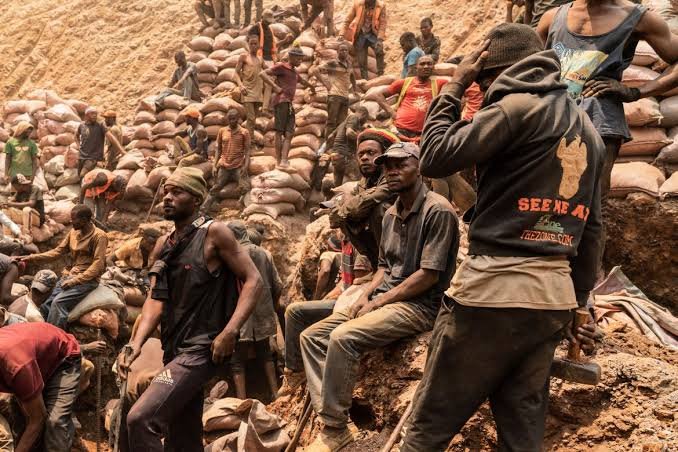
Artisanal and small scale miners face different risks because their incomes may depend on selling mineral output through traders and processing intermediaries with limited working capital. When exports are restricted, buyers may reduce purchases or offer lower local prices if they cannot readily sell the resulting cobalt products internationally. A higher benchmark price therefore does not guarantee better earnings for miners whose immediate customers are constrained by financing, storage or export permissions.
The distinction matters because the economic value of cobalt is distributed across multiple stages, from extraction to trading, processing, international shipment and manufacturing. A policy that raises the international value of cobalt may benefit companies holding marketable inventories without producing equivalent increases in wages or local procurement. Its effect on mining communities requires evidence on employment, purchasing activity, local prices and the financial conditions facing smaller enterprises.
The government has also sought to increase domestic value addition through restrictions affecting unprocessed mineral exports. These policies reflect an objective of retaining more industrial activity within Congo, although developing refining and manufacturing facilities requires dependable electricity, substantial capital, technical expertise and access to international customers. Export restrictions may encourage negotiations over such investments, but a processing plant will be commercially viable only if its operating costs and access to markets allow it to compete with established facilities abroad.
This is particularly relevant when comparing Congo with China. China's dominance in cobalt refining reflects years of investment in chemical processing, manufacturing infrastructure and battery supply chains. Reproducing part of those activities within Congo would require more than establishing export requirements. The country would need investment conditions that make domestic processing financially attractive over many years, including predictable electricity supply, logistics, skilled workers and regulatory stability.
A 33% price increase does not establish that the policy has succeeded
The sharp market response following the November 23 announcement demonstrates Congo's capacity to influence expectations about cobalt supply. However, the increase in quoted prices occurred before the November 30 suspension and therefore reflects anticipated scarcity, changes in trading positions and reassessment of future supply rather than the completed withdrawal of shipments from the market. The financial benefits will depend on whether those higher prices persist and whether producers are able to sell significant quantities when exports eventually resume.
The market has already demonstrated considerable sensitivity to Congo's decisions. The first export ban supported a substantial recovery from the depressed prices prevailing in early 2025, but those gains weakened as the quota system permitted additional supplies and demand remained insufficient to absorb the available material at earlier prices. The second suspension indicates that the authorities consider the previous system inadequate to stabilise the market. It also introduces greater uncertainty about future supply, since ARECOMS has not committed to maintaining previously authorised quantities when exports restart.
S&P Global's November 24 assessment reported that industry participants expected the latest restrictions to provide immediate support for cobalt prices but questioned whether export controls alone could achieve a lasting balance between supply and demand. The concern reflects the continued production of cobalt as a secondary product of copper mining, the availability of inventories and changes in battery chemistry. A durable improvement would require the underlying market to absorb available material at commercially sustainable prices, rather than relying exclusively on repeated interruptions to exports.
The distribution of benefits will also change over time. Producers outside Congo can benefit from higher prices without facing the same export restrictions, while companies holding inventories in international markets may obtain immediate valuation gains. Chinese processors with secure alternative supplies may strengthen their position relative to competitors, while battery manufacturers could respond by reducing cobalt content or adopting alternative technologies. Within Congo, companies holding large unsold stocks may eventually benefit from higher prices, but only if the restrictions permit commercially meaningful sales before additional financial costs accumulate.
Congo has demonstrated that its mineral production gives it influence over the international cobalt market, but that influence is not equivalent to control over the entire industry. China dominates refining, Indonesia is expanding alternative supply, and battery manufacturers can influence future demand through their technology decisions. The government's ability to convert temporary price increases into sustained national economic benefits will depend on how effectively it manages those relationships and whether export restrictions lead to higher realised revenue and greater domestic industrial activity.
The immediate beneficiaries of the November decision are likely to include holders of cobalt already available for sale outside the restricted market and producers elsewhere who can supply buyers facing shortages. For Congo itself, the financial outcome remains uncertain because a higher international price must be weighed against reduced export volumes, growing inventories and the costs imposed on domestic mining operations. The policy's eventual success will be measurable through realised export earnings, public revenue, investment in local processing and the incomes generated within the country, rather than the movement in cobalt prices during the first week after the announcement.
 Uchumi360
Business Intelligence
Uchumi360 covers business, investment, and economic policy across East, Central, and Southern Africa.
For the serious reader
You read to the end. That places you in a small group.
Uchumi360 is built for readers who demand precision over speed, structure over sentiment, and analysis that holds uncomfortable conclusions rather than softening them. If this work sharpens how you think about Africa's economy, help us keep building the infrastructure behind it.
Institutional Partners
Commission intelligence. Shape the conversation.
Uchumi360 works with development finance institutions, investment firms, sovereign bodies, and strategic organisations across the coverage region. Institutional partnership unlocks:
- Commissioned sector and country intelligence reports
- Branded research series under your institution's authority
- Exclusive data briefings for internal strategy teams
- Speaking and editorial presence at Uchumi360 events
- Co-published investment outlooks for your markets
Support Our Work
Independent analysis has a cost. Help us bear it.
Uchumi360 does not carry advertising. It does not take editorial direction from sponsors. Every article is produced without commercial compromise. Your contribution funds the reporting, research, and editorial infrastructure that keeps this analysis free from influence.
Secure checkout: One-time and monthly support are processed securely. Add payment credentials to enable checkout here.
Stay Connected
Keep up with every new insight.
Follow our latest analysis, policy coverage, and market intelligence as soon as it is published. If you need something specific, reach out directly and we will point you to the right research.
