
Bulyanhulu gains offset by North Mara setback in Barrick’s third quarter
Ready
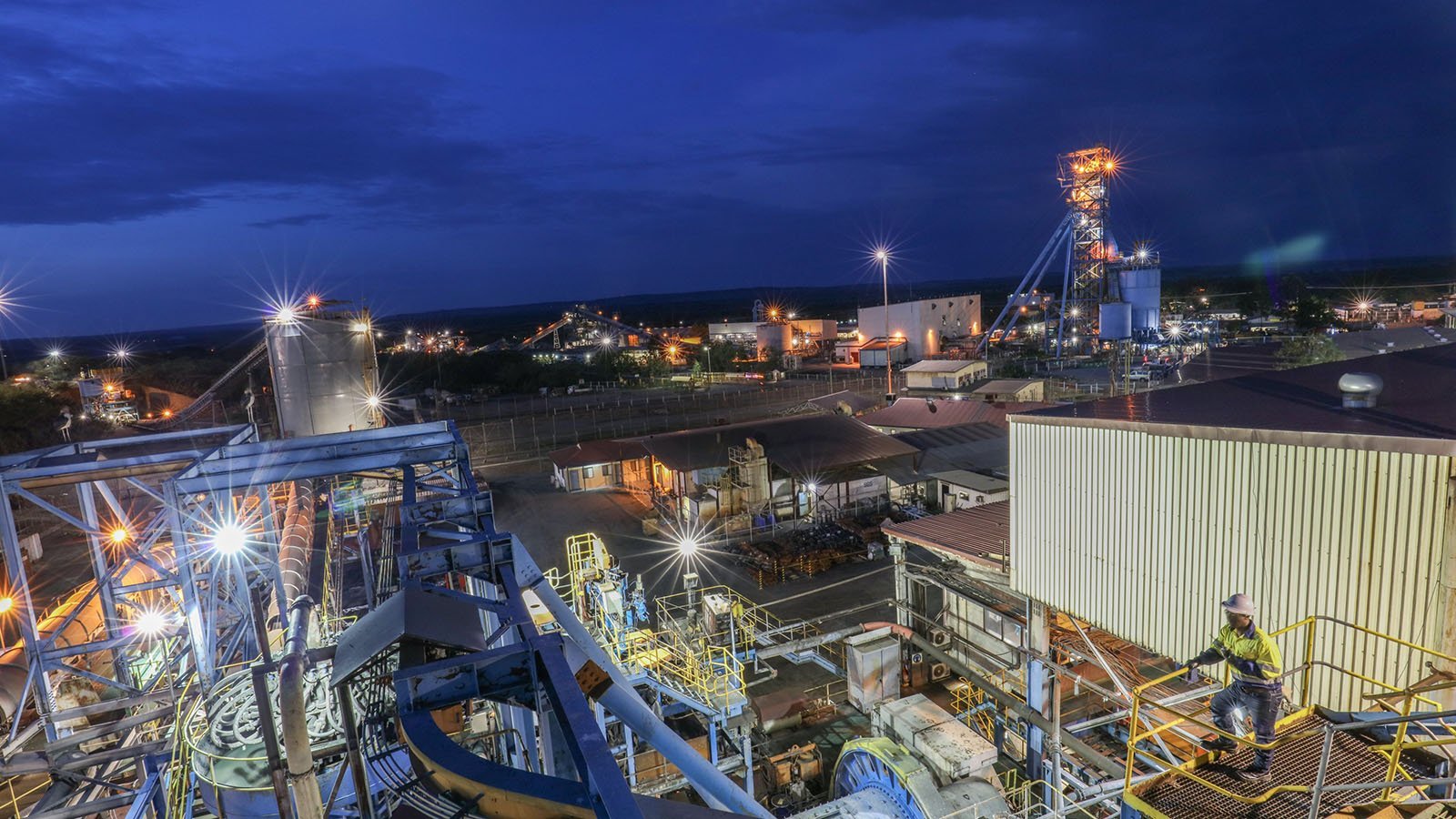
Barrick’s Tanzanian operations moved in opposite directions during the September quarter: Bulyanhulu increased production and lowered cash costs, while delayed access to higher-grade ore sharply reduced output and raised costs at North Mara.
Barrick Mining Corporation’s third-quarter results reveal a divided operational picture in Tanzania, where stronger performance at Bulyanhulu was offset by lower production and substantially higher costs at North Mara.
Bulyanhulu produced 56,000 ounces of gold on a 100-percent basis during the three months ended September 30, up from 45,000 ounces in the corresponding quarter of 2025. Barrick’s attributable share, based on its 84-percent interest, rose to 47,000 ounces from 38,000 ounces.
Total cash costs at Bulyanhulu declined to $1,189 per ounce from $1,334 a year earlier. All-in sustaining costs were broadly stable at $1,813 per ounce, compared with $1,790 in the third quarter of 2025. Barrick described Bulyanhulu as one of the stronger performers in its international portfolio.
North Mara moved in the opposite direction. Production fell to 45,000 ounces on a 100-percent basis from 75,000 ounces a year earlier. Barrick’s attributable production declined to 37,000 ounces from 64,000 ounces.
The mine’s all-in sustaining cost more than doubled to $2,972 per ounce from $1,268, while total cash costs increased to $2,260 per ounce from $1,069. Barrick attributed the weaker group-level production partly to delayed access to higher-grade material at North Mara, which it expects to reach during the fourth quarter.
The contrast matters because Tanzania’s economic benefit from gold is determined by more than the international price. Production volumes, operating costs and the timing of higher-grade ore all influence export earnings, taxable income, royalties, procurement and the amount of work available to local suppliers.
Gold prices nevertheless provided a powerful cushion. Barrick’s average realised gold price rose 23 percent year on year to $4,243 per ounce. Group revenue increased 22 percent to $5.07 billion, while net earnings edged up to $1.32 billion from $1.30 billion.
The company produced 816,000 attributable ounces of gold across its global portfolio, compared with 829,000 ounces in the same quarter of 2025. Higher prices therefore more than compensated for the decline in reported production. Operating cash flow reached $2.49 billion.
The results also expose the cost pressures facing gold producers. Barrick’s group all-in sustaining cost increased to $1,911 per ounce from $1,538 a year earlier. The company cited lower processed grades, higher royalties linked to stronger gold prices and elevated diesel costs.
For Tanzania, the immediate question is whether North Mara’s operational setback is temporary. Accessing the expected higher-grade material in the fourth quarter would support a production recovery and improve the mine’s cost profile. Further delays would leave North Mara more dependent on historically high gold prices to protect margins.
Bulyanhulu’s performance is more encouraging. Higher production combined with lower cash costs indicates improved operating leverage, while the company’s published 2026 outlook projects attributable production of between 140,000 and 160,000 ounces from the mine. That remains a forecast rather than a confirmed full-year outcome.
The wider economic effect cannot be calculated from the group results alone. Barrick did not disclose Tanzania-specific revenue, royalties, taxes or local procurement for the quarter in its headline release. Higher global earnings should therefore not automatically be interpreted as an equivalent increase in Tanzanian public revenue.
Attention now shifts to North Mara’s fourth-quarter grade recovery, power reliability at the two operations, year-end production and cost performance, and any subsequent disclosure on taxes, royalties, employment and local purchasing.
 Uchumi360
Business Intelligence
Uchumi360 covers business, investment, and economic policy across East, Central, and Southern Africa.
For the serious reader
You read to the end. That places you in a small group.
Uchumi360 is built for readers who demand precision over speed, structure over sentiment, and analysis that holds uncomfortable conclusions rather than softening them. If this work sharpens how you think about Africa's economy, help us keep building the infrastructure behind it.
Institutional Partners
Commission intelligence. Shape the conversation.
Uchumi360 works with development finance institutions, investment firms, sovereign bodies, and strategic organisations across the coverage region. Institutional partnership unlocks:
- Commissioned sector and country intelligence reports
- Branded research series under your institution's authority
- Exclusive data briefings for internal strategy teams
- Speaking and editorial presence at Uchumi360 events
- Co-published investment outlooks for your markets
Support Our Work
Independent analysis has a cost. Help us bear it.
Uchumi360 does not carry advertising. It does not take editorial direction from sponsors. Every article is produced without commercial compromise. Your contribution funds the reporting, research, and editorial infrastructure that keeps this analysis free from influence.
Secure checkout: One-time and monthly support are processed securely. Add payment credentials to enable checkout here.
Stay Connected
Keep up with every new insight.
Follow our latest analysis, policy coverage, and market intelligence as soon as it is published. If you need something specific, reach out directly and we will point you to the right research.
