
Is Uganda About to Ditch Kenya's $3 Billion SGR and Choose Tanzania Again, and Again?
Ready
A decade after Uganda chose Tanzania over Kenya for its crude oil export pipeline in 2016, Kampala is once again strengthening its economic ties with Dar es Salaam through the proposed Tanga Regional Energy Hub in 2026. Now, Uganda's military chief has announced the indefinite cancellation of a nearly $3 billion railway construction contract with Turkish firm Yapı Merkezi, just three days after Presidents Yoweri Museveni and Samia Suluhu Hassan agreed to accelerate an SGR connection through Tanzania. While Kenya is investing billions to extend its railway towards Malaba, Uganda's connecting section remains entangled in contractual disputes and financing delays. Tanzania, meanwhile, is extending its own SGR towards Isaka, pursuing a railway connection to western Uganda and the DRC, and deepening its partnership with Kampala in petroleum infrastructure. Uganda has not formally abandoned Kenya's Northern Corridor, but the contrast is becoming difficult to ignore: Nairobi is building towards a Ugandan railway connection whose future remains uncertain, while Dar es Salaam is advancing an alternative that could attract some of the same regional trade. Having already lost Uganda's crude oil export route to Tanzania, could Kenya now face another challenge to its position as Uganda's principal gateway to the Indian Ocean?
Uganda's renewed uncertainty over its $2.97 billion Standard Gauge Railway (SGR) contract with Turkish construction company Yapı Merkezi has created a potential opening for Tanzania's Central Corridor, three days after Presidents Yoweri Museveni and Samia Suluhu Hassan agreed to accelerate a separate railway connection linking Tanzania with western Uganda and the Democratic Republic of the Congo (DRC).
General Muhoozi Kainerugaba, Uganda's Chief of Defence Forces and President Museveni's son, announced on November 21 that the government had indefinitely cancelled its contract with Yapı Merkezi, the contractor selected to construct the 272-kilometre railway from Kampala to Malaba on the Kenyan border. He said Uganda would find a more suitable partner, reversing his own November 6 announcement that the Turkish company had been authorised to proceed with the project following instructions from Museveni.
The announcement came during a week in which Uganda's transport ministry had been preparing to finalise financing for the railway through Kenya. On November 17, Works and Transport Minister Fred Byamukama informed Parliament that the government was targeting January 2027 to complete financing arrangements, having already undertaken preparatory works, acquired sections of the railway corridor and compensated thousands of affected residents. 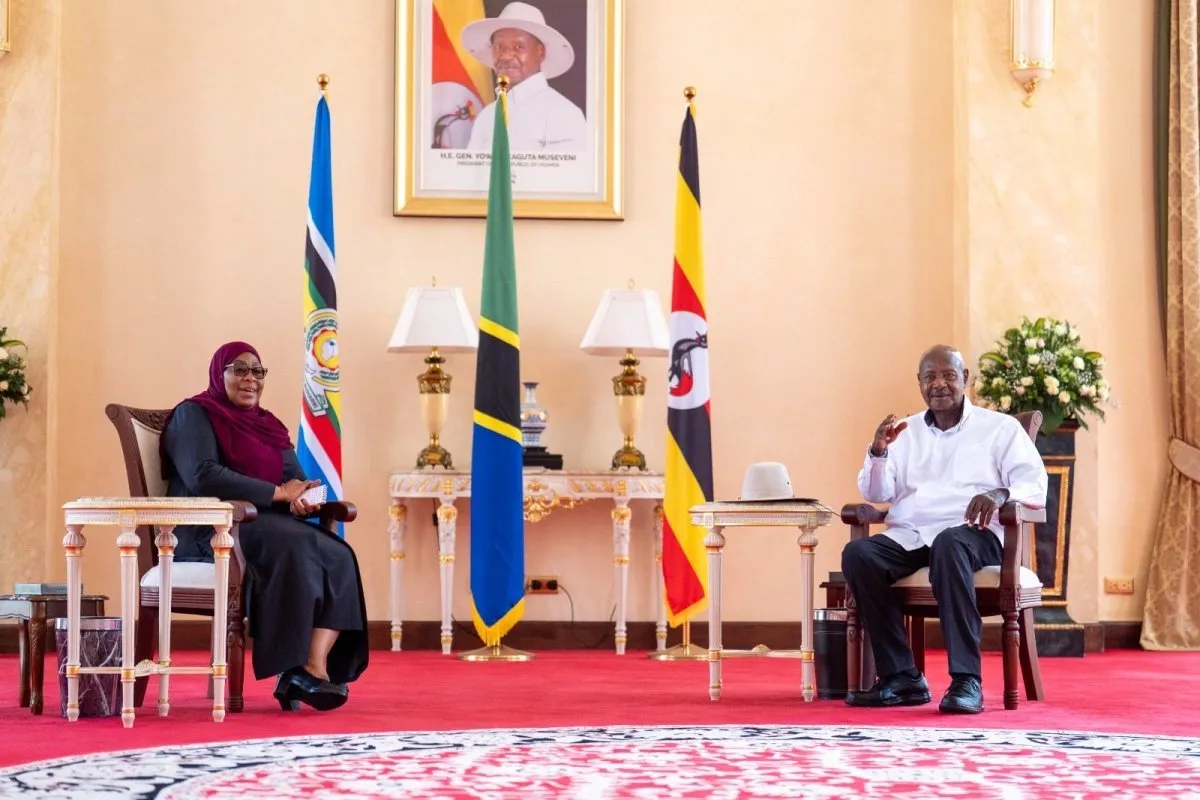 A day later, Museveni and Samia met in Entebbe and endorsed the acceleration of the Isaka to Lusahunga to Murongo/Kikagati to Mpondwe railway, a proposed connection that would link Tanzania's expanding SGR network to southwestern Uganda and the Congolese border. The presidents directed their respective authorities to advance technical studies, designs and financing arrangements.
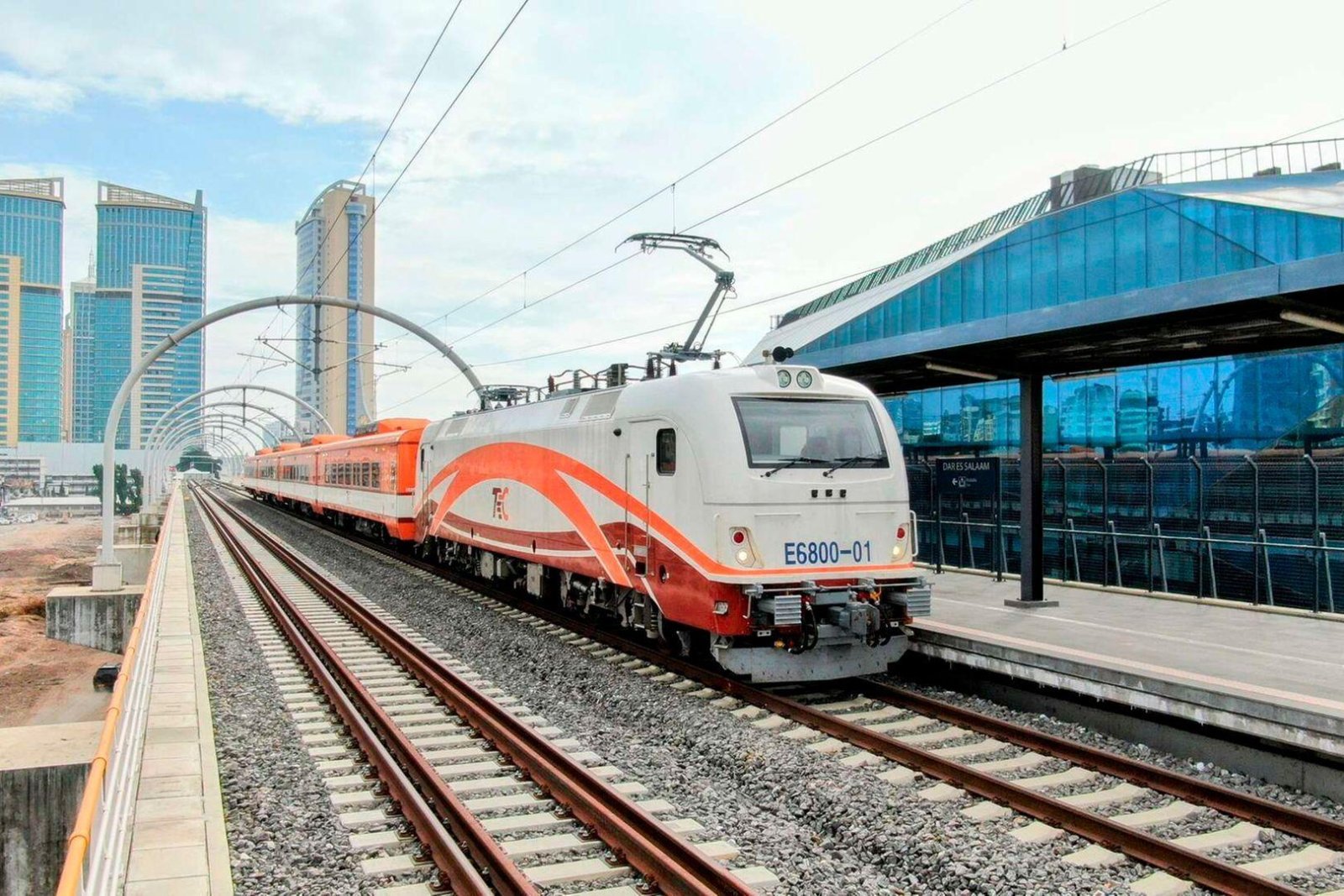
 The proximity of these events raises the possibility that Uganda's railway investment priorities could be changing. Tanzania already has an operational electric railway between Dar es Salaam and Dodoma, with further sections under construction towards Tabora, Isaka and Mwanza. Uganda, meanwhile, has spent more than a decade attempting to establish its own standard gauge connection to Kenya, encountering financing difficulties, contractor changes and repeated delays.
There is no official confirmation that Kampala has decided to abandon the Kenyan railway route in favour of Tanzania. Muhoozi's statement has also not been accompanied by a publicly verified formal termination notice from the Ministry of Works and Transport. Nevertheless, the latest developments invite a closer examination of the economics of Uganda's two possible routes to the Indian Ocean, particularly because the country has made a similar choice before.
In April 2016, Uganda selected Tanzania's Port of Tanga over Kenya's proposed Lamu route for its crude oil export pipeline. A decade later, the $5 billion plus East African Crude Oil Pipeline (EACOP) is approaching completion, while Uganda and Tanzania are exploring another major transport connection that could redirect part of the region's trade geography.
The railway decision is more complicated than the pipeline decision because Uganda's imports and exports are spread across multiple markets and commodities. But the underlying calculation is familiar: which corridor can offer landlocked Uganda reliable access to international markets at the lowest sustainable cost?
Uganda's Railway Problem Has Become Tanzania's Opportunity
The Malaba to Kampala railway was intended to complete Uganda's connection to Kenya's standard-gauge network and the Port of Mombasa. Uganda awarded an earlier construction contract to China Harbour Engineering Company in 2015, but the arrangement failed to advance after financing from China did not materialise. The government subsequently turned to Yapı Merkezi, signing a €2.7 billion engineering, procurement and construction contract in October 2024.
Museveni launched the project in Tororo in November 2024, with the main construction works expected to take approximately four years from their effective commencement. Yet by November 2026, the railway remained dependent on the completion of financing arrangements, despite substantial preliminary expenditure. The government's November 17 parliamentary update confirmed that Yapı Merkezi had undertaken preparatory work under a €75 million limited notice to proceed, including engineering investigations, site facilities and other activities required before full construction.
The Ministry of Works and Transport reported that the government had paid compensation to 7,721 people affected by the project and acquired approximately 2,108 acres of the 3,536 acres required for the railway corridor. Thousands of additional affected residents remained to be compensated. These commitments make cancellation materially more complicated than replacing a contractor before work begins, because Uganda must account for payments already made, technical documentation completed and outstanding contractual obligations.
The government had also been assembling a financing structure involving export credit agencies, development finance institutions and domestic resources. The Islamic Development Bank had approved a substantial financing commitment, while the OPEC Fund for International Development was considering a further €150 million contribution. Even before Muhoozi's latest statement, financial closure remained an obstacle to starting major construction.
These delays matter for Uganda because railway investment cannot be evaluated independently of what neighbouring countries are building. Kenya has already resumed construction of the Naivasha to Kisumu to Malaba extension, intended to carry standard-gauge rail services towards Uganda. Tanzania has also been advancing its own national railway network westwards, with the proposed Isaka to Mpondwe connection potentially creating another route to the coast.
For Uganda, the consequence is an opportunity to compare two major infrastructure systems at different stages of development. Rather than remaining committed to the original Malaba alignment solely because it was agreed earlier, Kampala could assess the relative cost of completing each corridor, the cargo each could attract, and the financial obligations associated with its own section of railway.
Tanzania's advantage is that the proposed cross border railway could be integrated into an existing national SGR investment programme. The country is already constructing sections of the railway through central Tanzania, including the route towards Isaka, which would become the starting point for the new Uganda connection.
In October 2026, Transport Minister Makame Mbarawa said the government had secured approximately TSh 3.67 trillion for construction works covering 424 kilometres between Makutupora and Isaka through Tabora. The allocation is equivalent to roughly $1.38 billion at an indicative exchange rate of TSh 2,657 per dollar.
The Tanzanian government has also identified completion of its Dar es Salaam to Mwanza railway as a priority, with Tanzania Railways Corporation indicating that operations across the full first phase remain targeted for the end of 2028. Passenger services are already operating between Dar es Salaam and Dodoma, giving the country an operational foundation from which to expand westwards.
These investments do not mean that a railway to Uganda is already financed or close to completion. Significant infrastructure would still be required between Isaka, the Tanzanian border and Mpondwe. However, they place the proposed connection within a broader programme that has existing railway operations, construction contracts and financing commitments.
For Tanzania, the commercial opportunity would be to extend the economic reach of its railway network beyond domestic passengers and freight, bringing western Ugandan and Congolese cargo into the Central Corridor and increasing the potential throughput of Dar es Salaam's port and inland logistics facilities.
The Same Turkish Contractor Is Also Under Pressure in Tanzania
One of the more consequential details in the railway dispute is that Yapı Merkezi is also a major contractor on Tanzania's Standard Gauge Railway. On October 26, less than a month before Muhoozi's latest cancellation announcement, Tanzania's Transport Minister Makame Mbarawa publicly criticised the Turkish company over delays on the 165 kilometre Tabora to Isaka section, the very part of Tanzania's railway network that would eventually support the proposed extension into Uganda.
During an inspection at Bukene, Mbarawa commended China Civil Engineering Construction Corporation (CCECC), which had been working as a subcontractor, for achieving five percentage points of construction progress during September and October 2026. According to the minister, that matched the progress Yapı Merkezi had delivered over the preceding four years. He warned the Turkish contractor about its failure to meet the required implementation timetable.
The criticism is relevant because it shows that infrastructure delivery problems involving Yapı Merkezi are not confined to Uganda. Both countries have experienced difficulties associated with the contractor, although the circumstances of each contract are different.
It also complicates any assumption that Tanzania's railway project is progressing without problems. While Tanzania has operational SGR services and ongoing construction farther inland, the Tabora to Isaka section has encountered substantial delays. The ability to connect Uganda through Isaka will depend partly on completing this section and ensuring continuous rail operations from the coast.
There is no evidence establishing that Muhoozi's November announcement was influenced by Tanzania's criticism of the contractor. His own earlier statements show that disagreements involving Yapı Merkezi predated the latest developments.
In June 2026, Muhoozi had already announced the cancellation of the Turkish contract before reversing his position in November. His latest declaration therefore represents another development in an existing dispute rather than the first indication of trouble.
Nevertheless, the parallel difficulties expose a common challenge for large East African railway projects. Contracting internationally experienced construction companies does not eliminate financing risks, delivery delays or the need for effective contract management. Railway programmes involving several national governments also require consistent technical standards and sequencing, because one unfinished section can prevent an otherwise completed network from operating as intended.
For Tanzania, completing the Tabora to Isaka section has consequences beyond the domestic Dar es Salaam to Mwanza railway. Isaka could become a junction for additional regional connections, making its timely completion increasingly relevant to the country's ambitions in cross border transport and logistics.
The New Railway Would Extend Tanzania's Reach Into Western Uganda and Eastern Congo
The Isaka to Mpondwe railway is potentially more important to Tanzania than its relatively limited public visibility suggests.
Unlike the existing Malaba to Kampala proposal, which is primarily designed to connect Uganda's capital with Kenya's railway network, the Tanzania route would pass through the western part of Uganda before reaching the DRC border. The alignment identified in the November 18 communiqué begins at Isaka, proceeds through Lusahunga and Murongo/Kikagati, and continues towards Mpondwe.  The geography gives Tanzania a possible entry into a wider freight market than the one served by the existing rail terminus at Dodoma. Western Uganda has agricultural production, commercial centres, energy developments and trading relationships with eastern DRC. Access to a standard gauge railway could provide an additional outlet for freight moving between these inland markets and the Indian Ocean.
For Dar es Salaam, transit cargo is commercially valuable because it generates demand across the transport chain, including port handling, warehousing, customs clearance, container services, rail operations and inland logistics. Increasing traffic from landlocked neighbouring countries can improve the utilisation of expensive port and railway assets, provided adequate capacity and reliable service are available.
The proposed route also fits Tanzania's longer term objective of positioning the Central Corridor as a transport system serving several landlocked countries rather than primarily the Tanzanian domestic market.
However, the potential connection to the DRC requires some geographic qualification. Mpondwe lies near Kasindi, which serves important commercial markets in eastern Congo. The country's largest copper and cobalt producing provinces, including Lualaba and Haut Katanga, are much farther south and already served by competing regional transport routes. The existence of a railway to Mpondwe would not automatically redirect copper or cobalt cargo from those provinces to Tanzania.
The stronger immediate commercial case may lie in serving eastern Congolese markets, western Ugandan agricultural trade, fuel imports, construction materials, manufactured goods and other freight already moving through established border crossings.
The potential advantage for Uganda is similarly location dependent. Kampala's access to Mombasa through the Northern Corridor differs from the transport needs of businesses in southwestern Uganda. A railway reaching Mpondwe could provide some of those markets with a more direct connection to the Tanzanian network, but that advantage must be demonstrated through detailed cost and freight studies.
Any future allocation of railway investment should account for these differences rather than treating Uganda as a single cargo market with one preferred seaport.
Uganda's 2016 Oil Pipeline Decision Provides an Important Precedent
The comparison with Uganda's earlier petroleum export decision is difficult to ignore. In 2015, Uganda and Kenya were exploring a crude oil pipeline connecting Uganda's Lake Albert oilfields to Kenya's proposed Lamu port infrastructure. The project was linked to wider plans for a regional transport and energy corridor across eastern Africa, and Kenya appeared well positioned to become the export destination for Ugandan crude.
By April 2016, Uganda had chosen Tanzania instead. The proposed route to Tanga was assessed against the Kenyan alternative using considerations that included construction cost, security, terrain and available port infrastructure. Contemporary reporting identified the lower expected cost of the Tanzanian alignment and concerns about the security of the Kenyan route among the factors influencing the choice.
The eventual result was EACOP, a 1,443 kilometre heated crude oil pipeline running from Uganda to Tanzania's coast. The decision created a major bilateral infrastructure commitment, with associated investment in pipelines, terminals, roads and supporting services.
During their November 18, 2026 meeting, Museveni and Samia again discussed the petroleum project, alongside additional energy cooperation and proposals to strengthen Tanga's position as a regional energy centre.
That history makes the current railway discussions commercially relevant. Uganda has previously altered an expected infrastructure alignment after evaluating competing routes to the coast, despite earlier political commitments to Kenya.
Yet there is an important difference between transporting crude oil and operating a regional railway. A pipeline can be designed around identified oilfields, production forecasts and contracted export volumes. A railway depends on attracting cargo from different industries, maintaining regular freight services, securing return loads and competing with established road transport and other railway operators.
The Tanzanian route cannot therefore be presumed economically preferable simply because Tanzania won the pipeline decision in 2016.
A useful lesson from that decision is that an earlier political agreement does not permanently determine Uganda's choice of infrastructure corridor. Commercial and financing considerations can lead governments to reassess their options, particularly when large construction contracts remain unresolved.
Uganda and Tanzania are also deepening their energy partnership through the proposed Tanga Regional Energy Hub, an investment programme estimated at more than $20 billion that would incorporate petroleum refining, storage, trading and distribution infrastructure. In August 2026, the Uganda National Oil Company (UNOC), Tanzania Petroleum Development Corporation (TPDC) and Vitol Bahrain signed an agreement to advance the project, which Presidents Museveni and Samia reaffirmed during their November 18 meeting in Entebbe.
The development is particularly relevant because Museveni publicly declined to commit Ugandan investment to Kenya's proposed $16 billion Dangote refinery in Lamu during its groundbreaking ceremony on September 30. “This one, I support, but I will not invest yet,” Museveni said, explaining that he wanted clarification on the earlier refinery proposal for Tanga and intended to proceed with Uganda's own refinery in Hoima. His position was not an outright rejection of the Kenyan project, but it underscored Uganda's continuing interest in developing petroleum infrastructure with Tanzania.
Taken together with the East African Crude Oil Pipeline and the proposed railway connection through Isaka, the Tanga initiative suggests that Uganda and Tanzania are developing an increasingly integrated relationship across energy production, processing and transport, potentially strengthening Tanzania's position as a gateway for Uganda's trade and petroleum industries.
Kenya's Existing Trade Advantage Makes a Complete Pivot Unlikely
Although Tanzania stands to gain from Uganda's growing interest in the Central Corridor, Kenya retains advantages that any commercial analysis must recognise.
The Port of Mombasa is already a major gateway for Ugandan imports and exports. Businesses operating through the Northern Corridor have established relationships with shipping companies, logistics providers, clearing agents and transport operators. Replacing those arrangements would involve more than constructing another railway.
Kenya is also extending its SGR towards Uganda. In March 2026, President William Ruto launched the Naivasha to Kisumu extension, with Museveni participating in the launch of the onward connection towards Malaba. The Kenyan project includes approximately 264 kilometres from Naivasha to Kisumu and another 107 kilometres towards the Ugandan border.
The Kenyan extension has its own financing and implementation challenges, but construction has begun. This gives Kenya a more immediate basis for connecting its existing railway to Uganda than the Tanzania to Mpondwe proposal, which remains in the feasibility and financing preparation stage.
A delayed or abandoned Ugandan connection at Malaba would create a commercial problem for Kenya because part of the value of the extension depends on accessing freight from Uganda and neighbouring countries. A functioning railway ending at the border could still support cargo transfer to road transport, but it would fall short of the uninterrupted railway system envisioned by both governments.
The corresponding opportunity for Tanzania is to establish a credible alternative before Uganda becomes locked into one route through the completion of the Kenyan connection.
However, this should not be understood as an inevitable transfer of freight from Mombasa to Dar es Salaam. Cargo owners compare total logistics costs, including shipping charges, rail tariffs, road transport, border delays, cargo handling, storage and reliability. The cheapest railway construction estimate does not necessarily produce the cheapest freight service.
Tanzania would therefore have to demonstrate that its network can offer commercially competitive transport for the markets it intends to serve. Construction progress between Dar es Salaam and Isaka is only one component. The government would also need efficient rail freight operations, adequate terminal capacity, predictable border procedures and competitive connections to customers in Uganda and the DRC.
An additional railway could benefit Uganda without eliminating the economic relevance of Mombasa. The two corridors may compete for some cargo while serving distinct regional markets. The critical question is whether their traffic volumes would justify investment in two expensive systems.
The $3 Billion Contract Dispute Could Change Uganda's Negotiating Position
There are at least two ways to interpret Muhoozi's announcement.
The first is that Uganda intends to retain the Malaba alignment while replacing Yapı Merkezi or renegotiating the existing contract. Under this interpretation, the dispute concerns the contractor rather than the railway's destination. The Ministry of Works and Transport could continue with the Northern Corridor once contractual and financing issues are resolved.
This interpretation deserves attention because Muhoozi's latest declaration follows his own previous reversals. On November 6, he announced that the company had been approved to proceed following directions from Museveni. His November 21 cancellation therefore cannot be treated as conclusive evidence of a settled government decision.
The second possibility is that the dispute gives Uganda more room to reconsider the sequencing of its railway investments. With the Tanzania connection receiving renewed presidential support, Kampala could examine whether some freight markets would be better served by prioritising the western route.
A decision to shift construction priorities would have consequences for financing. Uganda would need to reconsider which projects received budget allocations, what debt commitments were affordable, and whether international lenders were prepared to support the revised investment programme.
It would also have consequences for Kenya and Tanzania. Both countries have committed substantial resources to national railway systems whose future commercial performance could improve if they capture transit cargo from Uganda and the DRC.
For Uganda, retaining credible alternatives may strengthen its ability to negotiate financing, construction terms and future freight tariffs. But the value of those alternatives depends on their actual technical and financial feasibility. An announced railway without a viable construction plan provides limited commercial competition to an established corridor.
The November 18 bilateral communiqué is therefore important, but its wording is equally important. Museveni and Samia instructed their institutions to advance technical designs, feasibility studies and financing preparations. They did not announce that construction financing had been secured or that Uganda would discontinue its railway connection through Kenya.
A genuine strategic shift would be more clearly demonstrated by the government's next decisions: a formal cancellation of the Malaba contract, reassignment of railway financing, a new national construction sequence or binding investment commitments for the Isaka to Mpondwe connection. Until then, Tanzania's opportunity is substantial but remains conditional.
Tanzania Has a Window to Make the Central Corridor More Competitive
For Tanzania, the events of November 2026 create an opportunity to advance a railway proposal that has been discussed for months.
Reuters reported in February that Uganda was studying a rail connection to Tanzania, with the proposed route intended to provide an additional export outlet for minerals and other commodities. The African Development Bank was considering support for project preparation, although financing remained dependent on feasibility and commercial assessments.
The presidential agreement in November adds political support to those preparations. Tanzania also enters the discussions with an existing SGR operation, a programme of construction towards Isaka and a seaport that already serves regional transit markets.
The remaining investment requirements are substantial. In addition to completing the unfinished sections of Tanzania's domestic railway, the two countries would need to finance the new cross border alignment, resolve engineering and environmental requirements, acquire land, establish terminal facilities and agree on operating arrangements.
The DRC's eventual participation would introduce further considerations, particularly if the project were to extend beyond the border towards Congolese markets. Its participation could expand the potential freight base, but only if the infrastructure connects to commercially relevant production and consumption centres.
A credible economic assessment would also require the governments to compare the likely cost of freight using the proposed railway with the current cost of transporting goods through Mombasa and Dar es Salaam. Without these figures, claims that either corridor will necessarily offer lower transport costs remain forecasts rather than demonstrated outcomes.
The scale of Tanzania's national railway investment gives it a reason to pursue additional transit markets. Railways require sustained freight volumes to support operations and maintenance, and a network reaching western Tanzania could create further commercial value if it is connected to Uganda and neighbouring countries.
The opportunity is therefore connected to the financial performance of infrastructure Tanzania is already building. Additional regional traffic could help improve asset utilisation, support logistics investment and strengthen Dar es Salaam's role in supplying inland markets.
But Tanzania's own experience with construction delays shows that delivering the railway will require close attention to financing, contractor performance and implementation schedules. The proposed Ugandan connection would become commercially useful only after the necessary sections are completed and operating as a continuous transport system.
Uganda's Next Railway Decision Could Reshape East Africa's Trade Routes
Ten years after Uganda selected Tanzania over Kenya for its crude oil pipeline, another major infrastructure decision is emerging against the background of competing routes to the Indian Ocean.
The circumstances differ, but the latest developments have brought Tanzania's Central Corridor into sharper focus. Uganda's Malaba railway remains without complete construction financing, its principal contractor faces another public cancellation announcement, and a separate railway proposal through Tanzania has received renewed support from both presidents.
Kenya continues to possess an established commercial relationship with Ugandan traders and is constructing the missing railway sections towards Malaba. Tanzania, meanwhile, is expanding its own network towards Isaka and has secured Uganda's commitment to advance the proposed connection towards the DRC.
Neither development establishes the outcome. Uganda could retain the Malaba railway, pursue the Tanzanian connection, or ultimately develop both routes to serve different freight markets.
The immediate significance for Tanzania is that it has another opportunity to demonstrate the commercial value of its Central Corridor while Uganda's existing railway strategy faces contractual and financial uncertainty. The scale of the potential market extends beyond Uganda itself to eastern Congo and other inland economies seeking reliable access to international shipping.
The next decisions will be more informative than the announcements. Formal clarification of Yapı Merkezi's contract, the outcome of Uganda's January 2027 financing target, and progress on feasibility and financing for the Isaka to Mpondwe line will help establish whether Kampala is genuinely changing its investment priorities.
For Tanzania, the commercial proposition is becoming clearer: completing its existing railway and extending the network towards Uganda could give Dar es Salaam a larger share of East Africa's inland trade. Whether Uganda chooses to provide that opportunity will depend on costs, financing and the ability of each corridor to deliver the services freight customers require.
 Uchumi360
Business Intelligence
Uchumi360 covers business, investment, and economic policy across East, Central, and Southern Africa.
For the serious reader
You read to the end. That places you in a small group.
Uchumi360 is built for readers who demand precision over speed, structure over sentiment, and analysis that holds uncomfortable conclusions rather than softening them. If this work sharpens how you think about Africa's economy, help us keep building the infrastructure behind it.
Institutional Partners
Commission intelligence. Shape the conversation.
Uchumi360 works with development finance institutions, investment firms, sovereign bodies, and strategic organisations across the coverage region. Institutional partnership unlocks:
- Commissioned sector and country intelligence reports
- Branded research series under your institution's authority
- Exclusive data briefings for internal strategy teams
- Speaking and editorial presence at Uchumi360 events
- Co-published investment outlooks for your markets
Support Our Work
Independent analysis has a cost. Help us bear it.
Uchumi360 does not carry advertising. It does not take editorial direction from sponsors. Every article is produced without commercial compromise. Your contribution funds the reporting, research, and editorial infrastructure that keeps this analysis free from influence.
Secure checkout: One-time and monthly support are processed securely. Add payment credentials to enable checkout here.
Stay Connected
Keep up with every new insight.
Follow our latest analysis, policy coverage, and market intelligence as soon as it is published. If you need something specific, reach out directly and we will point you to the right research.
