
GGML and Tanzania’s Mining Growth: Why Careful Scrutiny Matters for Shared Prosperity
Ready
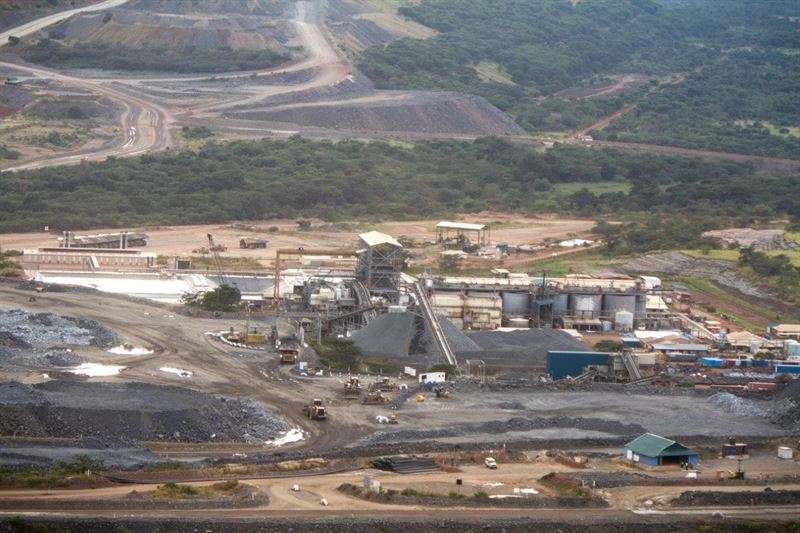
GGML are employing over 7,000 people (98% Tanzanians, 88% in leadership), and spending over US$400 million annually on procurement, with 95% of that money staying within Tanzania.
Tanzania’s mining sector continues to play a central role in the nation’s economic transformation. According to Prime Minister Kassim Majaliwa, the sector contributed 10.1% of GDP in 2024, marking it as one of the fastest-growing industries in the country. A key player behind this growth is Geita Gold Mining Limited (GGML), a subsidiary of AngloGold Ashanti.
At the 8th Mining Technology Exhibition in Geita, the Prime Minister highlighted GGML’s contribution to national growth, while the company’s Vice President, Simon Shayo, outlined the scale of its operations: employing over 7,000 people (98% Tanzanians, 88% in leadership), and spending over US$400 million annually on procurement, with 95% of that money staying within Tanzania.
These numbers are impressive but they also raise an important question: Is Tanzania capturing the full potential of this investment?
1. Employment and Skills Transfer
While GGML has a commendable record of employing Tanzanians, the real measure of long-term impact is skills transfer and professional development. Training programs, scholarships, and industry-specific skills development should be expanded so that Tanzanians not only fill positions but also become global leaders in mining innovation and management.
2. Local Procurement and Industrial Linkages
The fact that 95% of GGML’s procurement spending remains in Tanzania is significant. However, the question remains: What proportion of this spending supports industrial development rather than basic consumables? To maximize impact, procurement should increasingly favour local manufacturing, engineering firms, and technology providers, creating a multiplier effect across the economy.
3. Community Development and Shared Value
Mining towns like Geita often face challenges of uneven development, where mining companies flourish but communities struggle with poverty, inadequate infrastructure, and social services. GGML must continue and expand its corporate social investment in areas like health, education, and water access, ensuring that the wealth generated does not bypass local communities.
4. Tax Contribution and Transparency
For Tanzania to fully benefit, transparency around tax contributions, royalties, and revenue-sharing is essential. GGML should not only comply with tax laws but also embrace international standards of open reporting, ensuring Tanzanians see the direct link between mineral wealth and national development.
5. Environmental Responsibility
Mining comes with environmental risks land degradation, water pollution, and biodiversity loss. GGML must be held to strict environmental standards, with transparent reporting on rehabilitation programs, waste management, and long-term land-use planning. This will secure not just today’s gains but also future sustainability.
Policy Checklist: Ensuring Tanzanians Benefit from Mining Companies like GGML
To maximize the sector’s contribution to Tanzania’s Vision 2050, the government, regulators, and stakeholders should prioritize:
Skills Transfer Mandates – Require structured training, scholarships, and capacity-building programs so Tanzanians can lead in management and technical roles.
Local Industrial Linkages – Incentivize procurement from Tanzanian manufacturers, engineering firms, and technology providers, not just suppliers of basic goods.
Community Investment Benchmarks – Set minimum annual commitments for health, education, and infrastructure spending in host communities.
Revenue Transparency – Enforce open disclosure of taxes, royalties, and community contributions under international standards like the Extractive Industries Transparency Initiative (EITI).
Environmental Safeguards – Strengthen monitoring of waste disposal, land rehabilitation, and water use, with penalties for non-compliance.
Conclusion: Scrutiny for Shared Prosperity
GGML’s contributions to Tanzania’s economy cannot be understated jobs, procurement, tax revenue, and sectoral growth all demonstrate its importance. However, size and scale must come with accountability.
For Tanzanians to truly benefit, GGML must be seen through a lens of careful scrutiny one that measures success not just by profits or GDP contribution, but by the extent to which its operations build local industries, empower communities, and safeguard the environment.
Only then can the promise of Tanzania’s “mineral wealth” become a shared prosperity story for generations to come.
 Uchumi360
Business Intelligence
Uchumi360
Business Intelligence
Uchumi360 covers business, investment, and economic policy across East, Central, and Southern Africa.
For the serious reader
You read to the end. That places you in a small group.
Uchumi360 is built for readers who demand precision over speed, structure over sentiment, and analysis that holds uncomfortable conclusions rather than softening them. If this work sharpens how you think about Africa's economy, help us keep building the infrastructure behind it.
Institutional Partners
Commission intelligence. Shape the conversation.
Uchumi360 works with development finance institutions, investment firms, sovereign bodies, and strategic organisations across the coverage region. Institutional partnership unlocks:
- Commissioned sector and country intelligence reports
- Branded research series under your institution's authority
- Exclusive data briefings for internal strategy teams
- Speaking and editorial presence at Uchumi360 events
- Co-published investment outlooks for your markets
Support Our Work
Independent analysis has a cost. Help us bear it.
Uchumi360 does not carry advertising. It does not take editorial direction from sponsors. Every article is produced without commercial compromise. Your contribution funds the reporting, research, and editorial infrastructure that keeps this analysis free from influence.
Secure checkout: One-time and monthly support are processed securely.
Stay Connected
Keep up with every new insight.
Follow our latest analysis, policy coverage, and market intelligence as soon as it is published. If you need something specific, reach out directly and we will point you to the right research.
