

The Economics of Mining Royalties and Local Content Policies
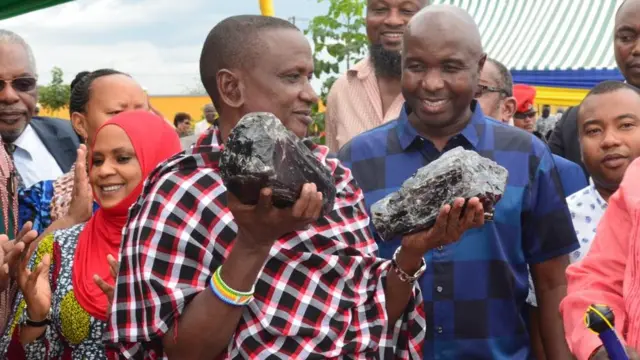
When designed and implemented strategically, royalties and local content policies have the power to transform Tanzania’s mineral wealth into long-term, broad-based prosperity.
Mining remains one of Tanzania’s most strategic economic pillars, contributing thousands of jobs, generating foreign exchange, and supplying a significant share of government revenue. Yet the debate over royalties and local content policies continues to shape how the country manages its mineral wealth. These two components determine how benefits are shared between the government, investors, and surrounding communities. This article provides an analytical look at how royalties and local content influence economic growth, investment decisions, and long-term national development.
1. Why Royalties Matter
Royalties are mandatory payments that mining companies make to the government for extracting natural resources. They serve as a mechanism to ensure that the nation receives fair compensation for its finite mineral wealth. By collecting royalties, the government is able to support essential public services such as education, healthcare, and infrastructure. Additionally, royalty revenues can be used to finance development in mining communities, helping reduce poverty and expand economic opportunities. For Tanzania, royalties are especially important because minerals like gold, nickel, graphite, uranium, and rare earth elements have strategic value both locally and globally.
2. Tanzania’s Royalty Structure
Tanzania applies different royalty rates depending on the type and value of minerals produced. This tiered structure helps align national interests with global market dynamics. However, the mining industry often argues that higher royalty rates increase operational costs, reduce competitiveness, and discourage further exploration especially in high-risk zones where geological information is limited. On the other hand, very low royalties reduce public benefits and weaken national bargaining power. Finding the right balance is therefore crucial to maintain investor confidence while ensuring the country benefits adequately from its natural resources.
3. Local Content: Building National Capacity
Local content policies require mining companies to employ Tanzanians, procure goods and services from local suppliers, transfer technical skills, and support the growth of domestic industries connected to mining. The purpose is to prevent an “enclave economy,” where mining activities operate in isolation with little connection to the broader national economy. Strong local content policies help ensure that mineral wealth contributes to long-term economic transformation instead of short-term revenue collection.
4. Economic Benefits of Local Content
Effective local content frameworks create multiple layers of economic benefits. They expand employment opportunities for Tanzanian professionals, artisans, and technical workers. Local SMEs gain access to mining supply chains, enabling them to grow and innovate. Technology transfer allows Tanzanian firms and workers to acquire specialized skills that strengthen the country’s technical capacity. Additionally, local content can increase national income through business linkages and stimulate industrialization especially when combined with downstream processing such as smelting, refining, and battery mineral production.
5. Challenges and Risks
Despite their potential, local content and royalty policies face notable challenges. Some local companies lack the technical capacity or financial strength to meet strict mining standards, limiting their participation. Enforcement of local content rules can sometimes be inconsistent, creating uncertainty for investors. If poorly coordinated, local content requirements may increase operational costs, which can deter investment. Skills gaps also remain a major barrier, especially in specialized mining fields such as geology, metallurgy, and engineering. These challenges highlight the need for strategic implementation rather than policy expansion alone.
6. Policy Recommendations
To maximize benefits, Tanzania should strengthen monitoring frameworks that track local content performance and ensure compliance. Investing in specialized vocational and technical training will help reduce reliance on foreign expertise and expand the pool of qualified Tanzanians. Developing strong industrial linkages—especially through mineral processing, smelting, and manufacturing—will add more value domestically. Adjusting royalty rates to strike a balance between competitiveness and national benefit is crucial. Finally, establishing continuous public–private dialogue platforms will promote transparency, reduce friction, and build long-term investor trust.
Conclusion
When designed and implemented strategically, royalties and local content policies have the power to transform Tanzania’s mineral wealth into long-term, broad-based prosperity. Achieving this requires consistency, strong institutional capacity, and an investment-friendly environment. With the right balance, Tanzania can secure fair value for its resources while fostering a competitive and inclusive mining sector.
