
How Africa's 10 Biggest Economies Got There, and Why That's a Different Question From Who's Developing Best
Ready
The IMF's April 2026 World Economic Outlook puts Africa's ten largest economies by nominal GDP at South Africa ($480.0bn), Egypt ($429.6bn), Nigeria ($377.4bn), Algeria ($317.2bn), Morocco ($194.3bn), Angola ($152.4bn), Kenya ($147.3bn), the DRC ($123.4bn), Ethiopia ($121.5bn) and Ghana ($118.3bn), together accounting for roughly $2.46 trillion. Each got there through a distinct model: South Africa through industrial and financial diversification, Egypt through geography and infrastructure investment, Nigeria through population-driven scale, Algeria and Angola through hydrocarbon revenue now being redirected toward diversification, Morocco through export-manufacturing integration, Kenya through regional services and logistics, the DRC through a mineral boom, Ethiopia through state-led investment and rapid growth, and Ghana through a diversified resource-and-services base rebuilt after a debt crisis. Nominal GDP figures shift meaningfully with exchange rates, and the more important question the ranking raises isn't who's biggest, but which of these economies are converting size into broad-based productivity and income growth.
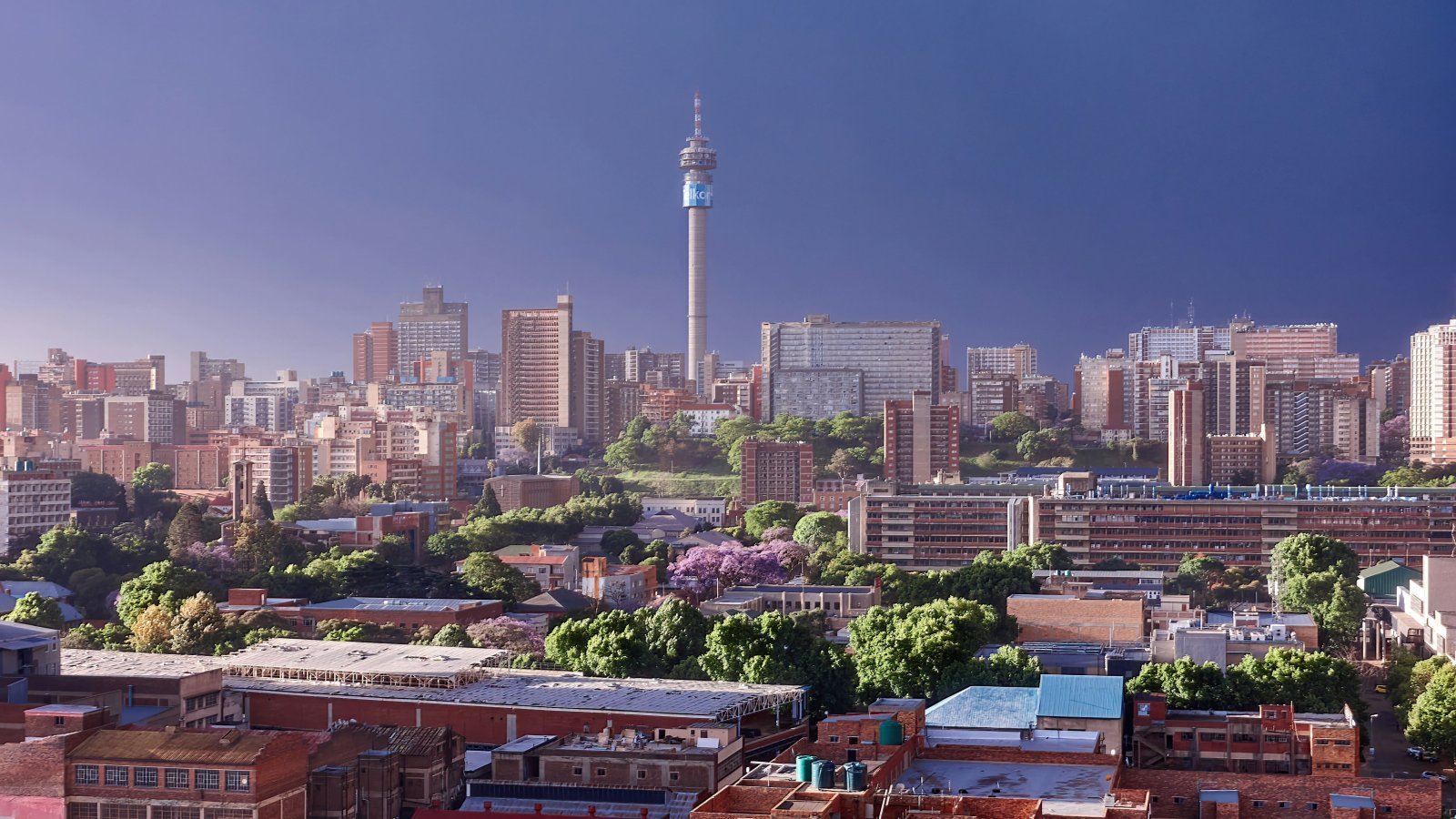
JOHANNESBURG — Africa's economic map keeps its shape from year to year more than its substance does. The same ten countries have occupied roughly this ranking for several years running, but the IMF's April 2026 World Economic Outlook data, measuring nominal GDP in current US dollars at market exchange rates, shows a continent whose largest economies got to their current size through almost entirely different routes. That divergence, not the ranking itself, is the more useful thing to understand.
The Ranking
| Rank | Country | 2026 Nominal GDP | Primary Growth Driver |
| 1 | South Africa | $480.0 billion | Industrial and financial diversification |
| 2 | Egypt | $429.6 billion | Geography, infrastructure, population scale |
| 3 | Nigeria | $377.4 billion | Population-driven services and consumer economy |
| 4 | Algeria | $317.2 billion | Hydrocarbons, now diversifying |
| 5 | Morocco | $194.3 billion | Export manufacturing integration |
| 6 | Angola | $152.4 billion | Oil, now investing in logistics corridors |
| 7 | Kenya | $147.3 billion | Regional services, finance and logistics hub |
| 8 | DR Congo | $123.4 billion | Mineral exports (copper, cobalt) |
| 9 | Ethiopia | $121.5 billion | State-led investment and infrastructure |
| 10 | Ghana | $118.3 billion | Gold, cocoa, oil and services |
Source: IMF World Economic Outlook, April 2026, nominal GDP at current US dollar exchange rates.
Together, these ten economies account for roughly $2.46 trillion of Africa's total output, with the top five alone, South Africa, Egypt, Nigeria, Algeria and Morocco, making up more than half of the continent's combined GDP. That concentration is itself worth pausing on before looking at any individual country: more than 40 other African economies share the remaining, smaller portion of the continent's output.
One methodological note worth stating plainly: nominal GDP rankings like this one are sensitive to currency movements in ways that can obscure or exaggerate real economic change. Nigeria's own recent history illustrates this starkly, its nominal GDP fell from roughly $477 billion in 2022 to as low as $253 billion in the 2024 IMF projection, driven almost entirely by naira devaluation rather than a collapse in actual domestic production, before recovering toward its current $377.4 billion estimate. Reported GDP figures for this ranking also vary somewhat between publications and data-pull dates even within the same April 2026 WEO release; the figures used here are the most consistently corroborated across independent sources, but readers comparing this ranking against other outlets, including earlier Uchumi360 coverage of the same dataset, may see modest variation for that reason.
1. South Africa: Built the Most Diversified Economic Base
South Africa remains Africa's largest economy in 2026, narrowly ahead of Egypt, and its advantage isn't one commodity. It's the depth of its economic structure. The country has mining, manufacturing, agriculture, financial services, telecommunications, retail, tourism and logistics operating simultaneously, with Johannesburg functioning as one of the continent's major financial centres and an industrial base spanning automotive manufacturing, chemicals, metals and food processing. The World Bank describes South Africa as having one of the continent's most diversified production bases, anchored by a deep financial sector and major logistics capabilities.
That breadth hasn't translated into fast growth. The IMF projects South Africa's economy grew only about 1% in 2026, and unemployment remained above 30% in 2025. South Africa became Africa's biggest economy by building breadth. Its challenge now is converting that breadth into faster growth and more employment.
2. Egypt: Turned Geography Into an Economic Asset
Egypt's economic power begins with geography, sitting between Africa, Europe and Asia and controlling the Suez Canal, one of the world's most important maritime trade routes. But the canal alone doesn't explain Egypt's scale. A population exceeding 100 million gives it one of Africa's largest domestic consumer markets, supporting tourism, manufacturing, construction, agriculture, energy and a large services sector, built on years of heavy government investment in roads, ports, electricity generation and new urban development.
Recent reforms focused on exchange rate flexibility, fiscal consolidation and tax reform are beginning to show in growth data: Egypt's real GDP expanded 5.3% during the first half of fiscal 2026, up from 3.9% a year earlier, with manufacturing, tourism, communications and a gradual recovery in Suez Canal traffic all contributing. Egypt's lesson is straightforward: geography becomes economic power when a country builds infrastructure around it.
3. Nigeria: Made Scale Its Economic Weapon
Nigeria's greatest economic asset is scale. One of the world's largest populations gives it an enormous domestic market for banking, telecommunications, food, retail, entertainment and digital services. Oil created the initial foundation, but the economy has broadened considerably since, telecommunications transformed the country, banking and fintech expanded rapidly, entertainment became a genuine export, and agriculture remains a huge employer.
The IMF projects Nigeria's real GDP growth at 4.1% in 2026, with non-oil GDP growing at a similar pace. What that scale hasn't yet produced is comparable income per person: projected 2026 nominal GDP per capita sits at roughly $1,556. Nigeria shows that population can create enormous economic scale. It doesn't automatically create prosperity.
4. Algeria: Built on Hydrocarbons, Now Diversifying
Algeria's economic weight is inseparable from oil and gas, which have historically generated the majority of export earnings and a substantial share of government revenue, financing infrastructure, public services and state investment despite a relatively small private sector. The government is now pushing agriculture, manufacturing, mining and non-hydrocarbon exports as a hedge against that dependence. The World Bank reports Algeria's non-hydrocarbon exports tripled between 2017 and 2023, to $5.1 billion, while non-hydrocarbon GDP grew 4.8% in 2024, supported by a new investment law, banking reforms and a new mining law. Algeria's story runs in two phases: hydrocarbons built national economic capacity first, and that capacity is now being redirected toward reducing hydrocarbon dependence.
5. Morocco: Manufacturing Turned Geography Into Exports
Morocco has arguably the most interesting industrialisation story among Africa's large economies, deliberately positioning itself as a manufacturing and logistics bridge between Africa and Europe across automotive manufacturing, aerospace, phosphates and fertilisers, agri-food, tourism and digital offshoring. The Tangier Med port has become a major logistics platform connecting Moroccan factories to European and global markets, and the country built industrial clusters around multinational manufacturers rather than relying exclusively on domestic firms. The World Bank identifies manufacturing, services exports and tourism as the country's major growth drivers. Morocco's lesson is particularly relevant elsewhere on the continent: industrialisation doesn't require producing everything. It requires becoming indispensable to a value chain.
6. Angola: Oil Built the Wealth, Infrastructure Is Broadening It
Oil remains responsible for roughly a third of Angola's GDP, around 60% of fiscal revenues and more than 90% of exports, according to World Bank assessments, an even heavier dependence than Algeria's. Angola has been investing in roads, railways, ports and the Lobito Corridor, which has become strategically important as a route connecting mineral-producing regions of Central Africa to the Atlantic, alongside promoting agriculture, fisheries, diamonds and logistics as alternatives to petroleum revenue. The World Bank credits Angola's reforms with reducing public debt from 116% of GDP in 2020 to about 52% in 2025. Angola's problem was never a lack of resources. It's converting resource wealth into a broader productive economy.
7. Kenya: Built Its Weight Through Services
Kenya doesn't have Nigeria's population, Algeria's hydrocarbons or South Africa's industrial depth. Instead, it built an exceptionally significant services economy across finance, telecommunications, technology, tourism, agriculture and logistics, with Nairobi becoming a regional headquarters for multinational companies, international organisations, banks and technology firms. Kenya's mobile money revolution reshaped financial services across the continent, and its geography reinforced the model: Mombasa's Indian Ocean access, connected by road and rail to Uganda, Rwanda, South Sudan and the wider Great Lakes region. The World Bank identifies Kenya as an East African hub for finance, innovation, logistics, healthcare and technology. Kenya demonstrates that a country doesn't need to be Africa's largest oil or mineral producer to become a major economy. It can become the place where other economies conduct business.
8. DR Congo: Minerals Are Driving Rapid Expansion
The DRC is the clearest example on this list of natural resources driving rapid economic growth, sitting on enormous copper, cobalt and gold deposits that have become particularly strategic given global demand for electric vehicles, batteries and renewable energy technologies. The World Bank estimates the DRC grew 5.5% in 2025, with mining the principal driver; strong copper production and exports helped offset a temporary cobalt export ban during the year. The country's potential is still constrained by infrastructure gaps, security problems and limited diversification. The DRC illustrates the difference between resource wealth and industrial wealth: the minerals make the economy large. Processing them domestically would make it deeper.
9. Ethiopia: Investment and Scale Built Rapid Growth
Ethiopia is the biggest structural surprise in this top ten, having built its economic scale through population, sustained public investment, infrastructure development and rapid growth in services, construction and agriculture. The government's historically state-led development model financed roads, electricity, industrial parks and large projects including the Grand Ethiopian Renaissance Dam; it's now shifting toward a more private-sector-led model, backed by a $1 billion World Bank operation approved in 2025 to support reforms aimed at reducing macroeconomic imbalances, improving export performance and increasing domestic revenue mobilisation. The IMF projects Ethiopia will grow approximately 9.2% in real terms in 2026, the fastest rate among Africa's ten largest economies. Ethiopia shows that economic scale can be built quickly when population, infrastructure investment and sustained growth reinforce each other.
10. Ghana: Gold, Cocoa, Oil and a Rebuilt Fiscal Base
Ghana's economy rests on several pillars simultaneously: gold, cocoa, oil, agriculture, services and manufacturing, alongside a relatively sophisticated financial sector. Gold has been particularly important recently, with strong exports helping Ghana post a current account surplus in 2025, build foreign reserves and strengthen the cedi; real GDP grew 6% in 2025, according to the World Bank. That growth follows a severe debt crisis and a deliberate fiscal consolidation effort, Ghana achieved a primary fiscal surplus of 2.5% of GDP in 2025, exceeding its own target, while inflation fell sharply. Ghana's lesson: natural resources can supply the foreign exchange base, but macroeconomic management determines whether that wealth becomes durable economic capacity.
The Pattern Behind the Ranking
No single formula explains all ten economies, and that's the most important finding here. South Africa built diversification. Egypt built around geography and infrastructure. Nigeria built around population and services. Algeria and Angola built around hydrocarbons, now redirecting that capacity toward diversification. Morocco built export manufacturing. Kenya built services and regional connectivity. The DRC is being built by minerals. Ethiopia built through state investment and rapid structural expansion. Ghana combined resources with services and fiscal discipline.
What connects them isn't a shared model. It's that each found one or more sectors capable of operating at genuinely large scale, and built policy, infrastructure and institutions around that sector rather than trying to be broadly competitive everywhere at once.
Size Is Not the Same Question as Development
The real question for the next decade isn't whether these ten countries stay in this ranking. It's whether they can move from large economies to productive ones, a distinction the GDP figures alone can't answer. A country can post a $400 billion economy and still have millions of people living in poverty. A country can export billions of dollars in minerals while importing the machinery needed to extract them, as the DRC's own processing gap illustrates. A country can carry one of the world's largest populations without generating enough high-productivity employment to match it, which is precisely Nigeria's per-capita income problem despite its overall scale. And a country can post rapid headline GDP growth, as Ethiopia currently is, without that growth yet translating into comparable income gains for ordinary households.
GDP tells you who is large. It does not tell you who is developing well, and the gap between those two questions is where the next decade of African economic policy will actually be decided.
FAQ
Which is Africa's largest economy in 2026? South Africa, with a projected nominal GDP of $480.0 billion, narrowly ahead of Egypt at $429.6 billion, according to the IMF's April 2026 World Economic Outlook.
Why did Nigeria's GDP ranking fall from first to third place in recent years? Primarily currency devaluation rather than a collapse in real production. Nigeria's nominal GDP in US dollars fell from roughly $477 billion in 2022 to as low as $253 billion in 2024 projections as the naira devalued sharply, before partially recovering toward its current $377.4 billion estimate.
Which economy is growing fastest among Africa's top ten? Ethiopia, with the IMF projecting approximately 9.2% real GDP growth in 2026, the fastest rate among the continent's ten largest economies.
Do these countries share a common economic development model? No. Each built its scale through a different primary driver, diversified industry for South Africa, geography and infrastructure for Egypt, population and services for Nigeria, hydrocarbons for Algeria and Angola, export manufacturing for Morocco, regional services for Kenya, minerals for the DRC, state-led investment for Ethiopia, and a diversified resource-and-services base for Ghana.
Is a large GDP the same as a developed or prosperous economy? No. A country can have a large nominal GDP while still having widespread poverty, low income per capita, or an economy heavily dependent on exporting raw resources rather than processing them domestically, as the gap between Nigeria's overall economic size and its roughly $1,556 GDP per capita illustrates.
How much of Africa's total economic output comes from these ten countries? Roughly $2.46 trillion combined, with the top five economies alone, South Africa, Egypt, Nigeria, Algeria and Morocco, accounting for more than half of the continent's total GDP.
 Uchumi360
Business Intelligence
Uchumi360
Business Intelligence
- IMF, World Economic Outlook Database, April 2026, and IMF DataMapper, "Real GDP growth," April 2026
- Primary source for all nominal GDP figures and real growth projections cited throughout
- World Bank Group, country pages for South Africa, Egypt, Morocco, Angola and Kenya, accessed 2026
- Sectoral descriptions and structural assessments for each economy
- World Bank, "How Algeria is Crafting a Dynamic Economy for Tomorrow," April 2025, and "Algeria: Boosting productivity to achieve sustainable and diversified growth," June 2025
- Non-hydrocarbon export and GDP growth figures, and reform programme details
- World Bank, "Angola Country Economic Memorandum: Moving Beyond Oil." Oil's share of GDP, fiscal revenue and exports, and Angola's public debt reduction figures
- World Bank, "Democratic Republic of Congo Economic Update, March 2026: From Parking Lot to Fast Lane." DRC's 2025 growth rate and the impact of the temporary cobalt export ban
- World Bank, "World Bank Steps up Support for Ethiopia's Economic Reforms with $1 Billion Development Policy Operation," July 2025
- Details of the reform-support loan and its stated objectives
- World Bank, Ghana country page, accessed 2026
- 2025 GDP growth, current account surplus, and primary fiscal surplus figures
- IMF eLibrary, "Nigeria: 2026 Article IV Consultation," 2026
- Nigeria's real GDP growth projection and 2026 nominal GDP per capita estimate
- Empower Africa, "Africa's 10 Largest Economies in 2026, According to the IMF," May 2026
- Legit.ng, "IMF Names Africa's Top 10 Richest Economies for 2026," June 2026
- Gil Analytics, "GDP of Africa (2026)," May 2026
- Cross-referenced confirmation of the top-five nominal GDP figures used in this ranking
- Uchumi360, "Every African Economy Ranked by GDP in 2026, According to the IMF," 2026
- An earlier Uchumi360 analysis of the same underlying IMF dataset
- figures in that piece differ modestly from those used here, a discrepancy likely reflecting different WEO data-pull dates rather than a change in the underlying ranking order
Uchumi360 covers business, investment, and economic policy across East, Central, and Southern Africa.
For the serious reader
You read to the end. That places you in a small group.
Uchumi360 is built for readers who demand precision over speed, structure over sentiment, and analysis that holds uncomfortable conclusions rather than softening them. If this work sharpens how you think about Africa's economy, help us keep building the infrastructure behind it.
Institutional Partners
Commission intelligence. Shape the conversation.
Uchumi360 works with development finance institutions, investment firms, sovereign bodies, and strategic organisations across the coverage region. Institutional partnership unlocks:
- Commissioned sector and country intelligence reports
- Branded research series under your institution's authority
- Exclusive data briefings for internal strategy teams
- Speaking and editorial presence at Uchumi360 events
- Co-published investment outlooks for your markets
Support Our Work
Independent analysis has a cost. Help us bear it.
Uchumi360 does not carry advertising. It does not take editorial direction from sponsors. Every article is produced without commercial compromise. Your contribution funds the reporting, research, and editorial infrastructure that keeps this analysis free from influence.
Secure checkout: One-time and monthly support are processed securely. Add payment credentials to enable checkout here.
Stay Connected
Keep up with every new insight.
Follow our latest analysis, policy coverage, and market intelligence as soon as it is published. If you need something specific, reach out directly and we will point you to the right research.
