
Africa Receives Billions in Foreign Aid and Foreign Investment Every Year. It Loses More Than That to Capital Flight. The Continent Is Not Underfunded. It Is Being Drained.
Ready
Africa loses an estimated USD 88.6 billion annually to illicit financial flows including trade misinvoicing, tax evasion, and money laundering, more than the continent receives in foreign aid. Legal capital outflows including multinational profit repatriation, transfer pricing, and elite asset externalisation add further pressure. Trade misinvoicing accounts for the largest single component, particularly in extractive industries. Between mid-2015 and end-2016, China lost approximately USD 1 trillion to capital flight through trade misinvoicing, underground banking channels, and import overstatement, despite operating the world's most sophisticated capital control architecture. Beijing's response included mandatory export earnings repatriation, cross-referencing customs and banking data to detect invoice discrepancies, restrictions on offshore acquisitions, and UnionPay transaction monitoring. China stabilised its outflows by mid-2017. The lesson for Africa is not that capital controls prevent capital flight. China had controls and lost USD 1 trillion anyway. The lesson is that containing capital flight requires cross-referencing customs, banking, and tax data at national scale with the technical capacity to identify the discrepancies that misinvoicing and related-party manipulation produce. Tanzania's Universal Billing System and TRA's intelligence-led audit strategy are the building blocks of that architecture. Tanzania's mining sector, whose gold, tanzanite, and graphite exports pass through international commodity chains whose pricing is determined by counterparties outside Tanzanian regulatory jurisdiction, is the specific exposure whose quantification and enforcement requires exactly that capability. Africa is not poor because it lacks capital. It is poor in part because the capital it generates flows out faster than the capital it attracts flows in. Africa does not have a capital shortage. It has a capital direction problem compounded by a capital retention problem. Those are different problems from underfunding and they require different solutions. The solutions start with naming the problem accurately.
The standard African development narrative has a seductive simplicity. Africa needs capital. Foreign investors have capital. The task of African governments is to make themselves attractive enough to foreign investors that some of that capital flows toward the continent rather than toward the alternatives that international capital markets offer. Presidents travel. Investment conferences convene. Tax incentives are announced. Industrial parks are built and marketed.
The narrative is not entirely wrong. Foreign investment matters and the competition for it is real. But it systematically obscures a financial reality whose acknowledgement would reframe the development finance conversation in ways that are more uncomfortable for more parties, including the international financial system's primary architects, than the current framing permits.
Africa loses more capital than it attracts.
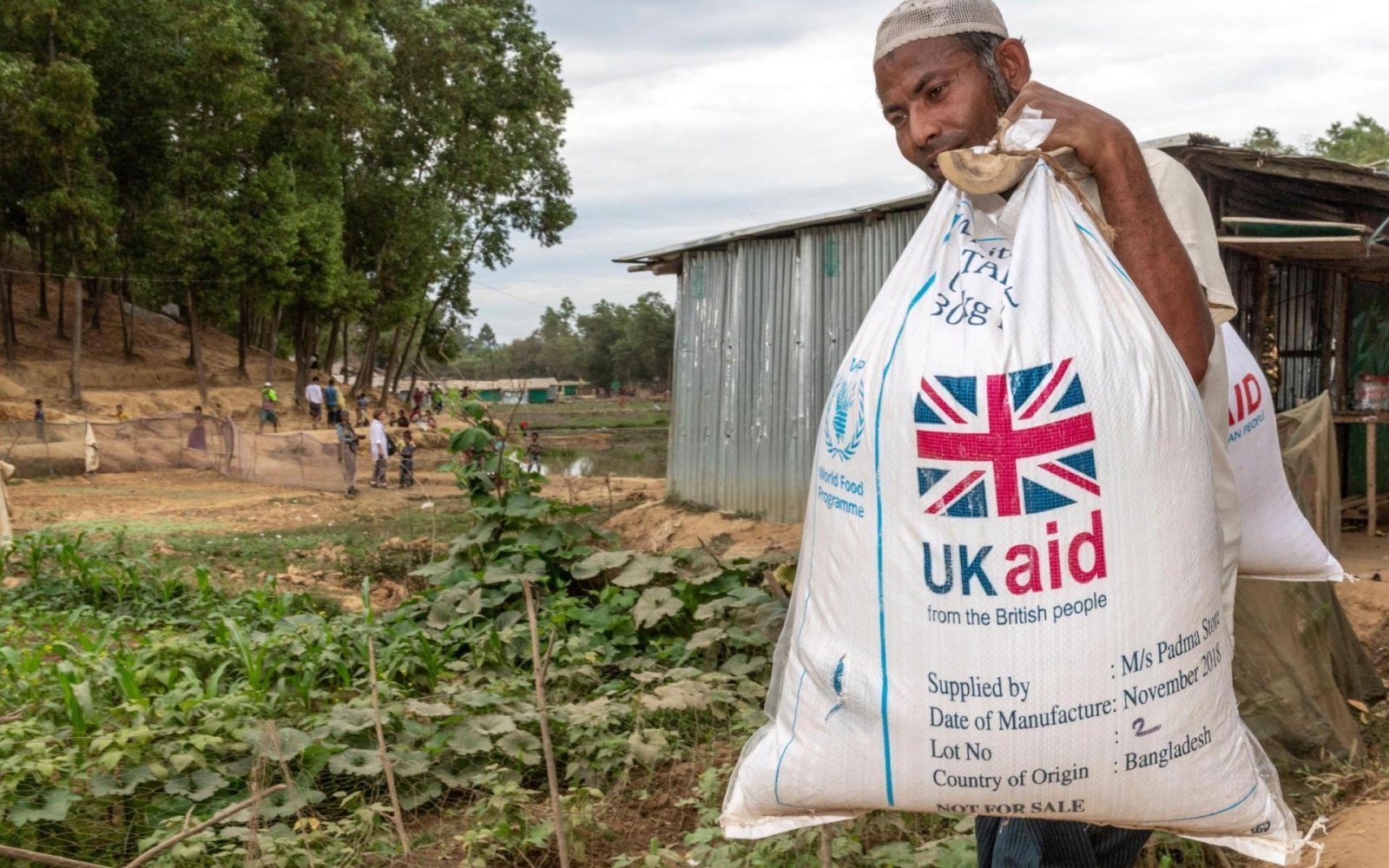
The United Nations Economic Commission for Africa estimates that Africa loses approximately USD 88.6 billion annually to illicit financial flows alone. Official development assistance to the continent runs at approximately USD 50 to 60 billion annually. Africa is a net capital exporter. The haemorrhage of capital that the continent is experiencing through illicit outflows, legal profit repatriation, transfer pricing, and elite asset externalisation exceeds the inward flows whose attraction absorbs the diplomatic energy of every government on the continent.
The development finance gap is not primarily a question of attracting more external capital. It is a question of stopping the drain.
What capital flight actually means and how it works
Capital flight is not a single phenomenon. It is a family of related mechanisms whose common feature is the movement of capital generated in African economies toward financial jurisdictions outside Africa, reducing the capital available for domestic investment, government revenue, and industrial development.
The most economically damaging component is trade misinvoicing: the deliberate misreporting of import and export values to shift profits toward low-tax jurisdictions and shift losses toward high-revenue jurisdictions. An extractive industry operator that exports mineral ore at an artificially suppressed invoice price to a related trading entity in a low-tax jurisdiction captures the difference between the suppressed price and the true market price as profit in the trading entity's jurisdiction rather than in the country of extraction. The mining country receives royalties and taxes calculated on the suppressed invoice price rather than the true market value, systematically understating the fiscal revenue whose collection is the government's primary economic interest in the resource development.
The UNECA estimates that trade misinvoicing accounts for the largest single component of Africa's illicit financial outflows, with the extractive industries and commodity trade providing the most significant channels. For Tanzania, whose gold exports are among the country's largest foreign exchange earners and whose tanzanite, graphite, nickel, and coal exports are growing in commercial significance, the transfer pricing and misinvoicing exposure in mineral commodity chains is the specific vulnerability whose quantification and enforcement the Tanzania Revenue Authority's intelligence-led audit strategy, confirmed as a FY2026/27 priority in the budget speech, is designed to address.
Tax evasion through shell company structures, nominee ownership arrangements, and offshore account systems is the second major component. Capital generated by business activity in African economies is routed through holding company structures in jurisdictions including the British Virgin Islands, Cayman Islands, Mauritius, and Dubai whose beneficial ownership disclosure requirements, tax treaty networks, and information exchange frameworks historically allowed African-origin capital to accumulate offshore without visibility to the tax authorities of the countries in which the underlying economic activity occurred.
Legal but economically draining profit repatriation by multinational corporations is the third component, and the one whose legality makes it the most difficult to address through law enforcement rather than policy design. A foreign-owned retailer, telecommunications company, hotel chain, or manufacturing operation whose equity capital, technology licensing, management fees, and debt financing are all structured to maximise the share of income that flows to related entities outside the operating country is not engaging in illegal conduct. It is engaging in standard multinational tax planning whose result is that a large share of the value generated by economic activity in Tanzania or Kenya flows to shareholders, creditors, and related service providers outside those economies rather than being reinvested domestically.
Elite asset externalisation is the fourth component. The wealth accumulated by African political and business elites is managed disproportionately in financial centres outside Africa. London's property market, Swiss private banks, Dubai real estate, and Singapore family offices hold African-origin wealth whose domestic deployment would finance the industrial investment, venture capital, and real estate development that foreign investors are being recruited to provide. The Africa Wealth Report estimates that over 30 percent of African private wealth is held outside the continent, a share that substantially exceeds the comparable figure for Asian or Latin American economies at equivalent development stages.
The extractive industry exposure that East Africa shares
East Africa's specific capital flight vulnerability is concentrated in its extractive industries, whose resource revenues are simultaneously the largest single source of foreign exchange and the most structurally exposed to the transfer pricing and misinvoicing mechanisms that drain fiscal revenue before it reaches government accounts.
Tanzania's gold sector is the most significant exposure. Gold exports are among Tanzania's largest foreign exchange earners, and the commodity chain through which Tanzanian gold moves from mine to international market passes through trading, refining, and pricing intermediaries whose location, ownership, and information disclosure are not under Tanzanian regulatory jurisdiction. The price at which Tanzanian gold enters the international commodity chain determines the royalty and export levy base whose calculation is the government's primary fiscal claim on the sector's economic value. When that entry price is suppressed through related-party transactions between mining operators and their affiliated trading entities, the fiscal revenue loss is direct, immediate, and structurally difficult to detect without the transfer pricing audit capability whose development requires technical expertise that is scarce in tax administrations across the region.
Kenya's flower export industry, Uganda's coffee and cocoa sectors, and Ethiopia's coffee export chain all face analogous misinvoicing exposure in the agricultural commodity trade, where the pricing of exports to related buyers in European markets or commodity trading hubs determines the taxable value at origin in ways that buyers and sellers with shared ownership have both the motive and the means to manipulate.
Rwanda's deliberate positioning as a regional financial hub through the Kigali International Financial Centre is an institutional response to the capital flight problem from one specific angle: if African capital is going to be managed in an international financial centre, it might as well be managed in one on African soil, subject to African regulatory jurisdiction, and with the benefits of financial centre activity accruing to an African economy. The KIFC's development as a serious competitor to Mauritius as the preferred booking centre for African investment vehicles and structures is the most direct attempt in the region to capture the financial intermediation value that currently flows to offshore jurisdictions.
The global financial architecture that enables the drain
The capital flight problem is not primarily a domestic African governance failure, though domestic governance gaps create the conditions in which capital flight is easier to execute and harder to detect. It is a structural feature of a global financial system whose architecture was designed by and for the economies that benefit from capital inflows, not the economies that bear the cost of capital outflows.
The network of bilateral tax treaties whose structure systematically benefits capital-exporting developed economies over capital-importing developing ones was negotiated over decades through frameworks in which African countries' technical capacity to assess the implications of specific treaty provisions was substantially weaker than the developed economy counterparties whose professional advisers drafted the terms. The withholding tax rates, permanent establishment definitions, and dispute resolution mechanisms embedded in those treaties create the legal framework within which profit repatriation and related-party pricing occur at terms more favourable to multinational operators than to source country fiscal authorities.
The global beneficial ownership disclosure framework, whose strengthening through the OECD's Base Erosion and Profit Shifting project and the Financial Action Task Force's recommendations has been the primary international response to illicit financial flows, has advanced substantially in developed economy jurisdictions while implementation in African jurisdictions remains partial and enforcement capacity remains limited. The automatic exchange of financial account information under the Common Reporting Standard has expanded the information available to tax authorities about their residents' offshore accounts, but the practical capacity of African tax administrations to process, analyse, and act on that information is a fraction of the capacity available to the OECD economies whose residents the framework was primarily designed to monitor.
The result is a structural asymmetry in which the information and enforcement tools required to detect and constrain capital flight are more available to the jurisdictions that receive the capital than to the jurisdictions that lose it.
China's capital flight crisis and what it teaches
China offers the most instructive available case study on capital flight, and not for the reason the standard development economics comparison usually suggests. The lesson is not that China successfully prevented capital flight through state control. The lesson is that even China, with the most sophisticated capital control architecture of any major economy, lost approximately USD 1 trillion to capital flight in under two years when those controls were inadequately enforced.
Between mid-2015 and the end of 2016, China experienced one of the largest capital flight episodes in economic history. Approximately USD 1 trillion left the Chinese economy through a combination of trade misinvoicing, underground banking channels, and the deliberate overstatement of import values to move money out of the country legally through the current account. Chinese exporters invoiced their goods at suppressed values, capturing the difference in offshore accounts. Chinese importers overstated the value of goods they were purchasing from abroad, transferring the excess to offshore entities. Underground money brokers, operating through Macau casino accounts and Hong Kong financial intermediaries, moved funds for wealthy individuals and corporate clients at volumes that overwhelmed the State Administration of Foreign Exchange's monitoring capacity.
Beijing's response was aggressive, specific, and technically sophisticated in ways whose detail is directly relevant to the tools that African economies are attempting to build. SAFE implemented mandatory repatriation requirements forcing Chinese exporters to return export earnings to domestic accounts within defined timeframes, directly countering the offshore retention mechanism. Cross-referencing of customs declaration data with banking settlement records allowed SAFE auditors to identify the invoice value discrepancies that trade misinvoicing produces: a company declaring a USD 10 million export to customs while reporting USD 6 million in export receipts to its bank is generating a USD 4 million gap that either represents an uncollected receivable or a misinvoiced transaction. China built the data infrastructure to detect those gaps at national scale and the enforcement capacity to pursue the cases they identified.
China also tightened restrictions on offshore acquisitions by state enterprises, requiring NDRC and SAFE approval for outbound investment above specific thresholds and specifically targeting the real estate, entertainment, and sports club acquisitions that had become the primary mechanism through which corporate capital was being externalised under the guise of legitimate outbound direct investment. Wanda Group's USD 20 billion international acquisition programme, HNA Group's USD 50 billion global asset purchases, and Anbang Insurance's USD 15 billion international portfolio were all subjected to regulatory review whose result was enforced asset sales and domestic repatriation of proceeds.
The UnionPay transaction monitoring system, whose settlement data covers a significant share of Chinese consumer and corporate financial transactions, was expanded to flag unusual offshore spending patterns that might indicate capital externalisation through retail channels.
The result of this enforcement response was a stabilisation of China's foreign exchange reserves by mid-2017 and a significant reduction in the capital outflow rate. China did not eliminate capital flight. It contained it to a level that its reserve buffer and current account surplus could sustain without threatening macroeconomic stability.
The African lesson from China's 2015 to 2017 episode is not that capital controls are sufficient to prevent capital flight. China had capital controls and lost USD 1 trillion anyway. The lesson is more specific and more demanding: detecting and constraining capital flight requires the cross-referencing of customs, banking, and tax data at national scale, in real time, with the technical capacity to identify the discrepancies that misinvoicing and related-party manipulation produce. China had most of that infrastructure and still needed two years of aggressive enforcement to stabilise its outflows.
Tanzania's Universal Billing System, whose first phase was completed and second phase reached 70 percent by April 2026, and TRA's intelligence-led audit strategy are the building blocks of the same data cross-referencing architecture whose deployment at Chinese scale took decades and enormous institutional investment to construct. The direction is correct. The scale relative to the problem remains the challenge.
The institutional responses that work and why they are hard to build
The policy responses to capital flight are well-documented in the academic and practitioner literature and are not particularly contested at the analytical level. Their implementation is the hard part.
Transfer pricing audit capacity is the most technically demanding requirement. A tax authority whose transfer pricing unit can analyse related-party transactions in the mining, telecommunications, financial services, and consumer goods sectors needs economists, accountants, and lawyers with expertise in international tax law, industry-specific pricing benchmarks, and the financial modelling whose application to specific transactions requires both technical skill and access to comparable transaction data that is not publicly available. Tanzania's TRA, Kenya's KRA, Uganda's URA, and Rwanda's RRA all have transfer pricing units whose capacity is improving but whose technical sophistication remains below the level required to match the advisory capacity of the major accounting and law firms whose multinational clients are the primary counterparties in the transactions under examination.
Beneficial ownership registries whose public accessibility removes the anonymity that shell company structures provide are the second critical mechanism. BRELA's company registry in Tanzania and the Companies Registry Authority in Kenya both maintain ownership records whose completeness, accuracy, and public accessibility are improving under anti-money laundering and corporate governance reform programmes. But the beneficial ownership chain of Tanzanian-registered companies whose ultimate ownership passes through holding structures in multiple offshore jurisdictions remains difficult to trace without the international regulatory cooperation whose quality varies significantly across the jurisdictions involved.
Automatic exchange of tax information with the financial centres where African-origin capital is most heavily concentrated, including Mauritius, the UAE, the United Kingdom, Switzerland, and Singapore, is the information infrastructure whose availability transforms transfer pricing audit from a domestic exercise in incomplete information to an evidence-based assessment of actual transaction terms. The Global Forum on Transparency and Exchange of Information for Tax Purposes, through whose framework Tanzania, Kenya, Uganda, and Rwanda all participate in some form, is the institutional mechanism for building that information exchange capacity. Its effectiveness is constrained by the same technical capacity asymmetry between African tax administrations and offshore financial centre regulators that limits transfer pricing audit effectiveness.
What Tanzania's budget is beginning to do about it
Tanzania's FY2026/27 budget's emphasis on intelligence-led audit, voluntary compliance promotion, and the Universal Billing System whose digital payment infrastructure creates the transaction visibility that cash-based economies deny tax authorities, is the domestic institutional response whose direction is correct and whose scale relative to the problem remains insufficient.
The budget speech confirmed TRA's FY2026/27 target of TZS 39,094.72 billion in revenue collection and its commitment to intelligence-led audits and anti-evasion enforcement as primary tools for improving collection beyond the voluntary compliance base. TRA's FY2025/26 collection at 105 percent of the reference period target, generating TZS 30.25 trillion in gross revenue, demonstrates that the revenue collection infrastructure is improving. The question is whether the improvement is capturing the domestic economic activity that has always been visible to the tax system or beginning to capture the international transaction activity that transfer pricing and misinvoicing have historically obscured.
The gold reserve accumulation programme, which purchased 17.64 tonnes at USD 2,616.77 million in FY2025/26, is tangentially related to the capital flight question in one specific respect: gold that Tanzania mines, processes domestically, and holds as a reserve asset rather than exporting through commodity chains subject to transfer pricing manipulation is gold whose full economic value is captured within the Tanzanian economy rather than shared with offshore intermediaries. The strategic logic of building domestic gold processing capacity, whose development would allow Tanzania to sell refined gold rather than ore or doré to international buyers, extends that value capture argument further along the commodity chain.
The next phase of TRA's capacity development, building the cross-referencing infrastructure that China's SAFE demonstrated is the primary technical tool for detecting trade misinvoicing at scale, is the investment whose return is denominated in the fiscal revenue that transfer pricing and misinvoicing are currently extracting from Tanzania's mining, agricultural, and commodity export sectors. It is less visible than a new factory or a new railway line. It is not less important.
What the reframing demands
Naming Africa's development finance problem accurately as a capital flight problem rather than a capital attraction problem demands different institutional responses, different international negotiations, and different definitions of success than the investment conference circuit produces.
Success in attracting foreign investment is measured in commitment announcements, signing ceremonies, and project approvals. Success in reducing capital flight is measured in transfer pricing audit adjustments, beneficial ownership disclosures, illicit flow interceptions, and automatic information exchange agreements whose technical implementation is invisible to everything except the revenue accounts that eventually benefit from it.
The work is less diplomatic and more institutional. It happens in tax authority technical units, company registry reform processes, bilateral tax treaty renegotiations, and international regulatory coordination forums rather than in investment summits. It requires sustained political commitment to reforming the international financial architecture whose current design benefits capital-exporting economies at the expense of capital-generating ones.
That commitment is harder to generate and harder to sustain than the commitment to attend another investment conference. It is also more consequential. A continent that stops losing USD 88.6 billion annually to illicit financial flows does not need to replace that capital with foreign investment. It retains it. It deploys it domestically. It taxes the economic activity it finances. And it builds the industrial base that foreign investment conferences have been promising and underdelivering for decades.
Africa is not poor because it lacks capital. It is poor in part because the capital it generates flows out faster than the capital it attracts flows in. China learned that lesson at USD 1 trillion of cost in eighteen months and built the enforcement infrastructure to contain the damage. Africa is still in the process of building that infrastructure. The cost of not finishing the build is denominated in the development outcomes that the capital being lost could have financed.
That is the development problem. Naming it accurately is where the solution begins.
FAQ
How much capital does Africa lose to illicit financial flows annually? The United Nations Economic Commission for Africa estimates Africa loses approximately USD 88.6 billion annually to illicit financial flows including trade misinvoicing, tax evasion through offshore structures, and money laundering. This exceeds the approximately USD 50 to 60 billion Africa receives annually in official development assistance, making Africa a net capital exporter despite being classified as capital-scarce in the standard development finance narrative.
Did China experience capital flight and how did it respond? Between mid-2015 and end-2016, China lost approximately USD 1 trillion to capital flight through trade misinvoicing, underground banking channels, and import value overstatement, despite operating the world's most sophisticated capital control architecture. Beijing responded by implementing mandatory export earnings repatriation requirements, cross-referencing customs and banking data to detect invoice discrepancies, restricting offshore acquisitions by state enterprises, and expanding UnionPay transaction monitoring. China stabilised its foreign exchange reserves by mid-2017. The lesson for Africa is not that capital controls prevent capital flight but that containing it requires cross-referencing customs, banking, and tax data at national scale to detect the discrepancies that misinvoicing produces.
What is trade misinvoicing and why does it matter for Africa? Trade misinvoicing is the deliberate misreporting of import and export values to shift profits toward low-tax jurisdictions. An exporter that invoices mineral exports to a related trading entity at artificially suppressed prices captures the difference between the suppressed price and the true market price as profit in the trading entity's jurisdiction, reducing the royalty and tax base in the country of extraction. UNECA estimates trade misinvoicing is the largest single component of Africa's illicit financial outflows and is most severe in the extractive industries and agricultural commodity trade.
What institutional responses are most effective against capital flight? Transfer pricing audit capacity within tax authorities, public beneficial ownership registries that remove shell company anonymity, automatic exchange of tax information with financial centres where African-origin capital is concentrated, and bilateral tax treaty renegotiations that rebalance terms toward source country interests. All require sustained technical capacity building and international regulatory coordination. China's SAFE cross-referencing of customs and banking settlement data is the specific technical model whose adaptation to African institutional contexts is the most immediately replicable mechanism available.
What is Tanzania doing to address capital flight? Tanzania Revenue Authority's FY2026/27 priorities include intelligence-led audits and anti-evasion enforcement alongside the Universal Billing System whose digital payment infrastructure creates transaction visibility. TRA collected at 105 percent of its reference period target in FY2025/26, generating TZS 30.25 trillion. The Universal Billing System second phase at 70 percent completion by April 2026 is the data infrastructure whose cross-referencing capability, once fully deployed, begins to replicate the customs-banking data matching that China's SAFE used to detect trade misinvoicing at scale. Tanzania's gold sector remains the primary transfer pricing exposure whose audit requires the most technically sophisticated enforcement capability.
 Uchumi360
Business Intelligence
Uchumi360
Business Intelligence
- United Nations Economic Commission for Africa, Illicit Financial Flows: Report of the High Level Panel on Illicit Financial Flows from Africa
- USD 88.6 billion annual illicit financial flow estimate.Available at uneca.org
- OECD, Development Assistance Committee, official development assistance to Africa approximately USD 50 to 60 billion annually
- Available at oecd.org
- Global Financial Integrity, trade misinvoicing research and Africa-specific estimates.Available at gfintegrity.org
- Africa Wealth Report, approximately 30 percent of African private wealth held outside continent.Available at africawealthreport.com
- OECD, Base Erosion and Profit Shifting project and Common Reporting Standard implementation.Available at oecd.org
- OECD Global Forum on Transparency and Exchange of Information for Tax Purposes, Africa participation and automatic exchange framework.Available at oecd.org
- Tanzania Revenue Authority, FY2025/26 collection TZS 30.25 trillion at 105 percent of reference period target
- FY2026/27 target TZS 39,094.72 billion.Available at tra.go.tz
- Tanzania Ministry of Finance, FY2026/27 Budget Speech
- Gold reserve purchases 17.64 tonnes USD 2,616.77 million
- Intelligence-led audit strategy confirmed.Available at mof.go.tz
- Business Registrations and Licensing Agency Tanzania, company registry and beneficial ownership framework.Available at brela.go.tz
- Kigali International Financial Centre, regional financial hub positioning.Available at kifc.rw
- Ha-Joon Chang, Kicking Away the Ladder
- Anthem Press, 2002
- Historical development finance analysis
- Léonce Ndikumana and James K
- Boyce, Africa's Odious Debts: How Foreign Loans and Capital Flight Bled a Continent
- Zed Books, 2011
- World Bank, Africa capital flows and domestic resource mobilisation research.Available at worldbank.org
- IMF, Africa illicit financial flows and tax base erosion research
- Available at imf.org
- UNCTAD, trade misinvoicing methodology and Africa-specific research.Available at unctad.org
Uchumi360 covers business, investment, and economic policy across East, Central, and Southern Africa.
For the serious reader
You read to the end. That places you in a small group.
Uchumi360 is built for readers who demand precision over speed, structure over sentiment, and analysis that holds uncomfortable conclusions rather than softening them. If this work sharpens how you think about Africa's economy, help us keep building the infrastructure behind it.
Institutional Partners
Commission intelligence. Shape the conversation.
Uchumi360 works with development finance institutions, investment firms, sovereign bodies, and strategic organisations across the coverage region. Institutional partnership unlocks:
- Commissioned sector and country intelligence reports
- Branded research series under your institution's authority
- Exclusive data briefings for internal strategy teams
- Speaking and editorial presence at Uchumi360 events
- Co-published investment outlooks for your markets
Support Our Work
Independent analysis has a cost. Help us bear it.
Uchumi360 does not carry advertising. It does not take editorial direction from sponsors. Every article is produced without commercial compromise. Your contribution funds the reporting, research, and editorial infrastructure that keeps this analysis free from influence.
Secure checkout: One-time and monthly support are processed securely. Add payment credentials to enable checkout here.
Stay Connected
Keep up with every new insight.
Follow our latest analysis, policy coverage, and market intelligence as soon as it is published. If you need something specific, reach out directly and we will point you to the right research.
