
Ethiopia Wants to Build Three More Dams on the Blue Nile. Egypt Can't Stop It This Time Either.
Ready
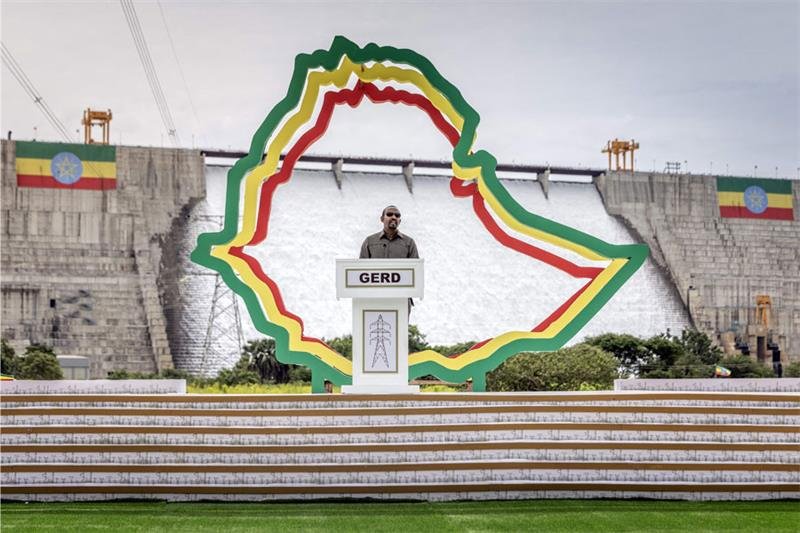
Ethiopia's Water and Energy Ministry has revived plans for three more hydropower projects on the Blue Nile, Karadobi, Mandaya and Beko Abo, with a combined generating potential of roughly 5,700 megawatts, five months after formally inaugurating the Grand Ethiopian Renaissance Dam in September 2025. Ethiopia's total installed electricity capacity has already surpassed 9,730 MW, more than triple its 2019 level, driven overwhelmingly by GERD's 5,150 MW. The three new projects remain at an early planning stage, with even their capacity figures described as subject to change. But the timing itself is the message: Ethiopia has already shown that diplomatic objections from Cairo did not stop GERD from being built and inaugurated, and it appears to be signalling it's prepared to do the same again.
CAIRO/ADDIS ABABA — Six months after Ethiopia inaugurated the Grand Ethiopian Renaissance Dam, ending a fifteen-year standoff with Egypt on Ethiopian terms, Addis Ababa has signalled it isn't finished building on the Blue Nile.
Ethiopia's Water and Energy Ministry announced in March 2026 that it was reviving plans for three previously studied hydropower projects further along the same river: Karadobi, Mandaya and Beko Abo. All three have been discussed for years and were listed among proposed Blue Nile projects in a 2024 academic study drawing on Nile Basin Initiative-sponsored research, which noted Karadobi and Beko Abo were considered alternatives within one potential three-dam configuration. What's new is Ethiopia's move to actually advance them. Their combined generating potential has been reported at around 5,700 megawatts, though officials and researchers caution that both the figures and specifications remain subject to change while the projects sit at the planning stage.
What Ethiopia Has Already Built
The scale of what's already operating puts the new announcement in context. Ethiopia's Water and Energy Minister, Habtamu Itefa, said the country's total installed electricity generation capacity reached more than 9,730 MW during the 2025/26 fiscal year, up from 7,910 MW the previous year. Hydropower accounts for the overwhelming majority of that, 9,201 MW, with wind (504 MW), solid waste (25 MW), solar (15.32 MW) and geothermal (7 MW) making up the remainder. GERD alone supplied 51.5% of the 35,670 GWh generated by Ethiopian Electric Power in the 2025/26 fiscal year, more than triple the output of Gibe III, the country's second-largest plant.
That existing base matters for reading the new announcement correctly. Ethiopia is not proposing three dams to build a power system from nothing; it's proposing them on top of a system that has already nearly doubled in the past decade and that the government has set a target of expanding to 17,000 MW within ten years. Electricity access, however, still lags well behind capacity: only 56.6% of Ethiopians had access to power in 2024, according to the World Bank, with rural access at just 44.8% against 95.1% in urban areas, evidence that building generation and building distribution to reach ordinary Ethiopians remain two different problems.
Why Ethiopia Wants More Dams
For Addis Ababa, developing the Blue Nile further is inseparable from its broader development strategy: electricity generation, industrialisation and energy security for a country where millions still lack reliable power. Ethiopia's stated economic case for GERD was similar, framing hydropower as an engine for industrialisation and hard currency earnings through electricity exports, and Ethiopia is already exporting power regionally, doubling its export capacity to Kenya to 400 MW by late 2026 and piloting electricity "wheeling" to Tanzania via Kenya's high-voltage network.
Whether the three new Blue Nile projects meaningfully affect downstream water flows depends entirely on details that haven't been settled yet. Ezekiel Gebissa, an Ethiopian professor at Kettering University, told Al Jazeera that smaller dams built primarily for electricity could generate power for local communities without significantly reducing the volume of water reaching Egypt and Sudan, while projects tied to large-scale irrigation could have considerably greater downstream implications. Reservoir size, filling schedules, water release rules and whether a dam is designed mainly for power generation or irrigation all shape the outcome, and none of those details are fixed at this stage. For now, the projects represent a new potential source of tension between the three countries, not evidence that they will actually reduce the water reaching Egypt.
What GERD Taught Egypt About Its Own Leverage
Egypt's response to the new announcement is being shaped directly by what happened with GERD. Ethiopia inaugurated that dam on 9 September 2025 after fifteen years of negotiations failed to produce the binding agreement Cairo wanted, a nearly $5 billion project funded largely by Ethiopia itself. The lesson Egypt drew, according to the analysts, was clear: diplomatic pressure could raise international attention but couldn't prevent Ethiopia from finishing the project on its own terms.
That's shifted Cairo's strategy from trying to stop individual dams toward seeking a role in how existing and future projects are designed, filled and operated. Egypt raised the issue again at the UN Security Council in September 2025, arguing Ethiopia's operation of GERD violated its international obligations and calling for a binding agreement, a stated legal and political position rather than any council finding. Horn of Africa analyst Abdiwahab Sheikh described Egypt's leverage as "meaningful but limited," concentrated in diplomacy, alliances, international law and coordination with Sudan, while judging economic pressure weaker and military coercion too risky to be a realistic option.
Sudan's Complicated Middle Position
Sudan sits geographically and politically between the two, directly affected by whatever happens upstream but not simply aligned with Egypt's position. Sudan could benefit from more predictable river flows and access to Ethiopian electricity, while also wanting greater transparency and safeguards around new projects, the same demand Egypt is making, but for its own reasons rather than Cairo's.
Mekki Elmograbi, a Sudanese governance expert, has been quoted as saying that transparency from Ethiopia was the necessary starting point for any cooperation, since neither Sudan nor Egypt can currently assess whether the new dams would help or harm Sudanese interests without more information being shared. Sudan's capacity to play a larger diplomatic role in the dispute, however, is constrained by its ongoing civil war, limiting how much weight its position can currently carry regardless of what it wants from Ethiopia.
What Actually Determines the Outcome
The three Blue Nile projects amount to a real test of whether Egypt's post-GERD diplomatic recalibration produces anything more durable than what preceded it. Abdiwahab Sheikh's assessment points toward negotiated rules rather than confrontation as the realistic path forward, a practical arrangement built on transparent information exchange, advance notification, adaptive dam-management rules, and shared mechanisms for handling droughts and downstream impacts, precisely the kind of binding framework Egypt failed to secure over GERD.
Whether Ethiopia is willing to accept that framework this time, having already demonstrated it can build and inaugurate a five-gigawatt dam without one, is the open question the next phase of this dispute will actually answer.
FAQ
What are the three new dams Ethiopia is planning? Karadobi, Mandaya and Beko Abo, three Blue Nile hydropower projects previously studied for years and now being advanced by Ethiopia's Water and Energy Ministry, with a reported combined generating potential of about 5,700 MW, though officials say the figures could still change at this early stage.
How much electricity does Ethiopia generate today? Total installed capacity reached more than 9,730 MW as of the 2025/26 fiscal year, up from 7,910 MW the year before, with hydropower, led by GERD's 5,150 MW, accounting for the large majority.
Can Egypt stop these new dams from being built? Based on its experience with GERD, probably not through diplomatic pressure alone. Analysts describe Egypt's leverage as meaningful but limited, strongest in diplomacy, international law and alliances, and weaker in economic or military terms, none of which prevented Ethiopia from completing GERD on its own timeline.
Will the new dams reduce the water reaching Egypt? That depends on details not yet settled, including reservoir size, filling schedules and whether the dams are designed mainly for electricity generation or also for large-scale irrigation. Experts say smaller, power-focused dams could have limited downstream impact, while irrigation-linked projects could affect Egypt and Sudan more significantly.
Where does Sudan stand in this dispute? Sudan shares some of Egypt's concerns about transparency and safeguards but isn't simply aligned with Cairo, since it could also benefit from more predictable river flows and access to Ethiopian electricity. Its ability to shape the outcome diplomatically is currently limited by its ongoing civil war.
 Uchumi360
Business Intelligence
Uchumi360
Business Intelligence
- Al Jazeera, "After GERD, can Egypt shape Ethiopia's next Nile dams?," 21 August 2026
- Primary source for the three new dam projects, expert commentary from Ezekiel Gebissa, Mekki Elmograbi and Abdiwahab Sheikh, and the GERD inauguration and UN Security Council timeline
- 2Merkato, "Ethiopia's Power Generation Capacity Exceeds 9,730 MW," July 2026, citing Water and Energy Minister Habtamu Itefa
- Current total installed capacity and year-on-year growth figures
- Ecofin Agency, "Ethiopia's Renaissance Dam Leads State Power Output With 51.5% Share," August 2026
- GERD's share of national electricity generation and comparison to Gibe III and Beles output
- Ethiopian Electric Power, "Generation," accessed August 2026
- Full plant-by-plant breakdown of Ethiopia's hydropower fleet and installed capacity by source
- Capital Ethiopia, "Mapping Ethiopia's Clean Energy Ascent," 8 February 2026
- Regional electricity export figures, including the Kenya wheeling pilot and planned export capacity increase
- World Bank, electricity access data for Ethiopia, 2024
- National, urban and rural electrification rates
- U.S
- Department of Commerce, "Ethiopia - Energy," Country Commercial Guide
- Ethiopia's long-term 17,000 MW capacity target and hydropower resource potential
Uchumi360 covers business, investment, and economic policy across East, Central, and Southern Africa.
For the serious reader
You read to the end. That places you in a small group.
Uchumi360 is built for readers who demand precision over speed, structure over sentiment, and analysis that holds uncomfortable conclusions rather than softening them. If this work sharpens how you think about Africa's economy, help us keep building the infrastructure behind it.
Institutional Partners
Commission intelligence. Shape the conversation.
Uchumi360 works with development finance institutions, investment firms, sovereign bodies, and strategic organisations across the coverage region. Institutional partnership unlocks:
- Commissioned sector and country intelligence reports
- Branded research series under your institution's authority
- Exclusive data briefings for internal strategy teams
- Speaking and editorial presence at Uchumi360 events
- Co-published investment outlooks for your markets
Support Our Work
Independent analysis has a cost. Help us bear it.
Uchumi360 does not carry advertising. It does not take editorial direction from sponsors. Every article is produced without commercial compromise. Your contribution funds the reporting, research, and editorial infrastructure that keeps this analysis free from influence.
Secure checkout: One-time and monthly support are processed securely. Add payment credentials to enable checkout here.
Stay Connected
Keep up with every new insight.
Follow our latest analysis, policy coverage, and market intelligence as soon as it is published. If you need something specific, reach out directly and we will point you to the right research.
