
Konkola’s Copper Expansion Shows Zambia’s Next Mining Bottleneck Is Power
Ready
If Zambia can build enough reliable generation and transmission to support Konkola and the wider Copperbelt, the country’s three-million-tonne copper target becomes more credible. If power lags, the target will remain exposed to the same constraint that has already tested the sector: a grid that cannot always carry the ambition of the mines attached to it.
Zambia’s copper revival is moving from boardroom promise to engineering constraint.
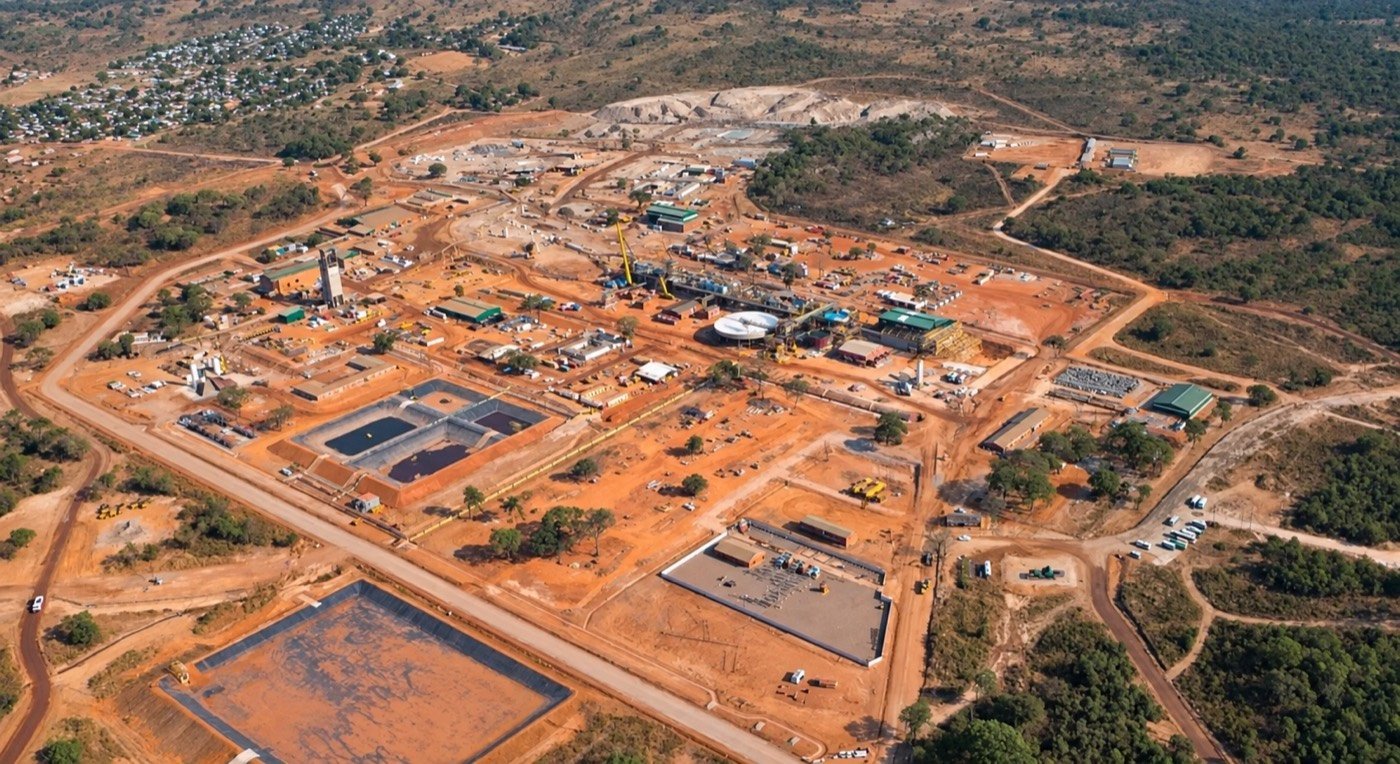
Konkola Copper Mines is targeting a major production recovery, backed by a $1.5 billion expansion and modernisation commitment through CopperTech Metals, the United States-domiciled vehicle created by Vedanta Resources for the Zambian asset. The ambition is to lift integrated copper production from about 140,000 tonnes in the 2026 financial yearto 300,000 tonnes by 2031, with a longer-term aspiration of 500,000 tonnes a year.
For Zambia, that matters because Konkola is no ordinary mine. It is one of the assets expected to carry the country toward its national target of 3 million tonnes of copper production annually by 2031, a goal that has become central to President Hakainde Hichilema’s mining-led growth agenda. Zambia’s Presidential Delivery Unit says the country produced 820,000 tonnes of copper in 2024, up 12 percent from 2023, and expects production to exceed 1 million tonnes in 2025 for the first time.
The expansion story, however, is no longer only about ore grades, investment capital or global copper prices. It is about electricity.
Konkola Deep, the underground engine of the expansion, reportedly pumps about 450,000 cubic metres of water every day to keep the mine open. Its Chililabombwe shaft reaches 1,505 metres, making it one of Zambia’s deepest shafts, with ore grades of up to 3.3 percent copper against a Konkola Copper Mines average of 2.9 percent. The mine also holds more than 291 million tonnes of ore and a projected life of at least 50 years.
Those numbers explain both the attraction and the problem. Konkola Deep has the geology to support a long-life copper revival. But deep mining is energy-intensive before production even begins. Dewatering alone is a continuous electricity load. As the mine goes deeper, pumping, ventilation, hoisting, crushing, rail haulage, smelting and refining all add to the power requirement.
That makes electricity the real balance sheet behind Zambia’s copper strategy.
Copper demand is not the problem
The market is giving Zambia every reason to expand. Copper has become one of the world’s most contested industrial metals, tied to power grids, electric vehicles, data centres, renewable energy, artificial intelligence infrastructure and military-industrial supply chains. Reuters reported this week that Africa is standing at a critical minerals moment, with infrastructure such as the Lobito Corridor becoming part of a broader contest over copper, cobalt and manganese supply chains.
Zambia sits directly inside that global shift. It has copper, mining history, export routes, smelting experience and a government that has made production expansion a national objective. The return of Konkola Copper Mines to Vedanta control, the recovery of Mopani, expansions by First Quantum Minerals and Barrick, and new exploration interest all fit into the same policy direction.
But copper markets do not reward ambition alone. They reward tonnes delivered. That is where power becomes decisive.
The power risk is already visible
Zambia’s mining sector has already learned what happens when electricity becomes unstable.
In 2024, the country faced a severe drought that cut hydropower output and pushed the state utility, ZESCO, to seek power imports for key economic sectors, including mining, agriculture and manufacturing. Reuters reported at the time that Zambia relied on hydropower for about 86 percent of its electricity and faced a projected 700-megawatt shortfall.
The impact on mining was serious enough that Zambia asked mines to cut normal power use by as much as 40 percentduring the crisis, according to Bloomberg reporting. The lesson was clear: Zambia can have copper in the ground, investors at the table and strong prices on the market, but production still depends on firm power.
That lesson is now shaping the Konkola conversation. President Hichilema has urged Vedanta Resources to accelerate investment in power generation to support Konkola’s expansion and contribute to Zambia’s wider electricity target. Lusaka Times reported that the President linked the request to the government’s ambition to produce 10,000 megawattsof electricity under the second-term Grow Zambia Agenda, while Vedanta briefed him on plans to move production toward 500,000 metric tonnes of copper.
This is the strategic shift. Zambia is no longer treating power as a background utility. It is becoming a mining input, a competitiveness factor and a national growth constraint.
Konkola’s expansion could become a power-sector catalyst
Konkola Copper Mines already appears in Zambia’s energy market through a 100-megawatt supply agreement with Kanona Power Company, according to Energy Regulation Board records cited by Energy News Network. The company has also set out plans for a 300-megawatt coal-fired power station in two phases, with an estimated cost of about $317 million.
That tells a bigger story. Large mines are no longer waiting passively for public utilities to solve generation constraints. They are increasingly part of the power investment equation.
Across Zambia, the mining expansion agenda is forcing a rethink of the electricity market. Copperbelt Energy Corporation has estimated that Zambia may need close to 10 gigawatts of new generation and almost $12 billion in energy investment by 2030 to support the mining expansion being planned, according to Energy News Network. That is a company estimate, not a formal government requirement, but it indicates the scale of power demand implied by mining growth.
This is where the opportunity sits. If Zambia can convert mining demand into bankable power projects, the copper boom can help finance new electricity supply. Mines provide large, creditworthy anchor demand. Power developers need stable offtakers. The country needs new generation. The pieces can fit, but only if regulation, tariffs, transmission access and offtake structures are credible.
Open access is changing the mining-power relationship
Zambia is already moving toward a more flexible power market. Energy News Network recently reported that installed generation capacity had reached 4,576 megawatts, including 841 megawatts of solar, and that open-access arrangements are helping decide how new supply reaches large users. It cited the 100-megawatt Chisamba solar plant, commissioned in June 2025, as an example of power developed through a ZESCO subsidiary and sold under a 13-year power purchase agreement with GreenCo Power Services, with much of the electricity reaching First Quantum Minerals.
That model matters for Konkola. If mining companies can contract power from independent producers, invest in captive or quasi-captive generation, and move electricity through open-access arrangements, Zambia’s mining expansion becomes less dependent on a single public-utility balance sheet.
But open access is not a cure by itself. It still needs transmission capacity, tariff clarity, dispatch discipline, grid reliability and credible payment structures. Mining companies need firm power, not only installed capacity. A solar plant helps, but mines operate day and night. Copper smelters, pumping systems and underground operations cannot depend on intermittent supply without storage, backup or complementary firm generation.
That is why Zambia’s power strategy for mining will likely need a mixed portfolio: hydro recovery, solar, storage, imports, coal, gas where available, transmission upgrades and private-sector generation.
The mine is deep, but the policy question is wider
Konkola’s technical profile makes the power issue unusually visible. A mine that pumps hundreds of thousands of cubic metres of water daily cannot tolerate weak power supply. A shaft more than 1.5 kilometres deep is not a casual load. A smelter-refinery complex cannot run like a household during load-shedding.
But the policy question goes beyond Konkola. Zambia’s three-million-tonne copper goal will require simultaneous expansions across brownfield and greenfield projects. The Ministry of Mines and Minerals Development says the government launched a three-million-tonne copper production strategy by 2031 to promote economic development, increase copper production, foster innovation, create jobs and maintain environmental standards. It also points to geophysical surveys, mining-sector reforms and critical minerals policy as part of the broader production push.
Every additional tonne will require electricity. Mines need power for drilling, hoisting, milling, flotation, pumping, ventilation, smelting, refining, workshops, water systems, camps and digital monitoring. As ore bodies become deeper and more complex, energy intensity can rise even before output scales.
That means Zambia’s copper target is also an energy target.
The regional lesson is important for Tanzania
For the wider regional outlook, the Konkola story should also be read from Dar es Salaam. Tanzania is not Zambia, and its mining structure is different. But the lesson is relevant. Critical minerals, copper logistics, regional corridors, power generation and industrial strategy are becoming inseparable. A country cannot build a serious mining economy if electricity remains uncertain, expensive or poorly aligned with industrial demand.
This matters as East and Southern Africa compete for mineral investment. Zambia has copper. The Democratic Republic of Congo has copper and cobalt. Tanzania has graphite, nickel, gold, coal, rare earth prospects and gas. Mozambique has gas and coal. Angola has logistics and the Lobito Corridor. The regional contest will not be decided only by deposits. It will be decided by power, ports, rail, regulation, processing capacity and investor confidence.
Zambia’s Konkola expansion shows what happens when mineral ambition meets infrastructure reality. The geology may be attractive. The capital may be available. The market may want the metal. But without power, the expansion timetable becomes vulnerable.
The execution risk
The risk is not that Konkola lacks a copper story. It has one. The risk is sequencing. Mining investment can move faster than power projects. Production targets can be announced faster than transmission lines are built. Investors can commit capital faster than regulators approve tariffs and grid-access rules. A mine can sign power agreements and still face system-wide instability if the national grid remains exposed to drought, import constraints or weak reserve margins.
There is also a climate and financing complication. Zambia’s hydro dependence was exposed by drought. Coal can provide firm power, but it carries environmental and financing risks. Solar is increasingly competitive, but large mines need round-the-clock energy. Imports can stabilise supply, but they add regional dependency and foreign-exchange exposure.
The practical answer is not ideological. Zambia needs firm, diversified and bankable power. The mining sector will need to help pay for it.
That is why Hichilema’s pressure on Vedanta is economically logical. If KCM wants to move from 140,000 tonnes to 300,000 tonnes and eventually 500,000 tonnes, the power plan cannot be secondary. It must be part of the mine plan.
The real story
Konkola Copper Mines is being positioned as one of the pillars of Zambia’s copper comeback. CopperTech’s $1.5 billion commitment, Vedanta’s return, the Konkola Deep reserve base and the 300,000-tonne target all point to a revived asset with national significance.
But the deeper story is Zambia’s infrastructure test. The country is trying to move from a copper producer shaped by legacy assets to a copper growth platform aligned with the global energy transition. That requires mines. It requires capital. It requires export corridors. It requires policy stability. Above all, it requires electricity.
Konkola’s expansion is therefore not only a mining story. It is a power-demand story.
If Zambia can build enough reliable generation and transmission to support Konkola and the wider Copperbelt, the country’s three-million-tonne copper target becomes more credible. If power lags, the target will remain exposed to the same constraint that has already tested the sector: a grid that cannot always carry the ambition of the mines attached to it.
The copper is underground. The next bottleneck is above it.
 Uchumi360
Business Intelligence
Uchumi360
Business Intelligence
Uchumi360 covers business, investment, and economic policy across East, Central, and Southern Africa.
For the serious reader
You read to the end. That places you in a small group.
Uchumi360 is built for readers who demand precision over speed, structure over sentiment, and analysis that holds uncomfortable conclusions rather than softening them. If this work sharpens how you think about Africa's economy, help us keep building the infrastructure behind it.
Institutional Partners
Commission intelligence. Shape the conversation.
Uchumi360 works with development finance institutions, investment firms, sovereign bodies, and strategic organisations across the coverage region. Institutional partnership unlocks:
- Commissioned sector and country intelligence reports
- Branded research series under your institution's authority
- Exclusive data briefings for internal strategy teams
- Speaking and editorial presence at Uchumi360 events
- Co-published investment outlooks for your markets
Support Our Work
Independent analysis has a cost. Help us bear it.
Uchumi360 does not carry advertising. It does not take editorial direction from sponsors. Every article is produced without commercial compromise. Your contribution funds the reporting, research, and editorial infrastructure that keeps this analysis free from influence.
Secure checkout: One-time and monthly support are processed securely. Add payment credentials to enable checkout here.
Stay Connected
Keep up with every new insight.
Follow our latest analysis, policy coverage, and market intelligence as soon as it is published. If you need something specific, reach out directly and we will point you to the right research.
