
When Are the Summits Going to Be About Africa?
Ready
China convened African leaders in Beijing, the United States brought them to Washington, the European Union met them in Brussels, South Korea invited them to Seoul, Italy to Rome, Turkey to Istanbul, France to Montpellier and Japan has repeatedly convened TICAD in Japanese cities. Although some partner summits have also been hosted in Africa, the dominant architecture still places African leaders inside diplomatic forums created around other powers’ Africa strategies. Africa’s stronger position will emerge when external partners increasingly travel to African cities to negotiate against continental priorities on trade, minerals, debt, infrastructure, industrialisation and technology that African governments have already agreed among themselves.
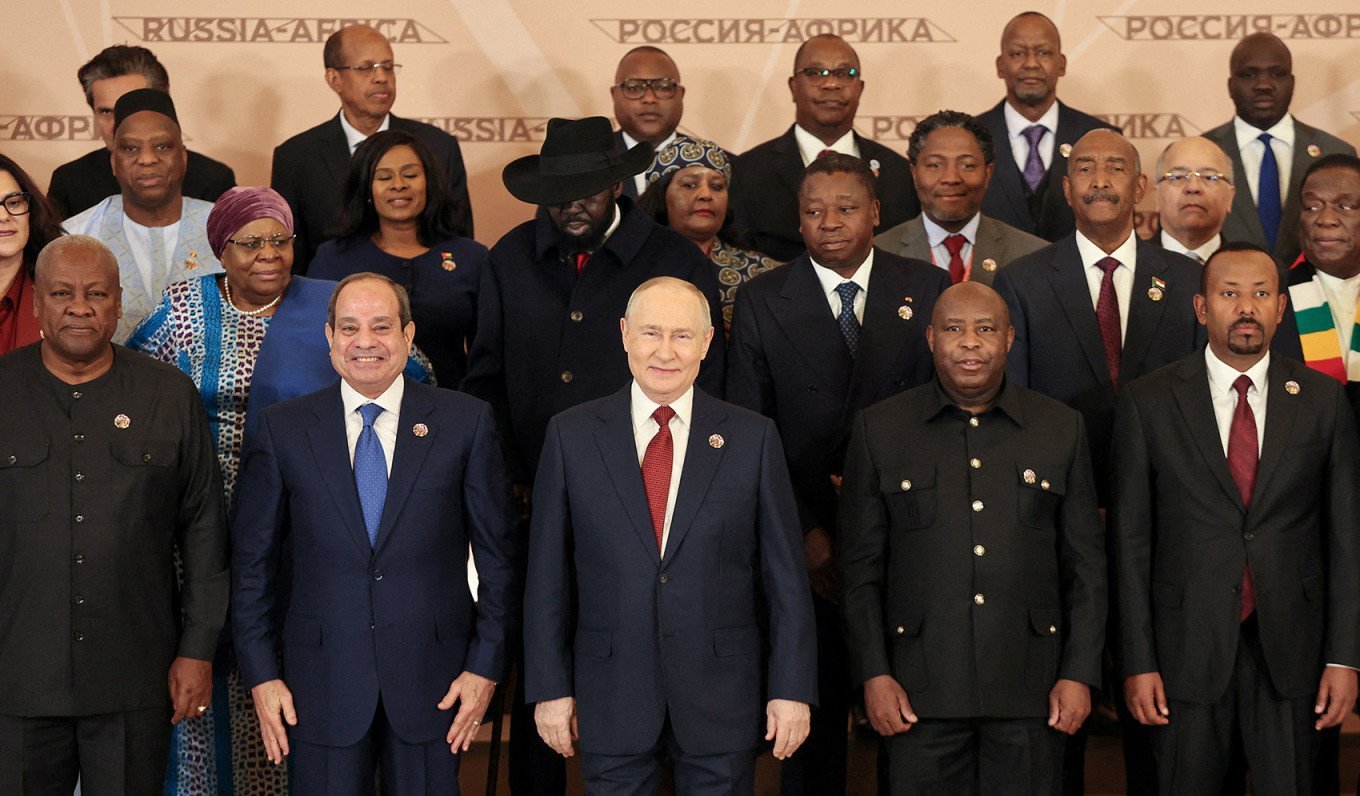
China has a summit with Africa. Russia has one. The United States has one. The European Union has one. Japan, India, Turkey, South Korea, France, the United Kingdom, Italy and the Arab world have all created formal diplomatic platforms through which they engage African governments, and increasingly the most revealing part of this summit architecture is not simply that almost every major power wants a structured relationship with Africa, but that many of the most prominent meetings about Africa are still convened outside Africa, in the capitals and diplomatic centres of the countries seeking access to African markets, resources, political support and strategic influence.
The 2024 Forum on China Africa Cooperation summit was held in Beijing, bringing together China, 53 African countries and the African Union Commission. The most recent United States Africa Leaders Summit was held in Washington in December 2022. The sixth European Union African Union summit was convened in Brussels in February 2022. South Korea held its inaugural Korea Africa Summit in Seoul in 2024, while Italy convened African leaders in Rome under its Africa partnership agenda. Turkey’s third Africa Partnership Summit took place in Istanbul in 2021, France held its New Africa France Summit in Montpellier the same year, and Japan’s TICAD process returned to Yokohama in 2025.
The pattern is difficult to ignore. African presidents and ministers repeatedly board aircraft to travel thousands of kilometres to foreign capitals where the subject of discussion is Africa itself, often under banners promising African development, investment, industrialisation, security, prosperity or partnership. The host governments define the diplomatic setting, control the institutional machinery surrounding the meeting, choose much of the language through which the relationship is presented and place the summit inside their own foreign policy strategy. African delegations participate, negotiate and influence outcomes, sometimes significantly, but the overall structure still often begins with one external power deciding that it needs an Africa policy and then inviting the continent into a forum designed around that policy.
This does not mean Africa never hosts these meetings. Johannesburg hosted FOCAC in 2015, Malabo hosted the second Turkey Africa Partnership Summit in 2014, Nairobi hosted TICAD VI in 2016, and Turkey has already indicated that its next partnership summit is intended to be held in Africa in 2026. The existence of these exceptions matters because the argument is not that every summit takes place outside Africa, but that the dominant diplomatic habit remains remarkably asymmetrical: foreign powers create named summit mechanisms around Africa, and African leaders frequently travel to those powers’ capitals to discuss the future of their own continent.
That geography is not merely symbolic. Venue is connected to agenda setting, diplomatic preparation, media framing, business participation and institutional control, and when African governments repeatedly enter summits designed and hosted by external powers, the continent often begins negotiations inside somebody else’s strategic framework rather than one developed collectively around African priorities.
Africa Is Usually the Subject, While Someone Else Is the Convener
A China Africa summit necessarily begins with China’s relationship with Africa. A United States Africa summit begins with Washington’s assessment of its interests on the continent. A Europe Africa summit reflects European calculations about trade, energy, migration, security, climate, investment and geopolitical competition. Japan, India, Turkey, South Korea and other partners approach Africa through their own economic strategies, diplomatic institutions and commercial interests, and this is normal because states are expected to organise foreign policy around their own national objectives.
The imbalance appears when Africa arrives without an equally coherent continental position capable of shaping the entire negotiation before the meeting begins. A summit may involve 40 or 50 African governments, but that does not automatically create one negotiating position. Each country arrives with its own debt pressures, infrastructure needs, investment priorities, political relationships and domestic constraints, while the external partner often arrives with a single diplomatic strategy supported by one foreign ministry, one treasury, one set of development institutions and one group of national commercial interests.
The United States Africa Leaders Summit illustrates the structure clearly. President Joe Biden invited African leaders to Washington in December 2022, where the summit discussed investment, food security, climate, governance, diaspora relations and the African Union’s Agenda 2063. The United States announced plans to invest $55 billion in Africa through 2025 and reported $15.7 billion in trade and investment commitments associated with the business forum. These commitments may generate real economic value, but the architecture remained unmistakably American: African leaders travelled to Washington to participate in a forum created by the United States as part of its wider Africa strategy.
The 2024 FOCAC summit followed a similar pattern in Beijing, where Chinese and African leaders adopted the Beijing Action Plan for 2025 to 2027. African governments were participants in the framework and negotiated its outcomes, but the institutional centre remained a China Africa relationship organised through a mechanism in which Beijing plays the convening role.
There is nothing inherently objectionable about either arrangement. Africa should engage the United States, China, Europe, India, Japan, the Gulf states and every other major economic centre capable of providing investment, technology, markets or finance. The concern is that if almost every important relationship is organised through a partner designed Africa summit, then African diplomacy risks becoming a series of responses to other countries’ Africa policies rather than an expression of one coherent African external economic strategy.
Travelling to Other Capitals Also Sends a Message About Where Power Sits
There is a practical dimension to summit location that deserves more attention. When dozens of African presidents, ministers, central bank officials, business executives and diplomats travel to Beijing, Washington, Brussels or another foreign capital, they do more than attend meetings. They enter an environment where the host country has control over the diplomatic programme, access to its own business community, media infrastructure, policy institutions and government agencies, all of which helps place African engagement within the host’s economic and strategic priorities.
A summit in Washington naturally creates easier access for American corporations, financial institutions, think tanks, lawmakers and investors. A summit in Beijing gives Chinese ministries, banks, state owned enterprises and private companies direct proximity to African delegations. Brussels offers similar advantages to European institutions and companies, while Seoul, Tokyo or Rome place African delegations directly inside the commercial and diplomatic environment of the partner country.
If African capitals hosted more of these meetings on African designed terms, the commercial geography would also change. Foreign delegations would be exposed to African companies, African financial institutions, African infrastructure priorities, local investment agencies and regional businesses on African soil. The conversation would take place closer to the factories, ports, farms, mineral deposits, technology companies and consumers that are supposedly at the centre of the partnership.
Hosting alone would not solve Africa’s bargaining problem, but the repeated expectation that African leaders should travel to external capitals to discuss African priorities reflects an international system in which Africa is still more often treated as the destination of other countries’ strategies than the originator of its own.
Africa Is Courted Because It Matters
The number of summits should not be interpreted as evidence of African weakness. It is evidence of African strategic value. The continent contains large reserves of minerals required for batteries, electric vehicles, renewable energy, electronics and defence industries; it has major agricultural resources, substantial energy reserves, strategically important ports and transport corridors, rapidly expanding consumer markets and a young population that will account for a growing share of global labour and consumption during this century. African states also constitute a substantial voting bloc in international institutions, and their alignment matters more as geopolitical competition intensifies.
External powers understand these assets very clearly, which is why Africa policies are becoming more structured. China institutionalised FOCAC and has maintained it for more than two decades. The United States revived its leaders summit partly because Washington concluded that Africa’s geopolitical and economic weight was increasing. Europe is pursuing deeper partnerships around trade, energy, infrastructure and strategic minerals, while Turkey, India, Japan, South Korea and Gulf countries have expanded their commercial and diplomatic presence across the continent.
The question is whether African governments have converted that competition into equivalent bargaining power.
Foreign governments frequently approach Africa with long term strategies supported by development banks, export credit agencies, diplomatic teams, security institutions and corporations, while African governments may enter negotiations under immediate pressure to finance infrastructure, service debt, create employment or stabilise foreign exchange reserves. Both sides may sign the same agreement while operating with completely different time horizons, and this becomes particularly important when the assets being negotiated are minerals, ports, energy systems, agricultural land or infrastructure whose economic importance may extend for several decades.
Fifty Five Countries Still Negotiate as Fifty Five Countries
Africa has 55 African Union member states, but the number itself creates little negotiating power unless those states coordinate. A continent can appear together at a summit while continuing to negotiate most commercially important agreements separately, allowing external partners to speak about Africa collectively while dealing with mineral concessions, infrastructure projects, defence agreements, market access and financing country by country.
This fragmentation is particularly costly because African governments frequently compete against one another for the same investors. Countries offer tax incentives, land, regulatory concessions and preferential terms to companies comparing several African markets, which means the continent’s collective scale can actually be used against individual countries when investors threaten to locate elsewhere.
AfCFTA has the potential to alter this structure by making continental market access a negotiating asset. A market of roughly 1.3 billion people and several trillion dollars in combined output creates a very different proposition from individual national markets, particularly when foreign companies seek access to consumers, minerals, infrastructure projects or production networks spanning several countries.
If Africa begins negotiating around market scale, it becomes easier to demand local manufacturing, regional value chains, technology transfer, African supplier participation and mineral processing. Without that coordination, summit diplomacy can continue producing large announcements while leaving the underlying structure of production largely unchanged.
Africa Needs Summits Where Others Are Invited Into African Priorities
The more useful question is therefore not when Africa will create another summit brand to compete with FOCAC, TICAD or the US Africa Leaders Summit, but when African institutions will develop forums in which external powers are invited to respond to priorities that the continent has already defined.
An African led global economic summit could begin with agreed continental positions on debt, industrialisation, critical minerals, energy, transport corridors, digital infrastructure, agricultural processing, pharmaceutical production and reform of the global financial system. China, the United States, Europe, India, Japan, the Gulf states and other partners could then be invited to propose financing, market access, technology and investment against those priorities.
The sequence matters. Instead of Africa waiting for Beijing, Washington, Brussels or another capital to announce what it wants to do with Africa, African governments would establish what they want done and then negotiate over which partners are best placed to participate.
The Africa Climate Summit in Nairobi provided a partial example of this approach. African governments used an African convened forum to articulate common positions on climate finance, debt and reform of the international financial architecture before engaging the wider world. That model can be extended into trade, minerals, manufacturing and infrastructure, where the continent’s bargaining power is potentially much greater because African markets and resources are increasingly important to external partners.
International Attention Has to Change What Africa Produces
The success of summit diplomacy should ultimately be judged through economic structure rather than the size of delegations, number of memoranda signed or value of headline investment announcements.
Africa has attracted foreign capital for decades and yet many countries still export raw commodities while importing higher value products produced from those same commodities. Critical minerals can leave the continent as ores or concentrates and return embedded in batteries, vehicles and industrial equipment. Agricultural commodities can be exported raw and reimported as processed food. Crude oil exporters can remain dependent on imported refined fuel. None of these patterns is solved merely because another foreign government announces an Africa strategy.
The relevant measurement is how much local processing is created, how many African suppliers participate, how much technology remains on the continent, how many productive jobs are generated and how much ownership African firms acquire in the industries built around African resources.
If a summit produces ten billion dollars of investment but the resulting projects remain extractive, import dependent and weakly connected to domestic industries, the value of the announcement needs to be judged accordingly. If a smaller investment creates processing capacity, export industries, local suppliers and technology transfer, its long term economic effect may be considerably larger.
Africa Must Decide What Access to Africa Is Worth
The global competition for African markets and resources gives the continent more bargaining options than it has had in decades. China wants deeper economic relationships. The United States wants stronger strategic engagement. Europe wants energy, minerals, trade and political cooperation. India, Japan, Turkey, South Korea, Russia and Gulf countries are also expanding their presence.
Africa can benefit from this competition, but only if its governments avoid competing against one another more aggressively than external partners compete for Africa.
The continent does not need to reject foreign capital or demand that every negotiation take place in Addis Ababa. It needs to become more deliberate about the terms under which access to African markets, resources and political relationships is granted.
That includes venue, because where negotiations take place shapes the environment in which they occur, but the deeper issue remains control of the agenda.
The repeated image of dozens of African leaders flying to Beijing, Washington, Brussels, Seoul or Rome to attend summits about Africa should make the continent uncomfortable enough to ask why the diplomatic traffic so often moves in that direction.
There should increasingly be summits in Addis Ababa, Nairobi, Kigali, Johannesburg, Abuja, Cairo, Dar es Salaam, Accra and other African cities where global powers arrive to hear what Africa has decided it needs, where African companies occupy the main business forums, where African institutions present projects they have designed and where access to the continent is negotiated against African industrial, financial and development objectives.
Everybody wants a summit with Africa because everybody has identified something valuable in Africa. The shift will come when the rest of the world increasingly has to travel to Africa because the continent has established its own negotiating table, written the agenda before the guests arrive and become clear about what participation in Africa’s future should cost.
 Uchumi360
Business Intelligence
Uchumi360 covers business, investment, and economic policy across East, Central, and Southern Africa.
For the serious reader
You read to the end. That places you in a small group.
Uchumi360 is built for readers who demand precision over speed, structure over sentiment, and analysis that holds uncomfortable conclusions rather than softening them. If this work sharpens how you think about Africa's economy, help us keep building the infrastructure behind it.
Institutional Partners
Commission intelligence. Shape the conversation.
Uchumi360 works with development finance institutions, investment firms, sovereign bodies, and strategic organisations across the coverage region. Institutional partnership unlocks:
- Commissioned sector and country intelligence reports
- Branded research series under your institution's authority
- Exclusive data briefings for internal strategy teams
- Speaking and editorial presence at Uchumi360 events
- Co-published investment outlooks for your markets
Support Our Work
Independent analysis has a cost. Help us bear it.
Uchumi360 does not carry advertising. It does not take editorial direction from sponsors. Every article is produced without commercial compromise. Your contribution funds the reporting, research, and editorial infrastructure that keeps this analysis free from influence.
Secure checkout: One-time and monthly support are processed securely. Add payment credentials to enable checkout here.
Stay Connected
Keep up with every new insight.
Follow our latest analysis, policy coverage, and market intelligence as soon as it is published. If you need something specific, reach out directly and we will point you to the right research.
