
Burundi Signs $1.4 Billion Power PPP to Add 1.2 Million Grid Connections
Ready
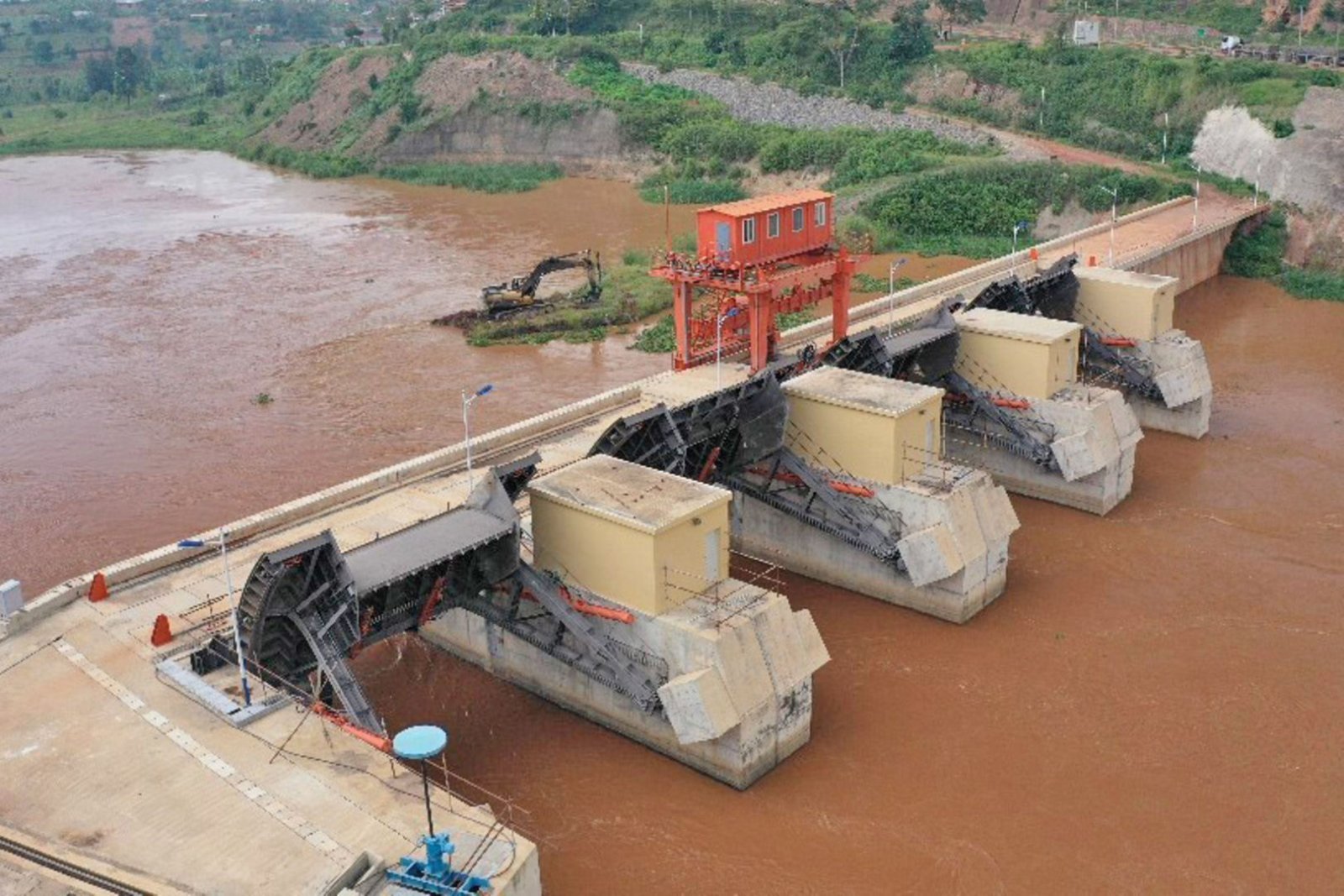
Burundi has signed a 25 year US$1.4 billion electricity distribution concession with Weza Power that aims to add more than 1.2 million household and business connections and 52,000 kilometres of network infrastructure. The programme addresses a distribution funding gap already identified in Burundi’s National Energy Compact, but much of the capital still has to be mobilised through grants, concessional finance and private investment.
Burundi has signed a 25 year electricity distribution concession with Weza Power that aims to mobilise US$1.4 billion, build or upgrade approximately 52,000 kilometres of distribution lines and connect more than 1.2 million households and businesses, placing private capital at the centre of one of Africa’s least electrified countries’ attempt to turn recent increases in power generation into electricity that can actually reach consumers. The agreement was signed on October 15 between the government and Weza Power, an Anzana Electric Group company, and divides distribution responsibilities between the new private operator and state utility REGIDESO, which will retain the national transmission network and continue distributing electricity in roughly half of the country.
The project is unusually large relative to Burundi’s existing electricity system. Weza Power says the concession is intended to provide first time or improved access to about eight million people and raise on grid electrification above 50 percent, while the government’s own National Energy Compact identifies distribution as the single largest funding requirement in its electricity expansion programme. The compact estimates that Burundi needs about US$1.64 billion for distribution infrastructure alone by 2030, compared with US$700 million for generation and US$200 million for transmission, meaning the Weza concession corresponds closely with an investment deficit the government had already quantified before the final PPP was signed.
The US$1.4 billion should not, however, be read as money already raised and ready for immediate deployment. The government and Anzana describe it as capital that the partnership will mobilise over the life of the programme through a blended structure involving commercial investors, grants, concessional finance and development institutions. The announcement names the World Bank’s ASCENT programme, IFC, MIGA, the African Development Bank, the U.S. International Development Finance Corporation, Gridworks, the U.S. Trade and Development Agency and NORAD among the institutions expected to support the structure, but it does not provide a financing table showing how much each partner has committed or whether the entire US$1.4 billion has reached financial close. That distinction matters because the concession has been signed, while much of the capital required to execute it still has to be assembled and deployed.
Burundi Has Increased Generation Faster Than It Has Expanded Access
The economic rationale for the concession is visible in Burundi’s own electricity data. The country has invested substantially in generation during the past several years, particularly in hydropower, but access remains extremely low. The World Bank recorded electricity access at 20.1 percent of the population in 2024, while Burundi’s 2025 National Energy Compact uses a broader access measure of 25.9 percent, consisting of only 8 percent connected to the interconnected grid and 17.9 percent served through decentralised solutions. The difference between those figures and Weza Power’s statement that current on grid electrification is approximately 15 percent reflects differing dates and definitions, which means they should not be treated as interchangeable. The direction is nevertheless consistent across the datasets: most Burundians still do not receive electricity from the national grid.
The same government compact records installed generation capacity at about 204.9MW in 2025, of which approximately 168MW was available, while the October PPP announcement refers to around 183MW of installed generation. The discrepancy is likely to reflect differences in what projects or available capacity are included in the respective figures, and the concession documents released publicly do not reconcile them. What is clearer is that Burundi has already reached the point where expanding generation without comparable investment in transmission and distribution leaves electricity stranded from the households, farms and businesses that are supposed to use it.
Burundi’s National Energy Compact estimates that installed capacity will need to rise from around 200MW in 2025 to approximately 410MW by 2030, including around 100MW of imports, while the transmission network will require another 704 kilometres of high voltage lines. On the distribution side, the government’s strategy calls for 6,578 kilometres of medium voltage lines, 51,839 kilometres of low voltage lines and 3,785 distribution substations. Those figures explain why the Weza concession is primarily a network project rather than another generation announcement. Burundi has added power plants, but its economic problem is increasingly whether electricity can be moved from generation points through transmission infrastructure and then distributed reliably enough for productive use.
The IMF reached a similar conclusion in its 2026 assessment of the Burundian economy. It noted that electricity generation had expanded rapidly while low access and outages continued to constrain economic activity, and estimated that expanding grid access towards 70 percent could add close to two percentage points to economic growth beyond its baseline projections. The IMF’s broader 2026 outlook already identifies electrification, mining and agriculture among the sectors expected to support growth, while warning that utility performance, system losses and complementary reforms will determine how much of the investment translates into actual economic gains.
Weza Will Operate Alongside REGIDESO Rather Than Replace It
The concession introduces a structure that is unusual in contemporary African power markets because it gives a privately operated company responsibility for a large geographical share of a national distribution system while preserving REGIDESO as both the transmission operator and the distributor in the remainder of Burundi. The government says REGIDESO will continue supplying electricity through the national transmission network while Weza invests in, expands and operates distribution infrastructure in its designated areas. The Ministry of Energy’s own announcement describes the objectives as improving service continuity, reducing outages, stabilising voltage, lowering technical and commercial losses and modernising metering and billing systems.
This division of the market matters because Burundi is not privatising the entire power system. Generation will continue to include public, regional and private projects, the national transmission grid remains under REGIDESO, and the public utility will continue serving a significant portion of customers. Weza is being inserted into the distribution layer as a parallel private operator, giving the government an opportunity to compare performance across public and private territories while also raising questions about tariff harmonisation, power purchasing arrangements, network boundaries and how investment obligations will be enforced during the 25 year concession.
The institutional model has been developing for several years rather than appearing suddenly with the October signing. Burundi’s National Energy Compact records that Anzana, previously known as Virunga Power, signed an interim agreement with the government in December 2023 to connect 55,000 households within two years, while a wider PPP was still being negotiated to electrify millions more people. The World Bank approved its ASCENT Burundi programme in June 2024, with project agreements subsequently signed with both REGIDESO and Weza Power, and explicitly designed the programme to combine public utility investment with private participation in electricity distribution.
The African Development Bank added a US$600,000 project development grant in 2025 through the Sustainable Energy Fund for Africa to finance environmental, social and other preparatory work required before Weza’s full launch. At that stage, the company was discussing connections for as many as nine million people. The final concession signed in October 2026 uses a target of around eight million people and more than 1.2 million new household and business connections, indicating that the project has been refined during the development process.
The Financing Model Relies Heavily on Concessional Capital
Burundi’s own National Energy Compact provides more detail on how a distribution expansion of this scale is expected to become commercially viable in one of the world’s poorest countries. For the proposed distribution PPP, the government envisaged a financing structure in which approximately 70 percent of capital would come through grants, 15 percent through concessional loans and the remaining 15 percent through longer term private or commercial financing. The compact states that blended finance is necessary to lower the investment cost sufficiently for consumers to receive electricity at affordable tariffs while still allowing private operators to invest sustainably.
This is central to understanding the US$1.4 billion programme because the phrase “private sector concession” can imply that private investors will finance most of the network from their own balance sheets and recover the investment entirely from electricity bills. Burundi’s plan is considerably more blended. Large amounts of grant and concessional capital are expected to absorb part of the upfront cost, while private capital and private operation are used to introduce investment discipline, network management and performance obligations.
The World Bank had already identified the difficulty in its ASCENT project analysis. REGIDESO’s existing tariffs did not fully cover the incremental cost of expanding supply, while the utility had been weakened by high system losses, previously estimated at around 30 percent, and by the cost of thermal generation. The World Bank argued that tariffs, operational efficiency and sector regulation would all have to improve if new electrification investment was to remain financially sustainable.
The final concession therefore creates a difficult balance between affordability and commercial viability. Millions of Burundians who have never had grid electricity are unlikely to sustain tariffs designed simply to recover full infrastructure costs from new customers, particularly where households have low incomes and consumption remains small. Yet a private distributor cannot indefinitely operate a network in which revenue fails to cover maintenance, operating expenses and financing obligations. Grants and concessional financing lower that tension, but the long term viability of the model will still depend on collection rates, electricity consumption, network losses, tariff adjustment and the extent to which productive customers such as businesses and industrial users expand alongside household connections.
The Deal Is Closely Tied to Mission 300
The PPP is also one of the more substantial country level projects to emerge under Mission 300, the World Bank and African Development Bank initiative seeking to provide electricity access to 300 million people in Sub Saharan Africa by 2030. Burundi joined the programme with a National Energy Compact that commits the government to significantly expand electricity access, strengthen utility performance, increase private investment and develop both grid and decentralised energy systems.
Burundi’s compact targets electricity access for 70 percent of the population by 2030, while the longer term Vision 2040 to 2060 targets universal electricity access, with 80 percent of the population connected to the main grid and the remaining 20 percent served through decentralised solar solutions. Meeting the 2030 objective requires about US$3.49 billion across generation, transmission, distribution, decentralised electricity and clean cooking, of which the government expects approximately US$1.95 billion from public sources and around US$1.54 billion from the private sector.
The Weza concession therefore represents a large share of the entire private capital requirement envisaged under Burundi’s national plan. Its success or failure will influence whether Mission 300 can demonstrate that private electricity distribution can work at national scale in lower income African economies, where the investment need is enormous but customer affordability remains limited.
The government and Anzana describe the concession as Africa’s first new privately operated national scale electricity distribution concession in decades. That description originates from the project sponsors and is difficult to establish conclusively across every African power market, but the scale is unquestionably unusual. Most private participation in African electricity distribution in recent years has occurred through generation projects, mini grids, management contracts or partial concessions rather than the creation of a new private distributor responsible for a large section of an entire country.
Electricity Is Becoming Part of Burundi’s Mining Strategy
The timing of the power agreement also coincides with a renewed attempt to develop Burundi’s mineral resources. In March 2026, the government granted New York listed Lifezone Metals a 14 month exclusivity period to assess the Musongati nickel project, a large laterite deposit in the East African Nickel Belt. Historical work cited by Lifezone identified more than 140 million tonnes of material grading approximately 1.31 percent nickel, with potential copper, cobalt, platinum group metals and scandium by products. The agreement was signed in Washington with U.S. government officials present, while KoBold Metals simultaneously agreed to work with Burundi on digitising geological data.
This explains the unusually explicit references to critical minerals in the electricity announcement. Energy Minister Hassan Kibeya said expanded distribution should support local processing of critical minerals, while Anzana described improved power infrastructure as part of a wider strengthening of U.S. and Burundian commercial relations. The relationship should not be overstated, because a distribution concession does not by itself provide the large generation capacity that a future industrial mining or refining project could require. It does, however, address one of the basic infrastructure weaknesses that has historically made large industrial projects difficult to develop in Burundi.
Reliable distribution also matters outside mining. Coffee processing, cold storage, irrigation, food manufacturing, telecommunications, healthcare and small industry all become more productive when electricity is available consistently rather than through costly diesel generation or intermittent supply. This is why the IMF treats electrification as a macroeconomic rather than merely social infrastructure issue. Burundi’s growth problem is partly one of moving labour and capital into more productive activities, and dependable electricity is one of the conditions that allows that transition to occur.
The $1.4 Billion Now Has to Move From Concession to Construction
The October agreement gives Burundi a contractual framework for an electricity expansion programme that had been under development since at least 2023, but the largest test begins after signature. More than 1.2 million connections and 52,000 kilometres of distribution infrastructure represent a construction programme far larger than the network the country operates today, and delivery will depend on whether grants, concessional lenders and private investors commit capital at the scale envisaged by the concession.
The financing structure deserves particular attention because the headline US$1.4 billion is a mobilisation target rather than a disclosed financial close. The World Bank has already committed substantial resources through ASCENT, including an original US$100 million IDA grant and an additional US$50 million financing request, while the African Development Bank has provided project preparation support. Other institutions named in the concession announcement are expected to participate through different instruments, but a complete breakdown of committed equity, grants, guarantees and debt has not yet been published.
Execution will also determine whether the project changes the economics of Burundi rather than simply the size of its electricity network. The most useful indicators will be the number of connections actually energised, the reliability and price of electricity delivered, technical and commercial losses, collection rates, industrial consumption and the amount of private investment that follows improved access. Burundi’s experience will be particularly important because its own energy strategy is effectively testing whether large scale concessional finance can make privately operated distribution commercially sustainable while still keeping electricity affordable for low income consumers.
The government has already set ambitious targets for generation, grid access and private participation, and the Weza concession now gives one of those ambitions a signed institutional structure. If the financing closes and the distribution network is built at the scale announced, the project would alter the physical reach of Burundi’s power system and could remove one of the country’s most persistent constraints on productive investment. If mobilisation falls short, the gap between the concession value and capital actually deployed will become the more important number.
FAQ
What is the US$1.4 billion Burundi Weza Power agreement? It is a 25 year public private partnership under which Weza Power will invest in, expand and operate electricity distribution infrastructure across roughly half of Burundi while state utility REGIDESO continues operating the transmission network and distributing electricity in the remainder of the country.
Has the entire US$1.4 billion already been financed? The available announcements describe US$1.4 billion as the amount the partnership intends to mobilise. They identify several development finance and commercial partners but do not publish a complete financing table demonstrating that the entire amount has reached financial close.
How many new electricity connections will Weza Power provide? The concession targets more than 1.2 million new household and business connections and approximately 52,000 kilometres of new and upgraded distribution lines.
How many Burundians currently have electricity? Different sources use different definitions. The World Bank recorded total electricity access at 20.1 percent in 2024. Burundi’s 2025 National Energy Compact reports 25.9 percent overall access, consisting of 8 percent connected to the interconnected grid and 17.9 percent served through decentralised electricity solutions.
What is Burundi’s electricity access target for 2030? Burundi’s National Energy Compact targets reliable electricity access for 70 percent of the population by 2030, using a combination of national grid expansion and decentralised electricity systems.
How much does Burundi need to invest in its electricity system? The National Energy Compact estimates total financing needs of about US$3.49 billion, including approximately US$700 million for generation, US$200 million for transmission, US$1.64 billion for distribution and additional investment in decentralised electricity and clean cooking.
What role will REGIDESO have after the Weza Power concession? REGIDESO will remain responsible for the national transmission network and will continue distributing electricity in approximately half of Burundi. Weza Power will operate distribution infrastructure in its concession area.
Why is the project important for Burundi’s economy? The IMF identifies limited electricity access and weak distribution as major constraints on productivity and investment. Its 2026 analysis estimates that significantly expanding grid access could materially raise economic growth, particularly by supporting agriculture, mining and other productive sectors.
 Uchumi360
Business Intelligence
Uchumi360 covers business, investment, and economic policy across East, Central, and Southern Africa.
For the serious reader
You read to the end. That places you in a small group.
Uchumi360 is built for readers who demand precision over speed, structure over sentiment, and analysis that holds uncomfortable conclusions rather than softening them. If this work sharpens how you think about Africa's economy, help us keep building the infrastructure behind it.
Institutional Partners
Commission intelligence. Shape the conversation.
Uchumi360 works with development finance institutions, investment firms, sovereign bodies, and strategic organisations across the coverage region. Institutional partnership unlocks:
- Commissioned sector and country intelligence reports
- Branded research series under your institution's authority
- Exclusive data briefings for internal strategy teams
- Speaking and editorial presence at Uchumi360 events
- Co-published investment outlooks for your markets
Support Our Work
Independent analysis has a cost. Help us bear it.
Uchumi360 does not carry advertising. It does not take editorial direction from sponsors. Every article is produced without commercial compromise. Your contribution funds the reporting, research, and editorial infrastructure that keeps this analysis free from influence.
Secure checkout: One-time and monthly support are processed securely. Add payment credentials to enable checkout here.
Stay Connected
Keep up with every new insight.
Follow our latest analysis, policy coverage, and market intelligence as soon as it is published. If you need something specific, reach out directly and we will point you to the right research.
