
Dangote’s KSh2.2 Trillion Lamu Refinery Faces Land Dispute Before Groundbreaking
Ready
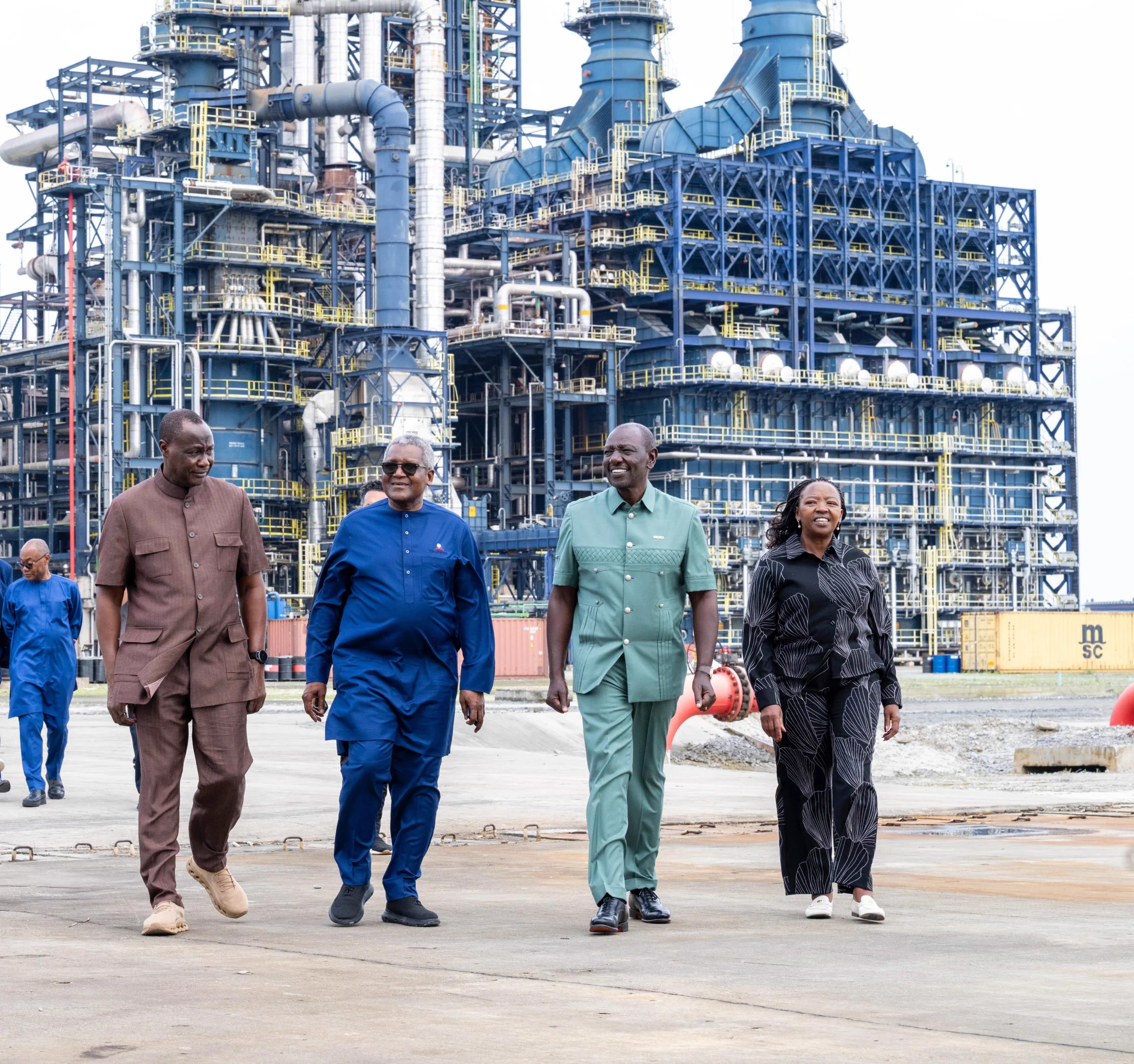
Kenya’s planned KSh2.2 trillion Dangote backed refinery in Lamu has reached a critical stage, with 2,930 tonnes of construction machinery already arriving at Lamu Port ahead of the scheduled September 30 groundbreaking. The 700,000 barrel per day refinery is being positioned as a major new refining and petrochemical complex for East and Central African markets. But the project faces a land dispute involving 133 Chandavai residents who claim ancestral rights over part of the proposed site. The Malindi Environment and Land Court has ordered parties to maintain the status quo on the disputed land until October 14. Dangote has said the court order will not prevent the official groundbreaking, although it could affect some site activities. The dispute adds a legal and land governance dimension to one of East Africa’s largest proposed industrial investments.
LAMU — The Dangote refinery is approaching construction with a major land dispute still before the courts
Kenya is preparing to break ground on a proposed KSh2.2 trillion East Africa Oil Refinery in Lamu on September 30, but a dispute over land at the planned site has introduced a legal complication just days before the ceremony. The refinery, backed by Nigerian industrial group Dangote, is designed to process up to 700,000 barrels of crude oil per day and is expected to become one of the largest refining projects in Africa if completed. Kenyan authorities have positioned the development as a major investment in petroleum refining, petrochemicals and industrialisation, with the potential to supply Kenya and neighbouring markets. The project is being developed within the LAPSSET corridor in the Magogoni area of Lamu, linking the refinery proposition to the wider ambition of turning the Kenyan coast into an industrial and logistics centre.
The immediate dispute concerns Land Reference No. 13061 in Manda Magogoni. According to the application filed by 133 Chandavai residents, the land is connected to families who say they have occupied and used the area for generations, including for farming and livestock keeping, while homes, mosques, shrines and family graves are also located on parts of the disputed property. The residents have challenged the planned development and named the National Land Commission, LAPSSET Corridor Development Authority, Lamu County Government and Dangote Industries among the respondents. They also allege that government and LAPSSET representatives entered the land with bulldozers in August 2024 and destroyed crops and trees without prior notice or compensation. Those allegations are claims made by the petitioners and remain subject to the court process. The court has not determined the merits of the underlying land dispute.
The court has preserved the land status quo, but has not cancelled the groundbreaking
The Malindi Environment and Land Court declined to certify the residents’ application as urgent on September 25 and ordered the parties to maintain the status quo on the disputed land until October 14, when the matter is scheduled for an inter partes hearing. The respondents were directed to receive the application and file their responses within 14 days. The order itself does not expressly cancel the September 30 groundbreaking ceremony. Reuters reported on September 29 that Dangote has said the ruling will not disrupt the official launch, although it could affect some activities at the site.
The distinction is important for a project of this scale. A groundbreaking ceremony and the commencement of full construction are separate stages, and the court order concerns activities on the disputed land rather than issuing a blanket order against the entire refinery project. Kenyan reporting had already indicated that preparations for the September 30 ceremony were well advanced, with authorities expecting regional and international delegations in Lamu. The legal proceedings therefore introduce uncertainty around site activities without, based on the order and the latest reporting, establishing that the wider project has been halted.
The dispute has emerged as physical preparations for the refinery are already becoming visible. On September 26, the Port of Lamu received the MV Da Yang carrying 2,930 metric tonnes of heavy construction machinery intended for the refinery project. The arrival was reported by The Star and linked to preparations for the planned development. This means the project has moved beyond a purely conceptual investment announcement, although the arrival of machinery does not by itself establish that full construction has commenced.
A 700,000 barrel refinery would change the scale of East Africa’s petroleum industry
The economic proposition behind the Lamu project is unusually large for East Africa. The refinery is planned to process 700,000 barrels of crude oil per day, a capacity that would put it on a scale comparable with Dangote’s existing Nigerian refinery. Kenyan officials have placed the investment at about KSh2.2 trillion, while recent international reporting has variously estimated the project at approximately US$15 billion to US$17 billion. The differences reflect different reporting dates and project cost estimates, so the figures should not be treated as a single settled construction cost until a definitive project financing figure is published.
The project is also larger than a refinery in the narrow sense. Engineers India Limited announced on September 23 that it had signed a contract worth more than US$450 million with Dangote Group to act as project management consultant and engineering, procurement and construction management consultant for the planned Kenyan refinery and petrochemical complex. EIL previously worked with Dangote on the Nigerian refinery, giving the Kenyan project an engineering and project management relationship connected to an operating facility of similar scale. EIL said the Kenyan facility is intended to strengthen fuel production in East Africa, reduce dependence on imports and supply petroleum products to regional and international markets.
The financing structure remains one of the central questions surrounding the project. President William Ruto met Dangote and Africa Finance Corporation President Samaila Zubairu in New York on September 21 to discuss financing and preparations for the project. Earlier reporting has also described possible participation by East African countries through an equity structure, although the final ownership and financing arrangements have not been fully established in the sources reviewed for this article. Reuters has identified financing as one of the project's major challenges alongside crude supply and infrastructure requirements.
The refinery’s biggest economic question may be where its crude will come from
The scale of the refinery creates a second strategic question beyond construction: securing enough crude oil at competitive cost. Kenya's own crude production has not yet reached the level required to supply a 700,000 barrel per day refinery, meaning the facility would require crude from domestic and regional sources or from international markets. Reuters reported that potential sources include Kenya, Uganda and South Sudan, but each presents infrastructure, production or geopolitical considerations. Until a reliable crude supply chain is established, refinery capacity alone cannot guarantee competitive petroleum production.
The Lamu location nevertheless offers a different proposition from a refinery dependent entirely on inland crude transportation. The facility is planned within the LAPSSET corridor and would have access to the Port of Lamu, giving it a maritime route for crude imports and refined product exports. This could allow the project to operate as a regional merchant refinery rather than depending exclusively on Kenyan crude. The commercial question will therefore be whether the combination of crude procurement, port infrastructure, refining margins, financing costs and regional demand can support a facility of this size over its operating life.
Dangote's Nigerian experience is central to the investment case. The company's Lagos refinery currently has crude distillation capacity of about 700,000 barrels per day, while Dangote is pursuing a further expansion to 1.4 million barrels per day. Africa Finance Corporation has previously participated in financing the Nigerian refinery and in August announced that it had led a US$2.5 billion private placement involving Dangote Petroleum Refinery and Petrochemicals.
Kenya is positioning Lamu as more than a fuel import terminal
For Kenya, the refinery fits into a wider industrial strategy around the coast. Government officials have presented the project as a potential source of jobs, industrial activity, petrochemical production and greater regional energy security. The proposed refinery is also expected to sit within a broader industrial complex rather than function as a standalone fuel processing plant. The project could therefore create demand for storage, logistics, engineering, construction, maintenance, power, transport and other industrial services around Lamu if the planned development proceeds at scale.
Dangote has also indicated that the Kenyan project will include a power component. Recent reporting following President Ruto's September 25 visit to the company's Nigerian refinery said the Lamu facility is expected to generate about 1,000 megawatts of electricity. That figure is a project expectation rather than an independently verified operating capacity, but it illustrates the intended scale of the complex. A refinery combined with petrochemicals, power, storage and maritime infrastructure would give the project a much broader economic footprint than petroleum refining alone.
The regional dimension is equally important. A 700,000 barrel per day refinery would have capacity far beyond Kenya's domestic market and would therefore depend on regional and international sales. The project's commercial case is consequently tied to markets across East and Central Africa, where many countries remain dependent on imported refined petroleum products. The ability to move those products competitively by road, rail, pipeline and sea will determine how much of the theoretical regional market can actually be captured.
The land dispute exposes the governance challenge behind mega infrastructure
The immediate legal dispute points to a wider issue that accompanies large infrastructure projects in coastal Kenya and elsewhere in Africa: the economic value of land can rise rapidly once a major industrial project is announced, while questions of ownership, compensation and community participation can become more difficult to resolve. Lamu Governor Issa Timamy warned residents in Hindi and Mkunumbi wards against selling land cheaply ahead of the refinery project, arguing that land values could increase as development proceeds. That advice illustrates the expectations already surrounding the project before the refinery has begun operating.
The court proceedings now place land governance alongside financing, crude supply and infrastructure as issues that will shape the project's execution. The residents' allegations concerning compensation and resettlement have not been judicially determined, and the October 14 hearing will provide the next formal stage for the parties to present their positions. For investors, the question is not simply whether the refinery can be built, but whether the institutional arrangements surrounding land, community interests and project implementation can support construction at the scale being proposed.
For Kenya, the refinery represents a bid to move further up the petroleum value chain. For Dangote, it extends a refining strategy that began in Nigeria into East Africa. For the region, it could eventually create a large new source of refined products and petrochemicals. But the project now enters its most consequential phase with three fundamentals still requiring execution: securing the land, financing the investment and establishing a reliable crude supply chain. The September 30 groundbreaking can mark the beginning of that process, but it cannot by itself settle the commercial and institutional questions that will determine whether a 700,000 barrel per day refinery becomes an operating industrial asset. The Lamu refinery is no longer a question of ambition. Its next test is whether land, finance, crude and infrastructure can move at the same speed.
FAQ
How much will the Dangote Lamu refinery cost? Recent reporting has placed the project at between about US$15 billion and US$17 billion, while Kenyan reporting has cited approximately KSh2.2 trillion. The final project financing figure should be treated separately from these reported estimates until a definitive financing structure is publicly established.
How much crude will the refinery process? The planned facility is designed to process up to 700,000 barrels of crude oil per day. This would make it one of the largest refining projects in Africa and give it capacity well beyond Kenya's current domestic refining requirements.
Has the Kenyan court stopped the refinery project? The Malindi Environment and Land Court ordered the parties to maintain the status quo on disputed land until October 14, but the order does not expressly cancel the September 30 groundbreaking. Dangote has said the court decision will not stop the official launch, although Reuters reported that some site activities could be affected.
Who is challenging the refinery land? The court application was brought by 133 residents of Chandavai in Lamu County. They claim ancestral rights over part of the proposed site and allege that the land is used for homes, agriculture, livestock, religious sites and family graves. Those claims remain before the court.
Who is managing the engineering work? Engineers India Limited has signed a contract worth more than US$450 million to provide project management consultancy and engineering, procurement and construction management services for the refinery and petrochemical complex. EIL previously worked with Dangote on its Nigerian refinery.
Why does Lamu matter to the project? The Lamu location connects the refinery to Kenya's deep water port and the wider LAPSSET corridor. That gives the proposed facility access to maritime crude supplies and potential export routes into East and Central African markets, although the commercial viability will depend on the cost and reliability of those supply and distribution networks.
 Uchumi360
Business Intelligence
Uchumi360
Business Intelligence
Uchumi360 covers business, investment, and economic policy across East, Central, and Southern Africa.
For the serious reader
You read to the end. That places you in a small group.
Uchumi360 is built for readers who demand precision over speed, structure over sentiment, and analysis that holds uncomfortable conclusions rather than softening them. If this work sharpens how you think about Africa's economy, help us keep building the infrastructure behind it.
Institutional Partners
Commission intelligence. Shape the conversation.
Uchumi360 works with development finance institutions, investment firms, sovereign bodies, and strategic organisations across the coverage region. Institutional partnership unlocks:
- Commissioned sector and country intelligence reports
- Branded research series under your institution's authority
- Exclusive data briefings for internal strategy teams
- Speaking and editorial presence at Uchumi360 events
- Co-published investment outlooks for your markets
Support Our Work
Independent analysis has a cost. Help us bear it.
Uchumi360 does not carry advertising. It does not take editorial direction from sponsors. Every article is produced without commercial compromise. Your contribution funds the reporting, research, and editorial infrastructure that keeps this analysis free from influence.
Secure checkout: One-time and monthly support are processed securely. Add payment credentials to enable checkout here.
Stay Connected
Keep up with every new insight.
Follow our latest analysis, policy coverage, and market intelligence as soon as it is published. If you need something specific, reach out directly and we will point you to the right research.
