
Dar es Salaam Is Adding 500,000+ People a Year. Whether That Becomes an Economic Asset or an Economic Liability Will Be Decided in the Next Four Years.
Ready
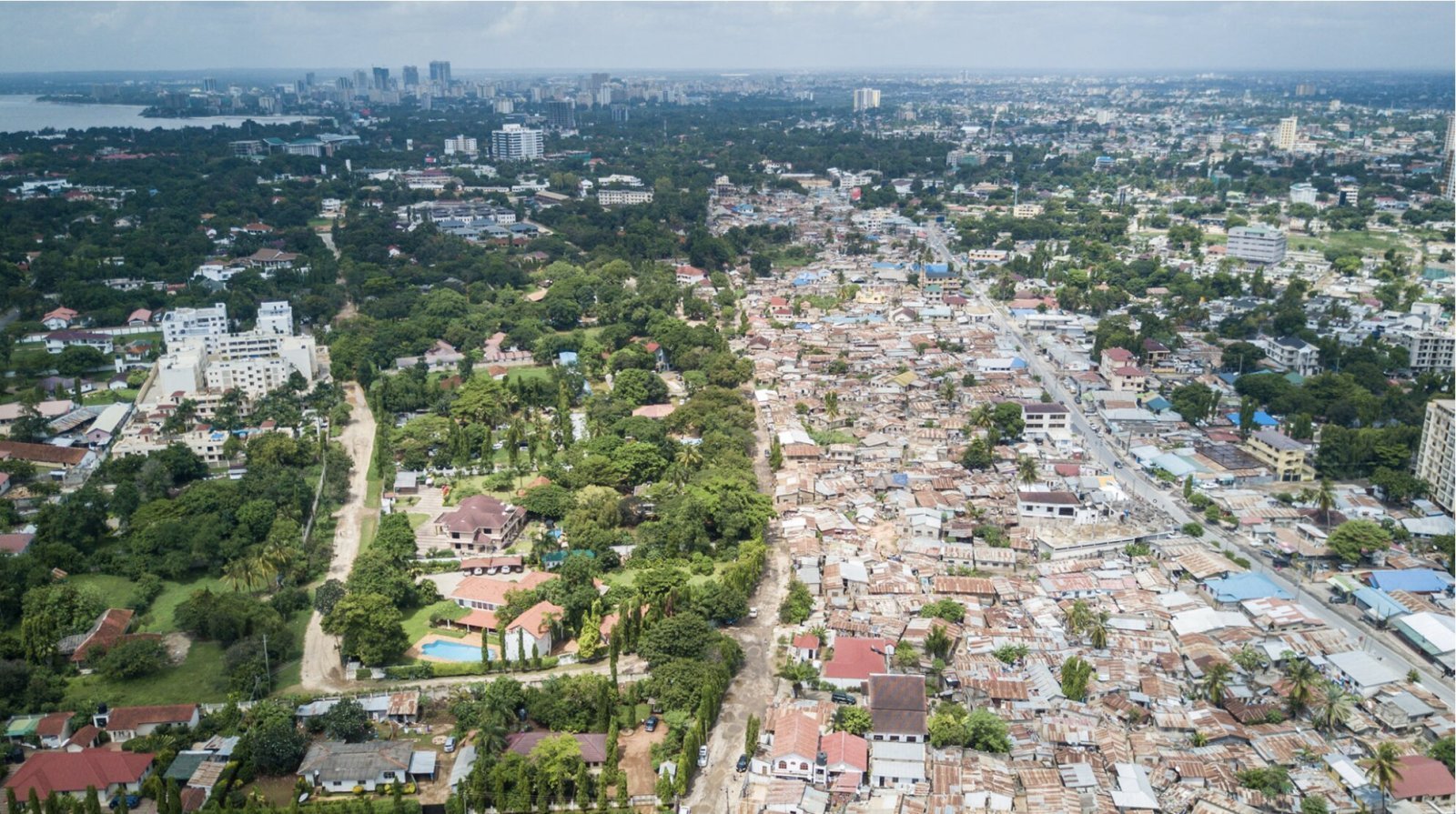
Dar es Salaam's population stands at approximately 7 million in 2026, according to Tanzania's National Bureau of Statistics, and is projected to exceed 10 million by 2030 under World Bank population growth projections. Nairobi crossed 5 million a decade ago and is pushing toward 6 million. Kampala, Kigali, and Addis Ababa are all on trajectories that will make them significantly larger urban economies by the end of the decade than they are today. The economic theory of urbanisation is unambiguous: cities generate value through agglomeration, through the clustering of workers, firms, ideas, and markets that raises productivity above what dispersed rural economies can achieve. The empirical record of East Africa's current urbanisation is more complicated. Population is concentrating. Productivity is not scaling proportionally with that concentration. The gap between these two trajectories is not an accident of geography or demography. It is the direct consequence of specific and identifiable urban system failures whose resolution in the next four years will determine whether Dar es Salaam and its regional peers arrive at megacity scale as economic engines or as congestion traps built at enormous scale.
The Agglomeration Premise and Why It Is Not Automatic
The economic case for urbanisation rests on a well-documented empirical relationship: as populations concentrate in cities, productivity rises. Workers in cities earn more than workers in rural areas doing equivalent work. Firms in cities are more innovative, more connected to supply chains and markets, and more productive per unit of capital than firms in dispersed rural or small-town environments. Services are delivered more cheaply per recipient when recipients are densely concentrated than when they are dispersed across vast geographies requiring extensive infrastructure per household served.
These agglomeration benefits are real and they are the primary mechanism through which urbanisation has historically been the engine of economic development in every economy that has achieved sustained industrialisation and broad-based income growth. The East Asian development experience that Uchumi360's analyses have cited repeatedly as the relevant regional precedent for Africa's structural transformation ambitions was overwhelmingly an urban experience. Manufacturing-led growth concentrates in cities because factories require the labour markets, the logistics infrastructure, the supplier networks, and the institutional services that urban concentration makes available at economically viable costs.
But agglomeration benefits are not automatic. They are conditional on the urban systems that allow concentration to generate productivity rather than congestion. A city that is dense but whose transport system cannot move workers from residence to workplace efficiently does not generate the labour market concentration benefits that urban density should produce. A city that is large but whose housing market forces workers into informal settlements far from employment concentrations does not generate the productivity premium that urban labour market depth should create. A city that attracts population but whose formal economy cannot absorb that population into productive employment generates poverty concentration rather than productivity concentration.
East Africa's cities are currently generating both outcomes simultaneously. The agglomeration benefits are visible in the fintech ecosystems, the professional services depth, the manufacturing activity, and the commercial density of Nairobi and Dar es Salaam. The congestion costs are equally visible in the traffic that Uchumi360's BRT analysis quantified as a macroeconomic constraint, in the housing informality that the housing crisis analysis documented at 90 percent of Dar es Salaam's urban stock, and in the growth-welfare gap that the happiness data makes measurable. The question is which dynamic is dominant and which direction the balance is moving as the cities grow toward megacity scale.
The Congestion Cost That Compounds With Scale
Dar es Salaam's traffic congestion is the most visible and most directly quantifiable urban productivity cost in Tanzania's economy. Uchumi360's BRT analysis documented the mechanism precisely: time lost in transit translates into labour output lost, logistics cost increases, and supply chain unreliability that imposes costs on every business operating in or through the city. The World Bank has estimated that Dar es Salaam loses up to 2 percent of GDP annually to flood-related infrastructure disruption, a figure that provides a reference point for the order of magnitude of urban inefficiency costs. Congestion costs, while harder to isolate as a single GDP figure, operate through the same mechanism and at comparable or greater scale.
The critical analytical point about congestion costs is that they do not scale linearly with population. They scale superlinearly. A city of 7 million with inadequate transport infrastructure does not simply have seven-sevenths of the congestion cost of a city of 1 million with the same infrastructure deficit. It has substantially more, because each additional resident added to an already congested road network increases the congestion experienced by every existing user of that network. The marginal congestion cost of the 500,000 additional residents who will arrive in Dar es Salaam each year between now and 2030 is higher than the average congestion cost of the existing population, because those additional residents are being added to a network that is already operating beyond comfortable capacity.
This superlinear scaling of congestion costs is the precise mechanism through which cities that fail to invest in transport infrastructure during their growth phase arrive at large size with productivity levels substantially below what their population concentration should generate. The investment in BRT corridors across six phases, the Nelson Mandela Road expansion to eight lanes, and the road network improvements that the TANROADS programme is delivering are all attempts to break this superlinear scaling by expanding transport capacity faster than population growth expands transport demand. Whether they are succeeding requires assessing not just the kilometres of infrastructure built but the ratio of infrastructure capacity addition to population addition over the same period.
Informality as a Productivity Ceiling
The 90 percent informal housing figure that Uchumi360's housing crisis analysis documented is the most precise quantification of the productivity ceiling that urban informality imposes on Dar es Salaam's economic output. But housing informality is the surface manifestation of a deeper informality in the urban economic system that extends through employment, business registration, tax compliance, financial system participation, and the professional services access that formal economic activity generates.
A worker in an informal settlement without secure land tenure cannot use her housing as collateral for the business loan that would allow her informal trading activity to formalise and scale. A small manufacturer operating from an informal workshop without a registered address cannot access the supply chain relationships, the trade finance instruments, and the export documentation that would allow his production to serve markets beyond the immediate neighbourhood. A service provider operating without formal registration cannot bid for government procurement contracts, cannot access the liability insurance that professional services require, and cannot build the reputational capital that formal business credentials provide.
These informality constraints compound across Dar es Salaam's entire small and medium enterprise sector in ways that reduce the aggregate productivity of the urban economy below what the same population and the same physical assets would generate in a more formally integrated urban system. Nairobi's deeper formal sector, reflected in its higher per capita formal employment, its more developed professional services ecosystem, and its more extensive financial market integration, generates substantially higher urban economic productivity per resident than Dar es Salaam, despite facing its own significant informality challenges. The productivity differential between the two cities is not primarily a function of education, infrastructure quality, or geographic advantages. It is substantially a function of formal sector depth that allows the agglomeration benefits of urban concentration to be captured rather than dissipated through the friction of informal economic organisation.
As Dar es Salaam grows from 7 million to 10 million, the productivity implications of maintaining the current level of informality at greater scale are the most important economic variable in Tanzania's urban development. A city of 10 million that is 90 percent informally housed, predominantly informally employed, and substantially outside the formal tax and financial systems is a city that generates the infrastructure demands of a megacity without generating the fiscal resources to meet those demands, and that generates the labour supply of a major industrial economy without generating the formal employment that converts labour supply into manufacturing productivity.
The Housing-Transport-Industry Triangle
The most productive cities in economic history have shared a specific spatial and economic characteristic: the integration of housing, transport, and industrial activity into a system where workers can afford to live within viable commuting distance of productive employment, where goods can move from production facilities to consumers and export points efficiently, and where the economic density that generates agglomeration benefits is matched by the physical infrastructure that makes density productive rather than congested.
East Africa's cities are currently failing on all three dimensions of this triangle simultaneously, and the failures reinforce each other in ways that make each individual intervention less effective than it would be in a more integrated urban system.
The housing failure documented in the housing crisis analysis, 90 percent informal, 200,000 unit annual deficit, growing at 500,000 additional residents per year, is pushing the urban poor and the working class into peri-urban locations where land is affordable but transport connectivity is poor. As workers move further from employment concentrations to find affordable housing, their commuting times increase, their transport costs rise, and the productivity premium of urban employment is partially offset by the time and money cost of accessing it. This spatial mismatch between affordable housing and productive employment is the primary driver of the long commutes that Dar es Salaam's BRT expansion is designed to address.
The transport failure, documented in the BRT and TANROADS analyses, means that even workers who are willing to absorb long commutes face journey time uncertainty that makes reliable punctuality at work difficult. A worker who cannot guarantee what time she will arrive at her workplace cannot be relied upon for the time-sensitive tasks that higher-productivity formal employment requires. The transport uncertainty acts as a soft exclusion mechanism from formal sector employment that adds to the structural barriers that informality already creates.
The industrial integration failure, which the import composition analysis and the consumption versus production article documented, means that Dar es Salaam's population growth is generating consumption demand that is being met by imports rather than by domestic manufacturing that would employ urban residents in productive formal sector work. A city of 7 million growing to 10 million that is primarily a distribution point for imported goods rather than a production location for domestically manufactured goods is generating commercial activity without generating the industrial employment that would make urban labour market concentration productive at the scale that the population warrants.
Nairobi's Lesson and What It Tells Dar es Salaam
Nairobi's experience as East Africa's most economically developed major city provides the most directly relevant regional evidence for what urban economic development looks like when it is working and where its limits are.
Nairobi's financial services sector, anchored by M-Pesa and the fintech ecosystem that has grown around it, has generated genuine and substantial economic value from urban concentration. The clustering of financial technology talent, venture capital, corporate headquarters, and the professional services firms that support them has made Nairobi the financial and innovation capital of East Africa in ways that reflect real agglomeration benefits. The labour market depth that Nairobi's size creates allows specialisation, matching, and the knowledge spillovers between firms that make urban professional economies more productive than dispersed alternatives.
Nairobi's limits are equally instructive. Despite higher per capita income and greater formal sector depth than Dar es Salaam, Nairobi ranks 110th in the World Happiness Report 2026, below Mozambique. Its traffic congestion is among the worst in sub-Saharan Africa and imposes productivity costs that the city's sophisticated financial sector cannot fully offset. Its housing market, while more developed than Dar es Salaam's, still excludes a substantial share of the working population from affordable formal housing in accessible locations. Its manufacturing sector, despite AGOA access and a deeper industrial base than most East African cities, has not developed to the scale that would make Nairobi a manufacturing economy rather than primarily a services and consumption economy.
The Nairobi lesson for Dar es Salaam is that services-led urban growth generates real economic value and real agglomeration benefits but reaches a ceiling when it is not accompanied by manufacturing depth that employs the full urban labour force at productive wages. Nairobi at approximately 5 to 6 million is the most economically sophisticated city in East Africa and still has not resolved the housing, congestion, and industrial integration challenges that limit its productivity. Dar es Salaam at 7 million growing to 10 million has less institutional depth, less financial market development, and less formal sector integration than Nairobi, and is growing faster. The trajectory requires more urgent intervention than Nairobi's more gradual urbanisation demanded.
What the Four-Year Window Requires
The period between 2026 and 2030, during which Dar es Salaam will add approximately 3 million residents to cross the megacity threshold, is the most important urban policy window in Tanzania's modern economic history. The infrastructure and institutional decisions made in this window will determine the urban system that 10 million people inhabit. Retrofitting a megacity with the infrastructure and institutions it should have been built with is substantially more expensive and substantially less effective than building those systems during the growth phase.
The BRT expansion across six phases is the transport investment that addresses the most immediately visible productivity constraint. Its economic returns depend on completion pace relative to population growth, on the land use planning coordination that Uchumi360's BRT analysis identified as the mechanism through which transit investment generates urban productivity benefits rather than simply improved bus speeds, and on the feeder transport network integration that connects the trunk BRT system to the informal settlement populations whose commuting times are longest and whose productivity losses from transport inefficiency are largest.
The DMDP II property tax system, which Uchumi360 identified as the most analytically significant element of the USD 385 million urban development package, is the fiscal infrastructure investment that determines whether Dar es Salaam can finance its megacity infrastructure needs from domestic revenue. A functioning GIS-based property tax system that captures the value of Dar es Salaam's rapidly appreciating urban land generates the municipal revenue that makes BRT maintenance, road upkeep, waste management, and the urban services that 10 million residents require financially sustainable without perpetual dependence on central government transfers and development finance.
Housing formalisation at scale, converting the informally settled land that the majority of Dar es Salaam's population occupies into registered, titled, mortgageable assets, is the financial system intervention that would unlock the largest single source of household wealth and connect it to the formal economy. Every informal structure that is titled and registered adds to the municipal tax base, gives its owner access to financial system instruments, and reduces the transaction cost of land markets that currently operate through informal channels whose opacity limits the efficient allocation of urban land to its highest productivity uses.
Industrial zone development that is genuinely integrated with the urban labour market, the transport network, and the housing locations of the workers it would employ is the economic integration investment that converts urban population growth into productive manufacturing employment rather than informal service sector absorption. The Kwala Industrial Park, the Bagamoyo SEZ, and the Dodoma industrial zone are all supply-side industrial investments. Their productivity returns depend on the demand-side urban system investments, the transport connectivity, the affordable housing proximity, the utilities reliability, that make them attractive to manufacturers who could produce in competing locations with better urban systems.
The Measurement That Will Tell You Whether It Is Working
The progress of Dar es Salaam's urban economic development between 2026 and 2030 can be tracked through specific and measurable indicators that are more diagnostic than GDP growth rates or investment approval statistics.
The formal housing share of annual new construction, currently at approximately 10 percent, is the most direct measure of whether the urban economic integration that housing formalisation represents is improving. If the formal share rises meaningfully as the population grows from 7 to 10 million, the urban economy is integrating. If it remains stable or declines as the population addition overwhelms formal system capacity, the informality ceiling is deepening.
Average commute time in Dar es Salaam, measured across the population rather than for the minority using formal transport, is the most direct measure of whether transport investment is keeping pace with population growth. If average commute time declines or remains stable as the city grows to 10 million, the BRT and road investments are working. If it increases, the infrastructure investment is being overwhelmed by population growth, and the congestion tax is rising.
Municipal own-source revenue as a share of the city's total budget is the fiscal measure that determines whether Dar es Salaam is building the financial self-sufficiency that a megacity requires. If the DMDP II property tax system and the broader revenue mobilisation reforms are working, this share should rise as the property tax base is formalised and extended. If it remains stagnant, the city will arrive at 10 million people dependent on the same external financing architecture that currently limits its infrastructure investment.
Manufacturing employment as a share of total urban employment is the structural transformation measure that distinguishes an economic engine city from a consumption economy city. If Dar es Salaam's SEZ and industrial zone development is generating formal manufacturing employment at meaningful scale, this share should rise between 2026 and 2030. If it remains flat or declines as informal service employment absorbs the population addition, the urban economy is growing without industrialising.
The Bottom Line
Dar es Salaam is not yet an economic engine at the scale its population warrants. It is not yet a congestion trap beyond the point of productive intervention. It is, in 2026, at the precise inflection point where the urban system investments of the next four years will determine which of these two trajectories it follows to 10 million and beyond.
The investments are being made. The BRT is being built. The road network is being expanded. The industrial zones are being developed. The property tax system is being designed. Each of these investments is a component of the urban economic engine that Dar es Salaam needs to be. Their combined effect will depend on whether they are coordinated into a system that connects housing to transport to industry to fiscal sustainability, or whether they remain the isolated asset investments that the infrastructure debt analysis identified as the most expensive form of urban investment: physical assets built without the institutional and economic integration that makes them productive.
A city of 10 million people is an extraordinary economic asset when its systems work. It is an extraordinary fiscal liability when they do not. Tanzania has four years and a 3 million person population addition to determine which of those descriptions fits Dar es Salaam in 2030. The decisions being made now, about BRT routes and property tax systems and industrial zone connectivity and housing formalisation, are the decisions that will write the answer.
 Uchumi360
Business Intelligence
- Tanzania National Bureau of Statistics Population and Housing Census Data and Projections
- World Bank Tanzania Population Growth Projections 2026 to 2030
- Dar es Salaam population figure of approximately 7 million in 2026 and 10 million 2030 projection sourced to NBS and World Bank
- World Bank Africa Urbanisation Report 2024
- UN-Habitat Urban Development Data 2025
- African Development Bank Cities and Economic Growth Report 2024
- Tanzania Urban Planning Reports 2025
- Kenya Urban Mobility Studies 2025
- World Bank DMDP II Project Appraisal Document 2023
- DART Agency BRT Phase Documentation
- TANROADS Programme Report December 2025
- World Happiness Report 2026, Wellbeing Research Centre University of Oxford
- Tanzania Investment and Special Economic Zones Authority Tiseza Data 2025
Uchumi360 covers business, investment, and economic policy across East, Central, and Southern Africa.
For the serious reader
You read to the end. That places you in a small group.
Uchumi360 is built for readers who demand precision over speed, structure over sentiment, and analysis that holds uncomfortable conclusions rather than softening them. If this work sharpens how you think about Africa's economy, help us keep building the infrastructure behind it.
Institutional Partners
Commission intelligence. Shape the conversation.
Uchumi360 works with development finance institutions, investment firms, sovereign bodies, and strategic organisations across the coverage region. Institutional partnership unlocks:
- Commissioned sector and country intelligence reports
- Branded research series under your institution's authority
- Exclusive data briefings for internal strategy teams
- Speaking and editorial presence at Uchumi360 events
- Co-published investment outlooks for your markets
Support Our Work
Independent analysis has a cost. Help us bear it.
Uchumi360 does not carry advertising. It does not take editorial direction from sponsors. Every article is produced without commercial compromise. Your contribution funds the reporting, research, and editorial infrastructure that keeps this analysis free from influence.
Secure checkout: One-time and monthly support are processed securely. Add payment credentials to enable checkout here.
Stay Connected
Keep up with every new insight.
Follow our latest analysis, policy coverage, and market intelligence as soon as it is published. If you need something specific, reach out directly and we will point you to the right research.
