
How Digital Customs Integration Along the Northern Corridor Is Becoming East Africa’s Most Important Trade Competitiveness Reform
Ready
The discussions taking place in Kigali under the Northern Corridor Integration Projects Single Customs Territory framework represent a significant institutional moment in the evolution of East Africa’s economic geography because they reveal a transition from infrastructure-led integration toward data-driven integration, where the movement of information increasingly determines the movement of goods. For more than two decades, regional governments have concentrated on roads, ports, border posts, railways and physical connectivity as the primary instruments for reducing trade costs. The current reform agenda reflects a recognition that physical infrastructure alone cannot deliver competitive logistics performance when customs systems remain fragmented, cargo inspections are duplicated, data platforms are disconnected and regulatory procedures differ across borders. The framework through which Rwanda, Kenya, Uganda and South Sudan are approaching digital customs cooperation therefore extends beyond trade facilitation into a broader effort to build an integrated regional economic operating system capable of supporting industrialisation, investment attraction, export competitiveness and supply chain resilience. According to World Bank logistics performance assessments, administrative delays frequently contribute as much to trade costs as physical transport bottlenecks, particularly in developing regions where regulatory fragmentation can add days or weeks to cargo movement timelines. The significance extends beyond customs administration because logistics efficiency influences manufacturing competitiveness, food security, energy supply chains, inflation management, foreign investment decisions and regional economic integration. The current moment matters because East Africa is entering a period of intensified competition for global capital, industrial investment and supply chain relocation opportunities at a time when countries such as Vietnam, Singapore and the UAE have demonstrated that digital trade governance can become a strategic economic asset. What appears to be a technical customs discussion is increasingly becoming a geopolitical and economic contest over which regions can build the most efficient systems for moving goods, capital, information and investment across borders.
The core argument emerging from the Northern Corridor discussions is that East Africa’s next phase of economic integration will be determined less by roads and border infrastructure alone and increasingly by digital interoperability, customs intelligence sharing, automated clearance systems and coordinated regulatory governance.
The evidence presented during the Kigali meetings demonstrates that despite significant progress achieved under the Single Customs Territory framework, non-tariff barriers continue to impose substantial costs on regional trade. Officials from Rwanda, Kenya, Uganda and South Sudan identified repeated cargo inspections, customs system incompatibilities, infrastructure constraints, fragmented information flows and emerging security risks as major impediments to efficient corridor performance.
The strategic implication is that digital customs integration is becoming a competitiveness issue rather than merely an administrative reform. Scanner image sharing between Mombasa and inland destinations, real-time customs data exchange, integrated cargo tracking and automated risk management systems could substantially reduce transit times, lower transport costs and improve investor confidence.
International comparisons are increasingly relevant. Singapore’s TradeNet system, the UAE’s integrated customs architecture and Vietnam’s trade facilitation reforms demonstrate that digital governance can significantly improve logistics performance and export competitiveness. East Africa’s challenge is adapting similar principles within a multi-state regional framework characterised by differing institutional capacities and regulatory environments.
Risks remain considerable. Data interoperability requires trust among partner states, cybersecurity capacity, legal harmonisation, technological investment and political commitment. Failure to address these issues could leave the region vulnerable to continued logistics inefficiencies at a time when global supply chains are becoming more competitive and increasingly digitised.
The opportunity window is equally significant because East Africa possesses one of the continent’s fastest-growing consumer markets, rapidly expanding industrial ambitions and increasing strategic relevance within African Continental Free Trade Area implementation. The success of digital customs integration could therefore shape the future trajectory of regional trade competitiveness.
Understanding why this transformation matters requires examining how logistics, technology, governance and geopolitics are converging within the Northern Corridor itself.
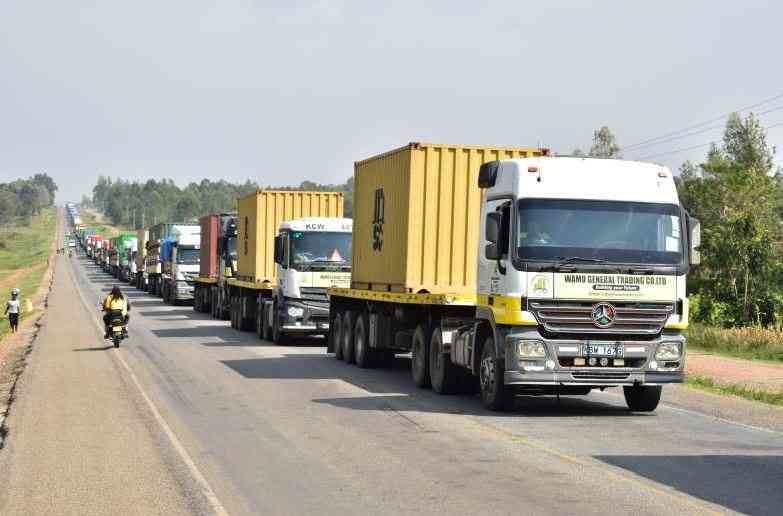
The discussions in Kigali reveal that the future of East African trade competitiveness may depend less on how quickly trucks move across borders and increasingly on how efficiently governments exchange information before those trucks even arrive.
From Physical Corridors to Digital Corridors
The framework through which regional integration has historically been understood in East Africa has focused heavily on physical infrastructure development, including highways, railways, ports and one-stop border posts. According to African Development Bank transport corridor assessments, substantial investments over the past decade have improved physical connectivity between Mombasa, Kampala, Kigali and Juba. Yet logistics performance data increasingly suggests that administrative inefficiencies continue to generate costs comparable to infrastructure deficiencies themselves.
The significance extends beyond transport economics because delays at borders affect industrial supply chains, agricultural exports, pharmaceutical imports, fuel distribution networks and manufacturing competitiveness. Rwanda’s position as a landlocked economy makes digital trade governance particularly important since every inefficiency along the corridor directly influences domestic inflation, business costs and export competitiveness. The difference between Rwanda and coastal economies such as Kenya is determined not only by geography but increasingly by the efficiency of institutional coordination across borders.
Non-Tariff Barriers as Hidden Economic Taxes
Non-tariff barriers increasingly function as invisible taxes on regional economic growth. According to East African Community trade assessments, NTBs frequently generate delays, increase inventory costs, reduce supply chain reliability and discourage cross-border investment.
Repeated cargo inspections highlighted by Kenyan officials illustrate the problem. When goods undergo multiple inspections despite already being scanned at the Port of Mombasa, logistics costs rise without necessarily improving security outcomes. Similar challenges have historically affected trade corridors in West Africa and Southern Africa, where duplicated procedures have often undermined otherwise substantial infrastructure investments.
The strategic implication is that eliminating NTBs may generate greater economic returns than constructing additional infrastructure in certain circumstances. Singapore, Dubai and Rotterdam achieved global logistics leadership through institutional efficiency as much as through physical infrastructure quality.
Scanner Image Sharing and the Economics of Trust
The proposal to share scanner images across borders represents a significant institutional innovation because it addresses a fundamental challenge within regional integration: trust between agencies operating under different jurisdictions.
The convergence of technology, governance, logistics and state capacity becomes evident in this reform. Scanner image sharing is not merely a technical solution. It requires mutually recognised standards, secure digital platforms, legal frameworks, cybersecurity protections and confidence in the integrity of partner institutions.
International experience provides useful comparisons. The European Union’s customs integration framework relies heavily on information exchange mechanisms that reduce duplication while maintaining security standards. The UAE has similarly invested in integrated customs intelligence systems that allow rapid cargo processing without sacrificing regulatory oversight.
Digital Customs Systems and Regional Industrialisation
The significance of customs automation extends beyond trade facilitation because industrialisation increasingly depends upon predictable logistics systems. Manufacturers operating within regional value chains require reliable access to inputs, predictable delivery schedules and efficient border procedures.
According to World Bank trade competitiveness research, logistics reliability often matters more than transport cost alone when investors select locations for manufacturing facilities. Vietnam’s rise as a manufacturing hub was supported not only by labour costs and industrial policy but also by sustained improvements in customs efficiency and trade facilitation.
For Rwanda, Uganda and South Sudan, digital customs integration could help offset disadvantages associated with geography and market fragmentation. The framework through which industrial competitiveness is now measured increasingly includes customs performance alongside energy availability, workforce skills and infrastructure quality.
The Geopolitical Importance of the Northern Corridor
The Northern Corridor is increasingly becoming one of Africa’s most strategically significant economic arteries. It connects the Port of Mombasa to some of the continent’s fastest-growing economies while serving as a critical gateway for imports, exports, fuel supplies and industrial inputs.
Competition with alternative routes is intensifying. Tanzania’s Central Corridor continues attracting investment through port upgrades, railway modernisation and logistics reforms. The difference between the Northern Corridor and competing routes will increasingly be determined by governance quality, digital integration and operational efficiency rather than geography alone.
The current moment matters because African Continental Free Trade Area implementation is creating pressure for faster and more seamless regional logistics systems. Countries capable of facilitating trade efficiently will attract disproportionate shares of future investment and industrial activity.
Rwanda’s Strategic Position Within Corridor Modernisation
Rwanda’s role as chair of the SCT Cluster reflects the country’s broader strategic interest in reducing logistics costs and strengthening regional integration. As a landlocked economy heavily dependent on external trade routes, Rwanda benefits disproportionately from every efficiency gain achieved along the corridor.
According to Rwanda Development Board investment data and World Bank competitiveness assessments, logistics reliability remains an important factor influencing investment decisions. The institutional capacity required involves not only technological adoption but also regulatory coordination, public sector modernisation and cross-border governance alignment.
What appears to be a customs reform agenda is increasingly becoming part of Rwanda’s wider strategy to enhance economic resilience, strengthen regional connectivity and improve its position within East Africa’s evolving economic architecture.
The Future of Trade Will Be Determined by Data
The convergence of customs automation, cargo tracking, scanner interoperability, artificial intelligence-based risk management and regional information sharing suggests that East Africa is entering a new phase of trade governance. Countries that successfully digitise trade ecosystems are likely to enjoy lower logistics costs, greater investment attractiveness and stronger industrial competitiveness.
The institutional capacity required will be substantial because digital corridors demand continuous investment in technology, cybersecurity, regulatory harmonisation and human capital development. The benefits will accrue not only to governments but also to exporters, manufacturers, logistics providers, investors and consumers throughout the region.
The significance extends beyond trade because the efficiency of economic corridors increasingly shapes the competitiveness of entire nations.
FAQ
Why are non-tariff barriers such a significant issue?
According to World Bank and EAC assessments, NTBs often create delays and costs equivalent to formal tariffs. They reduce competitiveness, increase inflationary pressures and weaken regional value chains.
Why is scanner image sharing important?
Scanner image sharing reduces repeated inspections, lowers transport costs and accelerates cargo movement while maintaining security standards. Similar systems are used in advanced logistics hubs worldwide.
How does this affect Rwanda?
As a landlocked economy, Rwanda depends heavily on efficient regional logistics systems. Reduced corridor delays lower import costs, improve export competitiveness and support investment attraction.
How does East Africa compare internationally?
East Africa is pursuing reforms similar in principle to those implemented in Singapore, the UAE and Vietnam, where digital customs systems became central components of national competitiveness strategies.
What risks could undermine implementation?
Institutional fragmentation, cybersecurity vulnerabilities, inconsistent political commitment, funding constraints and delays in legal harmonisation remain significant challenges.
Why does this matter beyond customs?
Customs efficiency influences inflation, industrialisation, food security, investment attraction, energy logistics and regional economic integration. Trade facilitation has become a core component of economic statecraft.
 Uchumi360
Business Intelligence
Uchumi360
Business Intelligence
- Northern Corridor strategic trade map from Mombasa to Kigali, Kampala and Juba, Comparative transit time chart before and after SCT implementation, Scanner image sharing process flow diagram, East Africa customs digitalisation timeline, Northern Corridor versus Central Corridor competitiveness matrix, Regional non-tariff barrier cost impact infographic, Customs interoperability architecture diagram and East Africa logistics performance comparison dashboard
Uchumi360 covers business, investment, and economic policy across East, Central, and Southern Africa.
For the serious reader
You read to the end. That places you in a small group.
Uchumi360 is built for readers who demand precision over speed, structure over sentiment, and analysis that holds uncomfortable conclusions rather than softening them. If this work sharpens how you think about Africa's economy, help us keep building the infrastructure behind it.
Institutional Partners
Commission intelligence. Shape the conversation.
Uchumi360 works with development finance institutions, investment firms, sovereign bodies, and strategic organisations across the coverage region. Institutional partnership unlocks:
- Commissioned sector and country intelligence reports
- Branded research series under your institution's authority
- Exclusive data briefings for internal strategy teams
- Speaking and editorial presence at Uchumi360 events
- Co-published investment outlooks for your markets
Support Our Work
Independent analysis has a cost. Help us bear it.
Uchumi360 does not carry advertising. It does not take editorial direction from sponsors. Every article is produced without commercial compromise. Your contribution funds the reporting, research, and editorial infrastructure that keeps this analysis free from influence.
Secure checkout: One-time and monthly support are processed securely. Add payment credentials to enable checkout here.
Stay Connected
Keep up with every new insight.
Follow our latest analysis, policy coverage, and market intelligence as soon as it is published. If you need something specific, reach out directly and we will point you to the right research.
