
Kenya Approves $1 Billion Port PPP Plan for Mombasa and Lamu
Ready
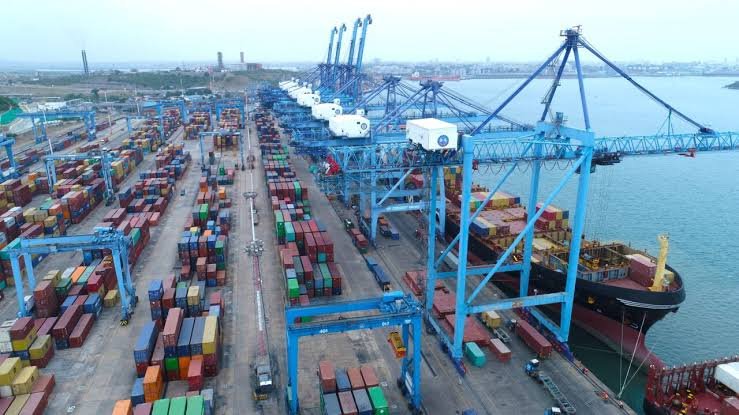
Kenya's Public-Private Partnership Committee approved feasibility studies for four port assets in Mombasa and Lamu on 27 August 2026, moving roughly $1 billion in planned private investment from feasibility into procurement. The programme covers Mombasa Berths 11-14, Mombasa Container Terminal 1, Lamu Container Terminal and the Lamu Special Economic Zone, structured as three separate transactions with investor engagement scheduled to begin in September. The push comes as both ports post record cargo growth, and as a new Government-Owned Enterprises Act reshapes how much financial self-sufficiency Kenya expects from the Kenya Ports Authority going forward.
MOMBASA — Kenya's Public-Private Partnership Committee approved feasibility studies for four strategic port assets in Mombasa and Lamu on Thursday, 27 August 2026, clearing the way for roughly $1 billion in planned private investment to move from feasibility work into formal procurement.
PPP Directorate Director General Kefa Seda announced the approval in a statement, describing it as a significant step in Kenya's port infrastructure investment programme. "The approval moves these strategic port assets from feasibility into the procurement stage under the PPP framework," Seda said.
What Was Actually Approved
The approval covers four distinct assets: Mombasa Berths 11-14, Mombasa Container Terminal 1, the Lamu Container Terminal (Berths 1-3), and the Lamu Special Economic Zone. Rather than pursuing four separate transactions, the government has structured Phase 1 into three: a concession for Mombasa Berths 11-14, a separate concession for Container Terminal 1, and an integrated concession combining the Lamu Container Terminal with the adjacent Special Economic Zone.
| Asset | Structure | Estimated Investment |
| Mombasa Berths 11-14 | Standalone concession | ~$300 million |
| Mombasa Container Terminal 1 | Standalone concession | Part of ~$1 billion total |
| Lamu Container Terminal + Lamu SEZ | Integrated concession | Part of ~$1 billion total |
| Phase 1 total | 3 transactions | ~$1 billion |
Source: Government of Kenya, 2026 Investment Projects Catalogue; PPP Directorate.
Feasibility work for the programme began in October 2025, sponsored by the National Treasury in collaboration with Kenya Ports Authority, and had nearly concluded by the time a PPP Directorate progress report in April 2026 listed the assets as a priority project under Kenya's Fourth Medium-Term Plan. With the PPP Committee's approval now secured, KPA can proceed to competitive bidding, with engagement with potential investors scheduled to begin in September 2026. Official documentation names Maritime & Transport Business Solutions, CPF Capital & Advisory Limited and Orion Infrastructure Africa LLP as transaction advisers, and a second phase of port assets remains under separate feasibility review.
Why Berths 11-14 Need $300 Million
The most capital-intensive single piece of this programme is also the most physically overdue for investment. Mombasa Berths 11-14 date to the 1950s, and the quay requires urgent refurbishment, estimated separately at around Sh45 billion, broadly consistent with the $300 million figure in the government's own catalogue. The planned redevelopment would modernise the ageing quay, build a multipurpose terminal and container storage yard, and add a truck waiting area, upgrades intended to expand the berths' current capacity of roughly 300,000 tonnes and bring the facility into line with the scale of cargo Mombasa now actually handles.
A Landlord Model, Not a Sale
Kenya has been explicit that this programme is not privatisation, a distinction officials have repeated often enough that it's clearly a deliberate messaging choice rather than an incidental clarification. Seda described the objective as progressively transitioning Mombasa and Lamu toward a landlord-port model, in which private capital, technical expertise and operational capacity flow into the ports while KPA retains public ownership and strategic oversight.
KPA Managing Director Captain William Kipkemboi Ruto, a career mariner who joined KPA as a cadet marine deck officer in 1991 before rising to the top job in 2023, made the same point directly to The Standard in March 2026: "The government retains ownership of port land and infrastructure while leasing certain operations to private operators under defined agreements." Under a landlord model, in other words, KPA continues to own the physical port and set strategic direction, while private concessionaires invest in, operate and maintain specific terminals or berths under time-limited agreements, a structure widely used at major ports globally precisely because it lets governments access private capital and operating expertise without giving up long-term control of strategic infrastructure.
The Legal Framework Pushing This Forward
This programme doesn't exist in isolation from Kenya's broader public enterprise reform agenda. The Government-Owned Enterprises Act, enacted in November 2025, provides the legal framework enabling KPA's transition and reflects a deliberate government strategy to push state corporations toward commercial self-sufficiency. Under the Act, KPA is expected to operate increasingly as a commercial, profit-oriented entity, with PPP transactions positioned as the most effective route to reduce KPA's reliance on the National Treasury for borrowing and capital expenditure funding.
The government's own projections attach real numbers to that ambition: the transition is expected to increase cash flows from Mombasa and Lamu ports by roughly Sh44 billion annually. Whether that figure proves accurate will depend heavily on how successfully KPA and its private partners execute the concessions once awarded, but the scale of the projection signals how central this programme is to Kenya's broader plan for weaning major state corporations off Treasury support.
The Cargo Growth Behind the Urgency
The investment push isn't happening against a backdrop of stagnant demand, it's responding to genuinely rapid growth that existing infrastructure is struggling to keep pace with. Mombasa handled a record 45.45 million tonnes of cargo in 2025, up from 40.99 million tonnes in 2024, according to Kenya Ports Authority figures. Container traffic rose 5.5% to 2.11 million TEUs, while transit cargo, goods moving through Kenya to landlocked neighbours including Uganda, Rwanda, South Sudan and the DRC, grew 19.5% to 15.88 million tonnes, evidence that Mombasa's role as a regional gateway, not just a domestic Kenyan port, continues to expand.
Lamu's growth was even more dramatic in relative terms, if still small in absolute scale. The port handled 799,161 tonnes in 2025, more than ten times the 74,380 tonnes it moved in 2024, driven largely by increased containerised cargo. Lamu's first three berths carry a combined annual capacity of 1.2 million TEUs, according to KPA, meaning current volumes still leave considerable room for growth before the port's existing infrastructure becomes the binding constraint, a useful contrast with Mombasa's much older, already capacity-strained Berths 11-14.
What Happens Next
With feasibility studies approved and transaction advisers named, the practical test now shifts to procurement itself: whether Kenya can attract credible bidders willing to commit roughly $1 billion in long-term capital across three concessions, on terms that satisfy both investor return expectations and Kenya's PPP legal framework, which Seda said will include public disclosures and stakeholder engagement throughout the process. Kenya has run PPP processes on other infrastructure before, including a landlord-model concession already underway at the smaller Shimoni Fish Port, giving KPA some direct institutional experience to draw on as it moves this considerably larger programme toward actual investor engagement in the coming weeks.
FAQ
What did Kenya's PPP Committee actually approve? Feasibility studies for four port assets, Mombasa Berths 11-14, Mombasa Container Terminal 1, the Lamu Container Terminal and the Lamu Special Economic Zone, moving them from feasibility into the procurement stage.
How much private investment is this expected to raise? Approximately $1 billion for Phase 1, according to Kenya's 2026 Investment Projects Catalogue, including roughly $300 million specifically to redevelop Mombasa Berths 11-14.
Is this privatisation of Kenya's ports? The government describes it as a landlord-port model, not privatisation. Kenya Ports Authority will retain ownership of port land and infrastructure and continue exercising strategic oversight, while private operators invest in and manage specific terminals under defined, time-limited agreements.
Why does Mombasa Berths 11-14 need $300 million specifically? The quay dates to the 1950s and requires urgent modernisation, including a new multipurpose terminal, container storage yard and truck waiting area, to bring its roughly 300,000-tonne capacity in line with current cargo demand.
How much has cargo volume actually grown? Mombasa handled a record 45.45 million tonnes in 2025, up from 40.99 million tonnes in 2024, while Lamu's cargo volume grew from 74,380 tonnes to 799,161 tonnes over the same period, more than a tenfold increase.
What is the Government-Owned Enterprises Act's role in this? Enacted in November 2025, the Act provides the legal framework for KPA's transition and pushes the authority toward commercial self-sufficiency, with the government projecting the port PPP programme could increase KPA's annual cash flows by roughly Sh44 billion and reduce its dependence on Treasury funding.
 Uchumi360
Business Intelligence
Uchumi360
Business Intelligence
Uchumi360 covers business, investment, and economic policy across East, Central, and Southern Africa.
For the serious reader
You read to the end. That places you in a small group.
Uchumi360 is built for readers who demand precision over speed, structure over sentiment, and analysis that holds uncomfortable conclusions rather than softening them. If this work sharpens how you think about Africa's economy, help us keep building the infrastructure behind it.
Institutional Partners
Commission intelligence. Shape the conversation.
Uchumi360 works with development finance institutions, investment firms, sovereign bodies, and strategic organisations across the coverage region. Institutional partnership unlocks:
- Commissioned sector and country intelligence reports
- Branded research series under your institution's authority
- Exclusive data briefings for internal strategy teams
- Speaking and editorial presence at Uchumi360 events
- Co-published investment outlooks for your markets
Support Our Work
Independent analysis has a cost. Help us bear it.
Uchumi360 does not carry advertising. It does not take editorial direction from sponsors. Every article is produced without commercial compromise. Your contribution funds the reporting, research, and editorial infrastructure that keeps this analysis free from influence.
Secure checkout: One-time and monthly support are processed securely. Add payment credentials to enable checkout here.
Stay Connected
Keep up with every new insight.
Follow our latest analysis, policy coverage, and market intelligence as soon as it is published. If you need something specific, reach out directly and we will point you to the right research.
