
Kenya's Competition Authority Approves Asahi's $2.3 Billion EABL Deal
Ready
Kenya's Competition Authority approved Diageo's sale of its 65% stake in East African Breweries Plc to Japan's Asahi Group Holdings on 10 September 2026, clearing the largest regulatory hurdle in a $2.3 billion transaction first announced in December 2025. The deal would mark Asahi's first direct operations anywhere in Africa and end nearly a quarter-century of Diageo control over one of East Africa's largest beverage companies, whose brands include Tusker, Pilsner and Guinness. But the approval doesn't mean the deal is done: it has already survived a court challenge from a Kenyan distributor, carries specific creditor-protection and market-competition conditions, and the transaction itself sends $2.3 billion to Diageo's shareholders in London, not fresh capital into Kenya's economy. What Kenya actually gains from this deal depends less on the purchase price than on what Asahi does with EABL once it owns it.
NAIROBI — Kenya's Competition Authority cleared the largest regulatory hurdle standing between Japan's Asahi Group Holdings and control of East African Breweries Plc on 10 September 2026, approving Diageo's sale of its 65% stake in the company for $2.3 billion. The approval marks real progress on a transaction that has moved slowly and faced genuine legal resistance since it was first announced roughly nine months earlier, in December 2025.
What Exactly Did Kenya's Competition Authority Approve?
The CAK approved Asahi's acquisition of Diageo Kenya Limited and UDV Kenya Limited, the two entities through which Diageo's EABL-related holdings are structured, subject to specific conditions designed to protect competition and creditors. The regulator directed EABL to reserve sufficient funds from the transaction consideration to meet any outstanding liabilities that might arise after the deal concludes, and separately required the company to reserve at least 20% of its cooler and refrigeration space in retail outlets for products not branded by EABL or Asahi, a direct measure aimed at preventing the combined company from squeezing out competing beverage brands through retail shelf and cooler access. EABL confirmed the approval in a statement to Reuters, saying simply that it "notes the approval by the Competition Authority of Kenya regarding the proposed transaction between Diageo PLC and Asahi Group Holdings, Ltd."
Has the Deal Actually Closed?
No, and this distinction matters. Regulatory approval removes a major obstacle, but the transaction remains subject to completion requirements between the parties, and as of this approval, ownership has not formally transferred and consideration has not yet been paid. The deal has also already faced real legal resistance: in April 2026, a Kenyan court dismissed an application from distributor Bia Tosha seeking to stop the sale entirely, after which EABL asked the chief justice to expedite related hearings. Whether any further court action could still delay completion, what the final size of the required creditor liability reserve will be, and whether the cooler-space requirement applies only within Kenya or across EABL's wider regional operations all remain open questions the completed transaction will need to resolve.
What Is Actually Being Sold?
The deal is structured across two related but distinct holdings. Diageo is transferring its entire shareholding in Diageo Kenya Limited, the entity that holds the 65% EABL stake, alongside Diageo's separate, direct 53.68% interest in UDV Kenya Limited, the spirits manufacturing business. EABL itself owns the remaining 46.32% of UDV Kenya and will retain management control of that spirits business specifically, meaning the transaction reshapes EABL's beer operations and its relationship with its spirits affiliate simultaneously, not simply a single, clean stake transfer.
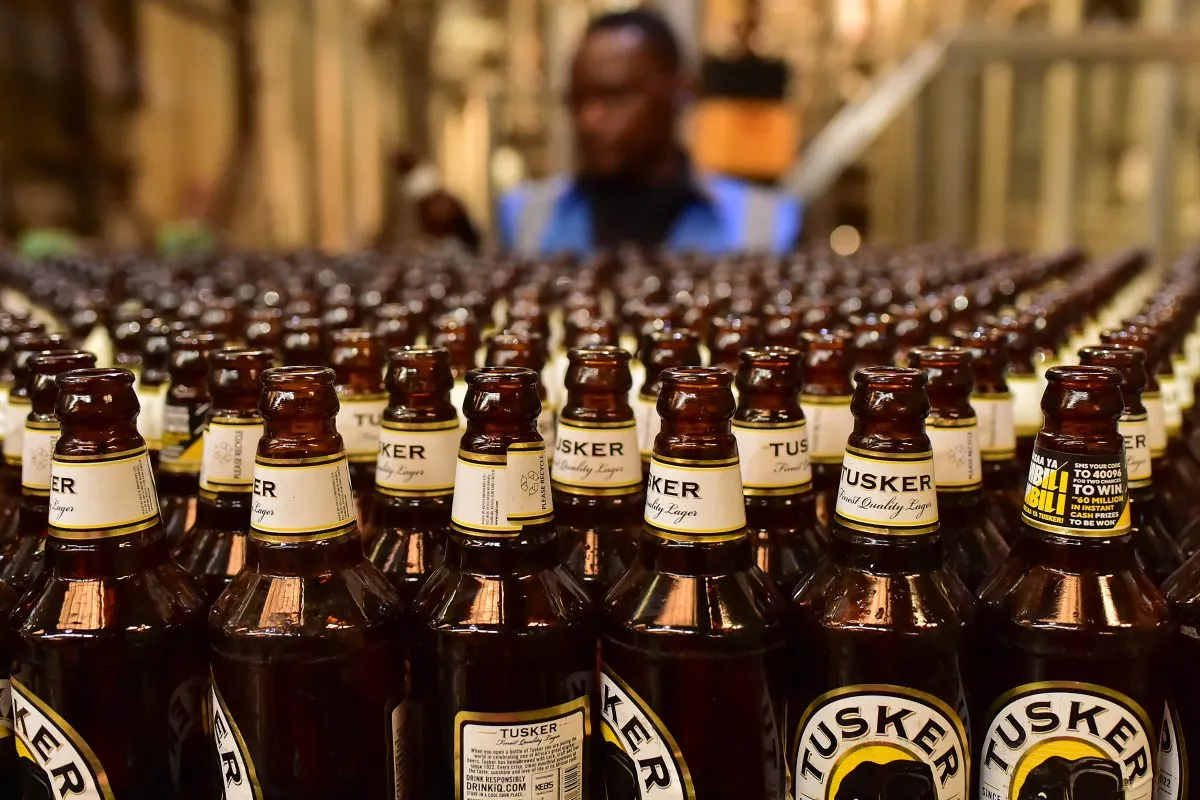
The company being acquired is a genuinely significant regional asset. EABL's portfolio includes some of East Africa's best-known beer and spirits brands, among them Tusker, Pilsner and Guinness, distributed across Kenya, Uganda, Tanzania and other regional markets through an established manufacturing and distribution network built over decades.
Why Is Diageo Selling Now, and Why Does It Matter That This Is Part of a Bigger Pattern?
Diageo has described the sale as part of a broader strategy to strengthen its balance sheet and reduce debt, with the transaction expected to generate estimated net proceeds of $2.3 billion after tax and transaction costs. But this isn't an isolated Kenya-specific decision. Diageo has been methodically divesting from Africa more broadly, having already sold businesses in Nigeria, Seychelles, Ghana, Cameroon and Ethiopia, making the EABL sale the latest, and largest, step in a continental retreat rather than a standalone transaction driven by conditions specific to Kenya or East Africa. The sale ends nearly a quarter-century of Diageo's controlling ownership over EABL, a genuinely long institutional relationship whose ending marks a meaningful transition regardless of what comes next.
Why Does This Matter for Asahi Specifically?
For Asahi, this transaction would establish the company's first direct operations anywhere in Africa, not an expansion of an existing regional presence, but an entirely new market entry executed by acquiring a fully operational business rather than building one from scratch. That gives Asahi immediate access to an established manufacturing and distribution platform, a large and growing consumer base, and recognised brands, without the years of market-building that a greenfield entry into East Africa's beverage sector would otherwise require. It also gives the Japanese group a base from which it could pursue further expansion across East Africa's broader regional market, rather than confining itself to a single national market.
Does This $2.3 Billion Actually Flow Into Kenya's Economy?
This is the point most easily misread in coverage of the deal, and it's worth stating precisely: the $2.3 billion purchase consideration is being paid to Diageo, EABL's outgoing majority shareholder headquartered in London, not invested directly into Kenya's economy as new capital. As one Kenyan outlet put it plainly, the deal is significant "not because Ksh297 billion will flow into Kenya," since that money flows to Diageo's shareholders rather than into Kenyan production, infrastructure or jobs. The transaction is, at its core, a change in corporate ownership, transferring control of an existing, already-operating business from one global drinks conglomerate to another.
That reframes what actually matters for Kenya and the wider region going forward. The economic benefit to Kenya will depend considerably less on the Ksh297.4 billion acquisition price itself and more on what Asahi actually does with EABL once it takes control: whether it expands local production capacity, develops new products for the regional market, increases exports, or invests further in Kenya's manufacturing and distribution base. A change of ownership alone guarantees none of that; it simply determines who's now positioned to make those investment decisions.
What Does This Mean for Kenya's Position as a Regional Corporate Hub?
Set against that caveat, the transaction still carries real symbolic and structural weight for Kenya's standing as East Africa's principal corporate and financial centre. EABL is listed on the Nairobi Securities Exchange and has long ranked among its largest companies by market value, and a transaction of this scale demonstrates that international investors continue to place substantial value on companies headquartered in Kenya but operating across multiple East African markets simultaneously. EABL was never simply a Kenyan company selling beer domestically; its operations and commercial relationships extend across national borders into Uganda, Tanzania and beyond, meaning ownership of the company provides a genuine platform into a regional consumer market rather than a single national one.
Is This Part of a Broader Pattern in How Global Companies Approach East Africa?
The EABL transaction fits a wider pattern in which multinational companies increasingly evaluate East Africa through a regional rather than country-by-country lens, and increasingly do so by acquiring already-established businesses rather than building new capacity from scratch. A company that can already manufacture, distribute and sell across several East African countries simultaneously offers a fundamentally different investment proposition than one confined to a single market, and as competition for African consumer markets intensifies alongside population growth, urbanisation and rising household incomes, companies with strong existing brands and distribution networks, in beverages, food, financial services, telecommunications and beyond, become natural acquisition targets for global players seeking fast, established entry points rather than years-long market-building efforts.
What Should Actually Be Watched Now?
The real test of this transaction's significance for East Africa hasn't happened yet, and won't be visible in the $2.3 billion price tag itself. It will be visible in whether Asahi treats EABL as a platform for genuine additional investment in Kenyan and regional production, exports and product development, or simply as an acquired revenue stream managed for returns without meaningfully expanding local economic activity. Whether the deal completes on the current timeline given its history of legal challenges, how the CAK's creditor-protection and cooler-space conditions get implemented in practice, and what Asahi's actual post-acquisition strategy for the business looks like are the specific developments worth tracking, considerably more than the headline acquisition figure that has dominated coverage so far.
FAQ
Has Asahi officially taken control of EABL? Not yet. Kenya's Competition Authority approved the transaction on 10 September 2026, removing a major regulatory hurdle, but ownership has not formally transferred and consideration has not been paid; the deal remains subject to completion requirements.
What conditions did Kenya's Competition Authority attach to its approval? Two specific conditions: EABL must reserve sufficient funds from the transaction proceeds to cover any outstanding liabilities, and the company must reserve at least 20% of its retail cooler and refrigeration space for competing beverage brands.
Has this deal faced legal challenges? Yes. A Kenyan court dismissed an application from distributor Bia Tosha seeking to block the sale in April 2026, after which EABL asked the chief justice to expedite related court hearings.
Is Diageo only selling its Kenyan business, or is this part of a bigger retreat from Africa? Diageo has already sold businesses in Nigeria, Seychelles, Ghana, Cameroon and Ethiopia, making the EABL sale the latest and largest step in a broader continental divestment strategy aimed at strengthening its balance sheet and reducing debt.
Does the $2.3 billion purchase price actually benefit Kenya's economy directly? No, not directly. The consideration is paid to Diageo's shareholders, not invested into Kenya's economy. Kenya's actual economic benefit will depend on what Asahi chooses to invest in production, exports and local operations after taking control, not on the transaction price itself.
What exactly is Asahi acquiring? Diageo's entire shareholding in Diageo Kenya Limited (which holds a 65% stake in EABL) and Diageo's separate direct 53.68% interest in UDV Kenya Limited, the spirits business EABL co-owns and will continue to manage after the deal.
 Uchumi360
Business Intelligence
Uchumi360
Business Intelligence
Uchumi360 covers business, investment, and economic policy across East, Central, and Southern Africa.
For the serious reader
You read to the end. That places you in a small group.
Uchumi360 is built for readers who demand precision over speed, structure over sentiment, and analysis that holds uncomfortable conclusions rather than softening them. If this work sharpens how you think about Africa's economy, help us keep building the infrastructure behind it.
Institutional Partners
Commission intelligence. Shape the conversation.
Uchumi360 works with development finance institutions, investment firms, sovereign bodies, and strategic organisations across the coverage region. Institutional partnership unlocks:
- Commissioned sector and country intelligence reports
- Branded research series under your institution's authority
- Exclusive data briefings for internal strategy teams
- Speaking and editorial presence at Uchumi360 events
- Co-published investment outlooks for your markets
Support Our Work
Independent analysis has a cost. Help us bear it.
Uchumi360 does not carry advertising. It does not take editorial direction from sponsors. Every article is produced without commercial compromise. Your contribution funds the reporting, research, and editorial infrastructure that keeps this analysis free from influence.
Secure checkout: One-time and monthly support are processed securely. Add payment credentials to enable checkout here.
Stay Connected
Keep up with every new insight.
Follow our latest analysis, policy coverage, and market intelligence as soon as it is published. If you need something specific, reach out directly and we will point you to the right research.
