
The Largest Sovereign Wealth Fund in Africa Is Not in an Oil State
Ready
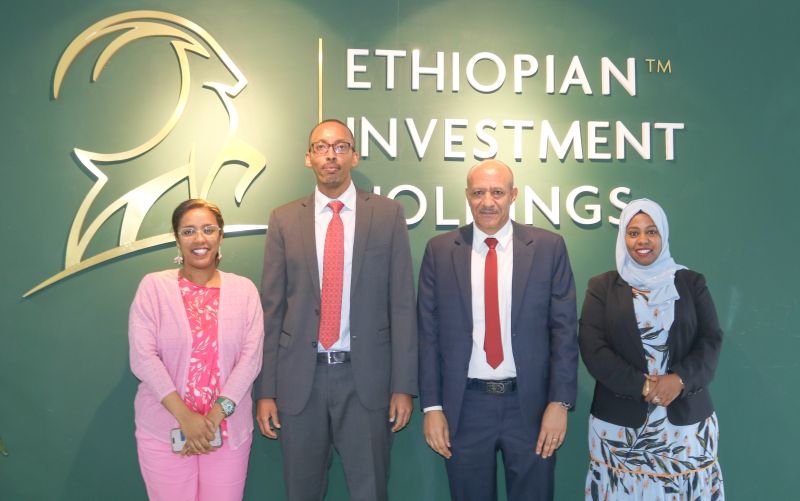
Africa’s largest sovereign wealth fund is not built on oil or gas. Ethiopian Investment Holdings is redefining development by treating public assets as strategic capital, shifting Ethiopia from managing scarcity to building long-term economic power.
Africa’s largest sovereign wealth fund does not sit on the coast of the Atlantic or atop vast oil reserves. It sits in the Horn of Africa, inside a country better known for volatility than financial architecture. Ethiopian Investment Holdings is quietly redefining what state power and development look like on the continent.
This matters because sovereign wealth funds are not just pools of money. They are instruments of intent.
EIH was created to do something African states have historically struggled to do. Treat public assets as strategic capital rather than political property. Instead of ministries micromanaging state-owned enterprises with weak oversight and poor incentives, Ethiopia consolidated them under a single holding structure, governed with corporate discipline and long-term objectives.
That alone is a structural break from the past.
EIH oversees more than 40 state-owned enterprises across sectors that actually determine national trajectory. Energy. Telecommunications. Transport. Finance. Manufacturing. Natural resources. These are not peripheral assets. They are the spine of the economy. By placing them under one investment mandate, Ethiopia is attempting something rare. Alignment.
The goal is not privatization for its own sake, nor state control for ideological reasons. The goal is value creation. Improve governance. Cut waste. Reinvest profits. Crowd in capital. Preserve national ownership while operating with commercial logic.
This is where EIH departs from the caricature of African state capitalism. It is not designed as a political slush fund. It is designed as a development engine.
The scale is already significant. Trillions of birr in assets. Revenues that have multiplied within a few years. Growing foreign exchange holdings. But the more important signal lies in what EIH is building next. Strategic capabilities that most African countries continue to outsource.
Currency printing capacity. A domestic gold refinery. Energy-linked digital infrastructure. These are not headline-grabbing populist projects. They are boring, technical, and foundational. That is precisely why they matter.
Sovereign wealth funds work when they think in decades, not electoral cycles. EIH’s leadership has been explicit about this. The structure is meant to be transferred to the next generation. That language is rare in African economic policy, where urgency often crowds out continuity.
Critics will rightly raise concerns. Concentration of assets creates governance risk. Transparency must be earned, not declared. Political interference remains a constant threat. These risks are real. But avoiding them has not delivered development either. Fragmented ownership, weak oversight, and short-term extraction have already failed.
EIH represents a different wager. That development requires institutions capable of holding complexity. That the state can be an owner without being an operator. That sovereignty is not declared. It is engineered.
For the rest of Africa, the lesson is not to copy Ethiopia blindly. Context matters. Capacity matters. Politics matter. The lesson is conceptual. No country develops by accident. And no country builds long-term prosperity without controlling its strategic assets.
Africa has spent decades negotiating access to other people’s capital. Ethiopia is trying to organize its own.
That is why Ethiopian Investment Holdings matters. Not because it is the largest sovereign wealth fund on the continent, but because it reflects a deeper shift. From managing scarcity to managing power.
History will judge whether Ethiopia executes this vision well. But the direction is already clear.
Africa’s future will belong to countries that learn how to think like owners again.
 Uchumi360
Business Intelligence
Uchumi360 covers business, investment, and economic policy across East, Central, and Southern Africa.
For the serious reader
You read to the end. That places you in a small group.
Uchumi360 is built for readers who demand precision over speed, structure over sentiment, and analysis that holds uncomfortable conclusions rather than softening them. If this work sharpens how you think about Africa's economy, help us keep building the infrastructure behind it.
Institutional Partners
Commission intelligence. Shape the conversation.
Uchumi360 works with development finance institutions, investment firms, sovereign bodies, and strategic organisations across the coverage region. Institutional partnership unlocks:
- Commissioned sector and country intelligence reports
- Branded research series under your institution's authority
- Exclusive data briefings for internal strategy teams
- Speaking and editorial presence at Uchumi360 events
- Co-published investment outlooks for your markets
Support Our Work
Independent analysis has a cost. Help us bear it.
Uchumi360 does not carry advertising. It does not take editorial direction from sponsors. Every article is produced without commercial compromise. Your contribution funds the reporting, research, and editorial infrastructure that keeps this analysis free from influence.
Secure checkout: One-time and monthly support are processed securely. Add payment credentials to enable checkout here.
Stay Connected
Keep up with every new insight.
Follow our latest analysis, policy coverage, and market intelligence as soon as it is published. If you need something specific, reach out directly and we will point you to the right research.
