
How Swahili Civilisation Built East Africa’s First International Trading Economy
Ready
Long before modern East African states developed their ports, railways and international trade agreements, merchants operating from Kilwa, Zanzibar, Mombasa and other Swahili coastal towns had established commercial networks linking inland African producers with Arabia, Persia, India and China. Kilwa accumulated wealth through the gold and ivory trade, minted its own coins and developed monumental urban architecture, while Zanzibar later emerged as a major nineteenth century commercial centre connected to inland caravan routes and international markets. Drawing on archaeological research, historical economic studies and contemporary trade data, this article examines how Swahili civilisation developed its commercial institutions, how colonial intervention and changing trade patterns altered the fortunes of coastal cities, and why the economic geography of the Indian Ocean remains relevant to Tanzania's modern port and infrastructure ambitions.
Long before modern Tanzania and Kenya existed, Swahili merchants had established commercially sophisticated port cities connecting the African interior with Arabia, Persia, India and China. From Kilwa's gold trade and locally minted currency to Zanzibar's commercial networks and today's Indian Ocean ports, the economic history of the Swahili Coast reveals how geography, maritime technology, trade institutions and access to inland markets shaped one of Africa's most enduring commercial societies.
More than a thousand years before the construction of the Port of Dar es Salaam, the Standard Gauge Railway or the modern highways connecting East Africa's coastal cities with their hinterlands, merchants operating from settlements along the Swahili Coast had established an international trading economy stretching from the African interior to Arabia, Persia, India and China. Cities such as Kilwa, Mombasa, Lamu, Pate and Zanzibar developed commercial institutions, maritime expertise, systems of exchange and urban infrastructure that allowed them to participate in international commerce on a scale unusual for many societies of the period. Their prosperity depended on a combination of geographical position, access to valuable commodities, relationships with inland producers and the ability to connect merchants operating across different political and cultural jurisdictions.
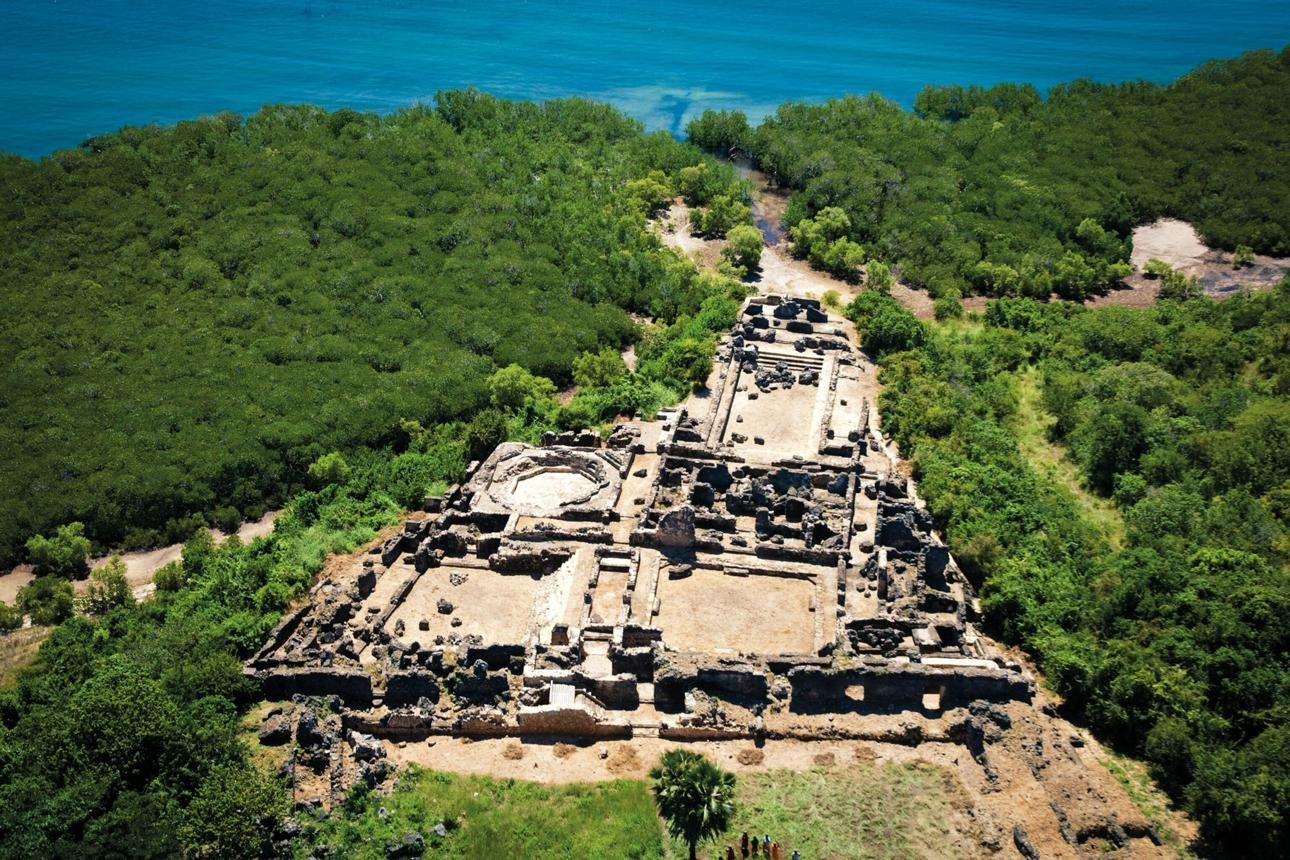
The ruins of Kilwa Kisiwani, approximately 300 kilometres south of Dar es Salaam, provide some of the clearest physical evidence of this commercial history. Between the thirteenth and fifteenth centuries, Kilwa emerged as one of the most prosperous trading centres on the East African coast, accumulating wealth through commerce involving gold, ivory and imported luxury goods. Merchants connected to Kilwa handled commodities originating deep within southeastern Africa, including gold associated with the Zimbabwe plateau, and exchanged them for products arriving through Indian Ocean trading networks. The resulting wealth supported the construction of mosques, substantial coral stone residences, public spaces and palace complexes whose remains are still visible today.
According to UNESCO's assessment of Kilwa Kisiwani and Songo Mnara, merchants operating through these ports traded with Arabia, India and China, while Kilwa minted its own currency between the eleventh and fourteenth centuries. The organisation records that the city's commercial prosperity reached its height during the thirteenth and fourteenth centuries, when its location and trading relationships allowed it to handle a substantial share of the region's maritime commerce. The traveller Ibn Battuta, who visited Kilwa in 1331 or 1332, described it as one of the most beautiful cities he had encountered, indicating the impression its built environment made on visitors accustomed to the established commercial centres of the mediaeval world.
The economic importance of these developments extends beyond their historical interest. Kilwa's wealth was generated through activities that remain central to modern economies: connecting producers with buyers, organising long distance transportation, facilitating exchange, providing accommodation and services for merchants, and accumulating capital through control of commercially valuable locations. Although medieval trade institutions differed substantially from modern banking, customs administration and logistics systems, the underlying commercial requirements were recognisable. Cargo had to be sourced, transported, stored, exchanged and delivered. Merchants needed reliable relationships, information about distant markets and mechanisms for managing the uncertainties of travel, price fluctuations and political authority.
For Tanzania, the history is particularly relevant because the country is again investing heavily in infrastructure intended to strengthen its position as an Indian Ocean trading gateway. The Port of Dar es Salaam serves neighbouring landlocked economies, railway investments are intended to improve access to Zambia and the Democratic Republic of Congo, and the government continues pursuing new port facilities and logistics developments along the coast. These ambitions operate under entirely different technologies, institutions and political conditions from those of medieval Kilwa, but they concern a geographical opportunity that has shaped coastal commerce for centuries: the ability to connect inland economic activity with maritime markets.
The Indian Ocean Made East Africa Part of a Commercial Network Centuries Before European Colonialism
The rise of Swahili commerce was supported by geographical and environmental conditions that made the East African coast suitable for maritime exchange. Natural harbours, sheltered islands, coral reefs, river mouths and navigable coastal waters provided locations where vessels could anchor, goods could be transferred and settlements could develop around commercial activity. Equally important were the seasonal monsoon winds, which enabled sailors to travel across the western Indian Ocean using predictable changes in wind direction. These maritime conditions connected the East African coast with ports in the Arabian Peninsula, Persian Gulf and Indian subcontinent, allowing traders to organise voyages around seasonal sailing cycles.
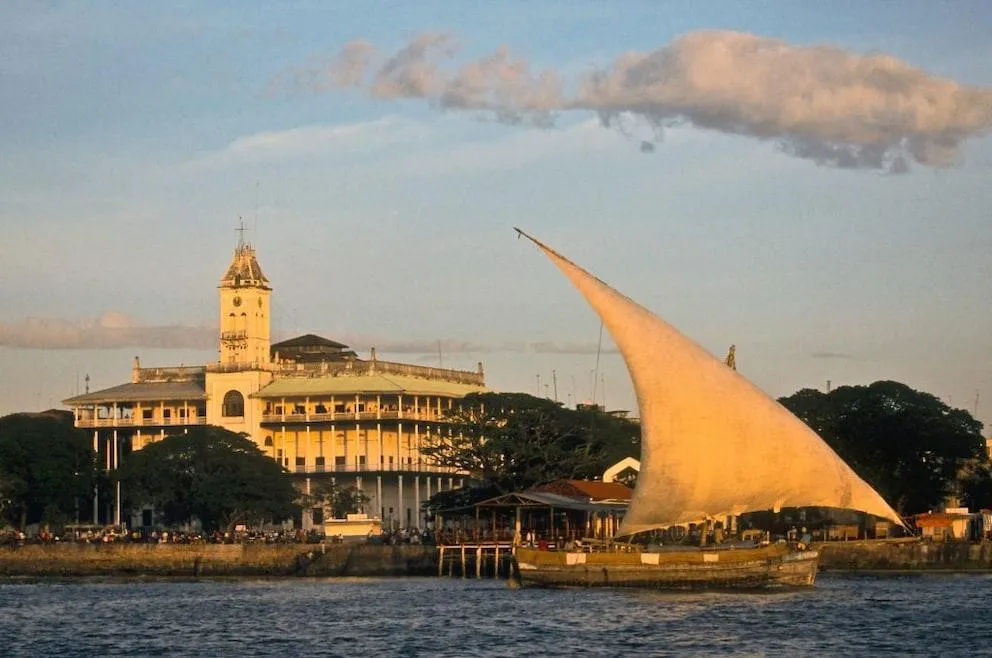 The monsoon system reduced some of the uncertainties associated with long-distance navigation, but it also imposed constraints. Merchants travelling between distant ports had to organise departures, cargo purchases and return journeys around the appropriate seasons. As a result, coastal trading settlements provided more than landing places for vessels. They became locations where merchants could remain between voyages, obtain supplies, conduct business and establish relationships with local suppliers and commercial intermediaries. The ability to accommodate visiting traders was therefore an economic advantage, particularly in a maritime system where travelling to and from distant markets could require extended periods.
Archaeological research demonstrates that international exchange developed along the coast well before the emergence of the most celebrated stone towns. In a 2017 study published in the Journal of Southern African Studies, archaeologists Edward Pollard and Okeny Charles Kinyera examined trading connections along the East African coast between the seventh and tenth centuries. Drawing on archaeological investigations around Bagamoyo and Kilwa, together with evidence from sites extending towards Mozambique, they documented the movement of African commodities including ivory and gold in exchange for imported beads, cloth, perfumes, oils and decorated ceramics from the Middle East and Asia.
These findings complicate accounts that associate the emergence of Swahili economic life primarily with the arrival of foreign traders or rulers. Coastal African communities already possessed agricultural, fishing, ironworking and exchange systems that provided a foundation for later commercial expansion. International commerce developed through interaction between these established communities and merchants arriving from across the Indian Ocean. The subsequent adoption of Islam, the emergence of new forms of architecture and the development of wider trading relationships occurred within societies whose languages and local economic foundations were African.
A major genetic study published in Nature in March 2023 provided additional evidence of the interconnected character of medieval coastal populations. Researchers analysed ancient DNA from individuals buried in medieval and early modern settlements, finding evidence of ancestry associated with both Africa and Asia, including Persian and Indian connections. The authors also emphasised that Kiswahili is a Bantu language and that the populations studied represented only part of the much wider and more diverse coastal society. These findings are consistent with long periods of interaction and family formation across the Indian Ocean, although the genetic evidence cannot by itself determine the organisation of trade or the economic status of individual communities.
The economic development of the Swahili Coast therefore emerged from the interaction of local productive activity with international demand. Inland communities supplied goods, coastal merchants organised exchange, and maritime traders provided access to distant markets. Over time, some coastal settlements accumulated sufficient wealth to support substantial urban development and political institutions, while smaller towns and rural communities remained connected through networks of production and exchange.
Kilwa Became Wealthy by Connecting Africa's Gold-Producing Interior to International Markets
Kilwa's commercial success was closely associated with the movement of gold from southeastern Africa towards the Indian Ocean. Gold produced in areas associated with the Zimbabwe plateau and surrounding regions entered trade networks connecting inland producers with coastal outlets, particularly Sofala in present-day Mozambique. Merchants associated with Kilwa developed influence over these commercial routes, enabling the city to participate in exchanges between African producers and international buyers seeking precious metals and other commodities.
The precise nature of Kilwa's control over individual routes and settlements varied over time, and medieval political claims do not always establish direct administrative authority over every market involved. Nevertheless, historical and archaeological evidence identifies Kilwa's access to the gold trade as a major source of its wealth. The city benefited from its ability to connect inland production with maritime demand, while merchants and political authorities acquired resources through commercial relationships, local exchange and control over strategically located trading centres.
The significance of this arrangement becomes clearer when considered through transport economics. Gold could be produced hundreds of kilometres from the coast, yet its international commercial value depended partly on the existence of networks capable of moving it to maritime markets. Inland traders, intermediaries, port merchants and shipowners each performed functions required to complete those transactions. The goods being transported were valuable, relatively compact and suitable for long-distance commerce using the technologies available at the time. Ivory similarly supported international exchange because demand in distant markets could justify the expense and difficulty of transporting it over considerable distances.
Kilwa's geographical position allowed it to participate in these activities without necessarily controlling the original production of the commodities being exchanged. That distinction helps explain why some of the wealthiest settlements in maritime history emerged at trading locations rather than at the sites where agricultural or mineral products originated. A port could accumulate commercial wealth by bringing together suppliers, buyers, transport services and financial resources, even when much of the underlying production occurred elsewhere.
The remains of the Husuni Kubwa palace complex, constructed during the fourteenth century, provide evidence of the wealth concentrated within Kilwa's ruling and merchant circles. UNESCO records that the palace was built between approximately 1310 and 1333, while the city's Great Mosque underwent substantial expansion as Kilwa's prosperity increased. The scale of these structures indicates that commercial surpluses could be converted into monumental architecture, public and religious buildings, and facilities associated with an established urban society.
There is, however, a distinction between evidence of concentrated wealth and evidence of broad prosperity. Monumental buildings demonstrate the resources available to rulers and established households, but they do not reveal how evenly the benefits of trade were distributed among agricultural producers, labourers, fishers, artisans and other residents. Swahili cities also participated in trade involving enslaved people, an aspect of the regional economy that cannot be separated from the history of Indian Ocean commerce. The prosperity of merchant elites existed alongside social hierarchies, unequal access to property and forms of coerced labour that varied across locations and historical periods.
Kilwa's experience illustrates both the commercial advantages and vulnerabilities of economies dependent on valuable trade routes. Access to gold and other commodities supported the city's rise, but the concentration of wealth around particular routes and commercial relationships also exposed it to competition, political disruption and changes in the organisation of international trade.
Stone Houses, Currency and Commercial Trust Supported the Swahili Urban Economy
The development of Swahili trading towns required more than access to valuable commodities. International commerce also depended on institutions capable of supporting transactions between merchants who often came from different societies, spoke different languages and remained in coastal settlements for limited periods. Archaeological evidence suggests that urban architecture, social relationships and commercial standing played roles in organising these exchanges, while locally minted coins provided another means through which value and political authority could be expressed.
Kilwa's coinage is particularly notable. UNESCO dates its locally minted currency to the eleventh through fourteenth centuries, demonstrating that the city possessed the political and technical capacity to issue coins long before modern states established central banks and national currencies. However, the existence of coinage should not be interpreted as evidence that all commerce operated through a fully monetised system comparable to contemporary economies. Archaeologists Stephanie Wynne-Jones and Jeffrey Fleisher, in their research on coins excavated at Songo Mnara, found that coins participated in social and ceremonial activities as well as forms of exchange, indicating that their value depended on context and local practice.
The stone houses of the Swahili Coast offer another indication of how commercial activity influenced urban development. Researchers Jeffrey Fleisher and Stephanie Wynne-Jones, examining the emergence of maritime society in a study published in American Anthropologist, argued that stone houses were closely associated with the identities and standing of coastal merchant households. The permanence and visibility of such buildings could communicate wealth and credibility, while internal spaces designed to receive visitors provided opportunities to accommodate trading partners and conduct commercial relationships. Their research connects the development of more substantial coastal architecture after approximately 1200 with the increasing importance of maritime activity and international exchange.
This relationship between wealth, reputation and the built environment is economically instructive. Merchants involved in international transactions needed ways to assess whether potential partners could honour agreements, provide goods and maintain commercial relationships across successive trading seasons. Substantial property ownership and established social standing could help support those relationships, although they did not eliminate commercial risk. The accumulation of wealth in urban buildings also reinforced differences between merchant elites and residents whose livelihoods depended on fishing, agriculture, craft production and labour.
The construction of Swahili towns additionally supported local productive industries. Coral stone had to be extracted and prepared, lime mortar manufactured, mangrove timber obtained, and buildings constructed and maintained by workers with specialised knowledge. These activities created demand for materials and services beyond the commodities traded internationally. Fishing, agriculture, pottery, ironworking and other local production remained necessary to sustain urban populations and supply visiting merchants. The commercial success of a port therefore depended partly on the surrounding economy's capacity to provide food, labour, building materials and other essential goods.
Zanzibar and Bagamoyo Later Reorganised East Africa's Commercial Geography
The prominence of individual Swahili ports changed over time as political authority, international demand and transport arrangements evolved. Portuguese expansion into the Indian Ocean during the late fifteenth and early sixteenth centuries challenged established coastal commercial networks, with military intervention and attempts to control maritime trade disrupting some existing centres. Kilwa experienced Portuguese intervention in the early sixteenth century, after which its commercial importance declined, although its fortunes had already been influenced by changes in regional political and trading relationships. Other settlements continued participating in commerce, and the wider Swahili trading world underwent successive periods of adjustment rather than experiencing a single uniform collapse.
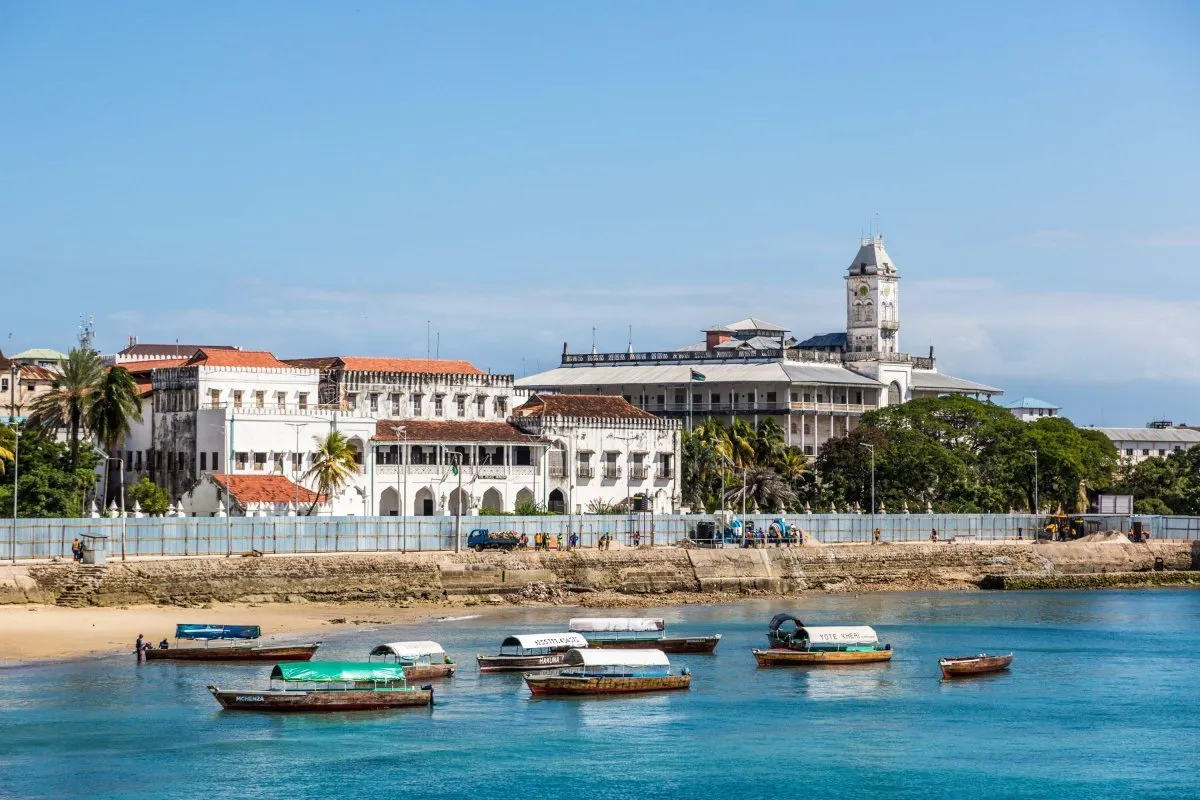 During the eighteenth and nineteenth centuries, Zanzibar became a major centre of commercial activity connecting the East African interior with international markets. Under growing Omani political influence, the island developed into an important trading and administrative centre, while the production of cloves expanded into a substantial export industry. Merchants handled ivory, agricultural commodities, imported textiles and other products, with caravan routes connecting Zanzibar's coastal trading system to areas deep within the mainland.
Historian Abdul Sheriff's Slaves, Spices and Ivory in Zanzibar provides a detailed account of the commercial arrangements underpinning this nineteenth century economy. Sheriff identified merchant capital, plantation production and inland trading networks as interconnected sources of Zanzibar's prosperity. Between 1859 and 1870/71, products originating on the islands accounted for an average of approximately 22% of the total value of Zanzibar's exports in the historical data he examined, indicating that most export value during that period was associated with goods originating beyond the islands themselves. This was the economic foundation of Zanzibar's role as a trading centre, where goods could be assembled, financed and shipped without necessarily being produced locally.
The commercial system was also deeply connected to slavery. Enslaved people were transported through East African trading networks, while enslaved labour supported clove plantations and other economic activities. The expansion of nineteenth century commerce consequently involved coercion, exploitation and substantial human suffering alongside the accumulation of wealth by merchants and landowners. Zanzibar's historical buildings, commercial institutions and plantation economy cannot be understood independently of these relationships. UNESCO recognises Stone Town's importance both as a historic trading centre and as a location associated with the East African slave trade and its eventual suppression.
On the mainland, Bagamoyo became an important gateway for the caravan trade connecting the coast with central and eastern Africa. Nyamwezi traders played a major role in organising routes towards the coast, while caravans carried ivory and other commodities eastward and returned inland with textiles, manufactured products and supplies. Historian Jan Lindström, in his 2019 study Muted Memories, documented how tens of thousands of porters participated in the ivory trade annually during the late nineteenth century, while large quantities of imported textiles circulated through the same commercial networks. The scale of these movements demonstrates that inland African traders and transport workers were central participants in the commercial economy associated with coastal ports.
Bagamoyo's importance depended on the organisation of inland transport before railways and modern highways provided alternative routes. Caravans required porters, provisions, resting places, commercial intermediaries and arrangements for securing goods across long distances. Their operations supported trading settlements along the routes and connected agricultural producers, livestock suppliers and other communities to markets beyond their immediate localities. However, caravan transport was expensive and physically demanding, while the movement of enslaved people and the coercive acquisition of some commodities inflicted substantial costs on affected communities.
Colonial expansion and the construction of new transport infrastructure subsequently altered the geography of trade. Under German colonial administration, Dar es Salaam developed as an administrative and commercial centre, while railway construction increasingly redirected inland freight towards routes determined by colonial economic priorities. The growth of modern shipping, rail transport and larger port facilities reduced the relative importance of some earlier trading centres. Zanzibar retained commercial functions and a distinctive urban economy, but its position within regional trade changed as mainland infrastructure expanded and colonial administrations reorganised production and transport.
The Modern Economy Still Depends on the Coastal Advantage
The economic geography that supported medieval and nineteenth century Swahili commerce remains relevant to East Africa's modern trade, even though the scale, technologies and institutions have changed fundamentally. Contemporary maritime transport involves container terminals, bulk cargo facilities, customs systems, road freight networks, railway connections and international shipping companies operating across markets much larger than those served by historical dhow trading networks. Yet the commercial importance of the coast continues to depend on connections between inland producers and overseas markets, the efficiency of cargo handling, and the ability of ports to serve regions beyond their immediate surroundings.
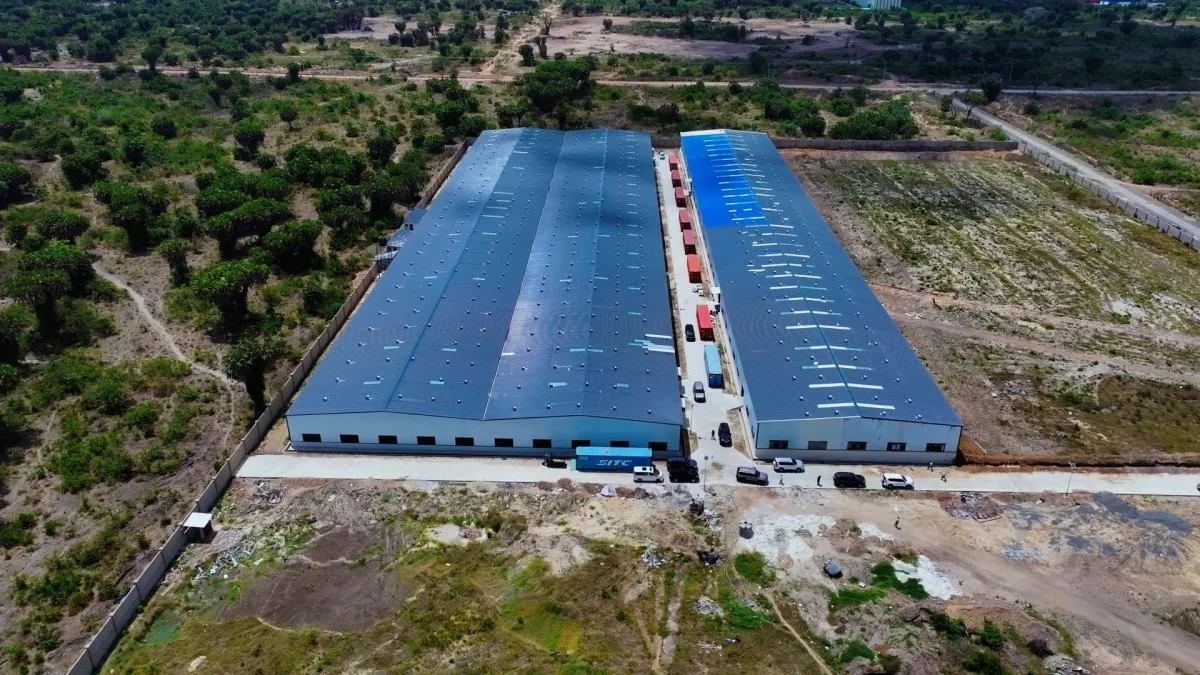 Dar es Salaam provides a contemporary example. According to the Bank of Tanzania's consolidated zonal economic report, which draws on Tanzania Ports Authority statistics, the port handled approximately 26.6 million tonnes of cargo during the 2024/25 financial year, accounting for about 86% of the cargo recorded across the major sea and lake ports covered in the report. The corresponding figure for 2021/22 was approximately 18.4 million tonnes, indicating growth of roughly 44% over three financial years. The figures show how heavily Tanzania's modern port system depends on Dar es Salaam, even as investments continue at Tanga, Mtwara and other locations.
Subsequent Tanzania Ports Authority figures placed Dar es Salaam's 2024/25 cargo throughput at 27.7 million tonnes, while the port reportedly handled 13.97 million tonnes during the first five months of the following financial year, compared with 10.40 million tonnes during the corresponding period in 2024. Differences between the annual figures published through official channels require reconciliation of reporting coverage and revisions, but both sources document substantial growth in port activity.
On January 20, 2026, Government Chief Spokesperson Gerson Msigwa said Tanzania was targeting annual cargo throughput exceeding 30 million tonnes at Dar es Salaam following investments in infrastructure and operational improvements. According to The Citizen's reporting, Msigwa associated the target with efforts to improve the port's capacity and strengthen Tanzania's competitiveness in handling regional trade. His statement demonstrates the government's current emphasis on expanding maritime capacity, although the commercial benefits will also depend on inland transport connections, customs processing, shipping costs and the ability to move cargo efficiently beyond the port.
The country's railway and road investments are directly connected to this objective. Dar es Salaam serves not only Tanzania's domestic market but also freight moving towards Zambia, Rwanda, Burundi, Uganda, Malawi and the Democratic Republic of Congo. These relationships require functioning transport corridors between coastal terminals and inland economic centres. A modern port may possess substantial handling capacity, but its commercial performance can be constrained if railways, highways, border crossings or inland cargo terminals cannot accommodate the resulting freight volumes.
This reflects a longstanding feature of coastal trade: access to the sea creates an opportunity, but the ability to connect that access with productive economic activity inland determines how valuable the opportunity becomes. Medieval Kilwa depended on commercial links to gold producing regions, nineteenth century Bagamoyo depended on caravan networks, and contemporary Dar es Salaam depends on road and rail corridors serving increasingly diverse cargo and markets. The commodities, ownership structures and transport systems differ, while the economic importance of connections between coastal and inland activity remains observable across the periods.
The historical comparison should not be taken to imply that modern Tanzania's ports are direct institutional successors to medieval Swahili city states. Those cities were organised under different political authorities, commercial practices and social conditions. The comparison instead highlights how access to maritime transport can shape the development of cities and trading institutions when accompanied by reliable connections to productive areas and international customers.
Swahili Heritage Has Become an Economic Asset in Its Own Right
The commercial legacy of the Swahili Coast now contributes to economic activity through channels that were absent from its earlier history. Historic towns, distinctive architecture, coastal cultural traditions and maritime heritage support tourism, hospitality, craft production, creative industries and related services. Zanzibar's Stone Town illustrates this transition, with buildings originally associated with merchant households, political authority, religious activity and urban commerce now forming part of a globally recognised historic destination.
UNESCO describes Stone Town of Zanzibar as an outstanding example of a Swahili trading town whose architecture reflects interactions between African, Arab, Indian and European cultures. The organisation identifies the city's houses, markets, religious buildings and narrow streets as evidence of centuries of commercial and cultural exchange. Many of these buildings continue to accommodate residents, businesses and visitors, creating an economic relationship between heritage preservation, urban property, tourism demand and the daily activities of the surrounding city.
The scale of Zanzibar's tourism economy demonstrates the contemporary commercial significance of the islands' cultural and geographical attractions. According to the Office of the Chief Government Statistician and the Zanzibar Commission for Tourism, Zanzibar received 917,167 international visitors in 2025, compared with 736,755 in 2024, an increase of 24.5%. Reporting published by The Citizen on January 18, 2026 showed that December arrivals alone reached 100,729, supported by strong demand from European markets and improved international connectivity.
Available figures for the first nine months of 2026 indicate that tourism continued expanding. An aggregation of official monthly statistical releases shows 729,301 international arrivals between January and September, compared with 656,865 during the same period in 2025, an increase of approximately 11%. These figures concern Zanzibar's overall tourism market rather than visitors to Stone Town specifically, and they should not be interpreted as the direct economic contribution of heritage tourism alone. Nevertheless, the historic urban environment forms part of the destination's wider commercial identity.
The growth of tourism also creates challenges for historic urban areas. Commercial property demand, hotel development, changes in building use and the conversion of residential spaces into visitor accommodation can affect the cost of living and the availability of housing for existing communities. Heritage preservation requires investment in building maintenance, infrastructure and services, while tourism businesses depend on keeping the historic environment attractive and accessible. The commercial value of cultural heritage therefore depends partly on how its preservation is financed and how the benefits of tourism are distributed among residents, property owners, workers and businesses.
There are related opportunities beyond tourism. Kiswahili has become a major language of commerce, education, media and administration across East and Central Africa, supporting communication between communities and businesses that operate across national boundaries. Its historical development along the coast and subsequent expansion inland have produced a shared linguistic resource whose economic usefulness extends well beyond the locations where the earliest Swahili trading towns developed. Although assigning a monetary value to this contribution would require separate research, its practical role in facilitating trade, public administration and regional communication is readily observable.
The maritime heritage of the coast also remains commercially active through fishing, boatbuilding, coastal transport and local markets. These activities do not necessarily operate at the scale of modern international shipping, but they continue supporting employment and livelihoods in places where access to the ocean has shaped economic organisation for generations. Their future prospects depend on fisheries management, infrastructure, environmental conditions, market access and the ability of coastal communities to participate in expanding economic activity.
What the Swahili Trading Economy Reveals About East Africa's Development
The history of Swahili civilisation demonstrates that internationally connected commercial economies existed along the East African coast centuries before European colonial administrations established their own transport and trading systems. African coastal communities developed urban settlements, participated in long distance exchange, cultivated relationships with inland producers and interacted with merchants operating across the Indian Ocean. Archaeological discoveries, historical accounts and the surviving architecture of Kilwa and other towns provide evidence of commercial wealth, specialised production and urban institutions, while research into Zanzibar and the nineteenth century caravan trade documents the changing organisation of commerce as international demand, political authority and transport technologies evolved.
The history also shows that prosperity was uneven and vulnerable to forces beyond the control of individual trading centres. Kilwa's position weakened as political and commercial relationships changed, while Portuguese military intervention altered established maritime arrangements. Zanzibar later accumulated wealth through trade and plantation production, but important parts of that economy depended on enslavement and coercion. Colonial governments subsequently reorganised transport networks and commercial institutions around different political and economic priorities, producing new centres of activity while reducing the importance of others.
Modern Tanzania and its neighbours operate within a fundamentally different economic system, shaped by sovereign states, international trade agreements, industrial production, banking institutions and infrastructure capable of moving millions of tonnes of cargo annually. The present expansion of ports and transport corridors reflects demand arising from mining, agriculture, manufacturing, consumption and regional commerce. These investments can improve competitiveness, but their benefits depend on the commercial and institutional arrangements that connect infrastructure with economic activity.
The historical Swahili economy provides a useful perspective on that relationship. The wealth of Kilwa depended on its access to gold and other commodities produced far from the coast, together with the merchants and transport networks capable of bringing those goods to market. Zanzibar's commercial prominence developed through connections between island production, inland caravans and international buyers. Today, the competitiveness of Dar es Salaam, Mombasa and other coastal gateways depends on efficient inland corridors, reliable services and the capacity to serve businesses operating across national borders.
For Tanzania, this history places its contemporary port and railway ambitions within a much longer economic geography. The coast has repeatedly supported prosperous commercial centres when productive inland regions could reach international customers through its ports. The scale of present investment is much larger, and the technologies are more advanced, but the performance of the resulting infrastructure will still depend on transport costs, commercial demand, institutional capacity and the ability of businesses to participate profitably in international trade.
The surviving buildings of Kilwa Kisiwani and Stone Town preserve evidence of commercial societies that accumulated wealth through their position in the Indian Ocean economy. Their history is also a reminder that the location of a port, however advantageous, does not guarantee lasting prosperity. Maritime access becomes economically valuable through the production, transport, services and institutions organised around it.
 Uchumi360
Business Intelligence
Uchumi360 covers business, investment, and economic policy across East, Central, and Southern Africa.
For the serious reader
You read to the end. That places you in a small group.
Uchumi360 is built for readers who demand precision over speed, structure over sentiment, and analysis that holds uncomfortable conclusions rather than softening them. If this work sharpens how you think about Africa's economy, help us keep building the infrastructure behind it.
Institutional Partners
Commission intelligence. Shape the conversation.
Uchumi360 works with development finance institutions, investment firms, sovereign bodies, and strategic organisations across the coverage region. Institutional partnership unlocks:
- Commissioned sector and country intelligence reports
- Branded research series under your institution's authority
- Exclusive data briefings for internal strategy teams
- Speaking and editorial presence at Uchumi360 events
- Co-published investment outlooks for your markets
Support Our Work
Independent analysis has a cost. Help us bear it.
Uchumi360 does not carry advertising. It does not take editorial direction from sponsors. Every article is produced without commercial compromise. Your contribution funds the reporting, research, and editorial infrastructure that keeps this analysis free from influence.
Secure checkout: One-time and monthly support are processed securely. Add payment credentials to enable checkout here.
Stay Connected
Keep up with every new insight.
Follow our latest analysis, policy coverage, and market intelligence as soon as it is published. If you need something specific, reach out directly and we will point you to the right research.
